



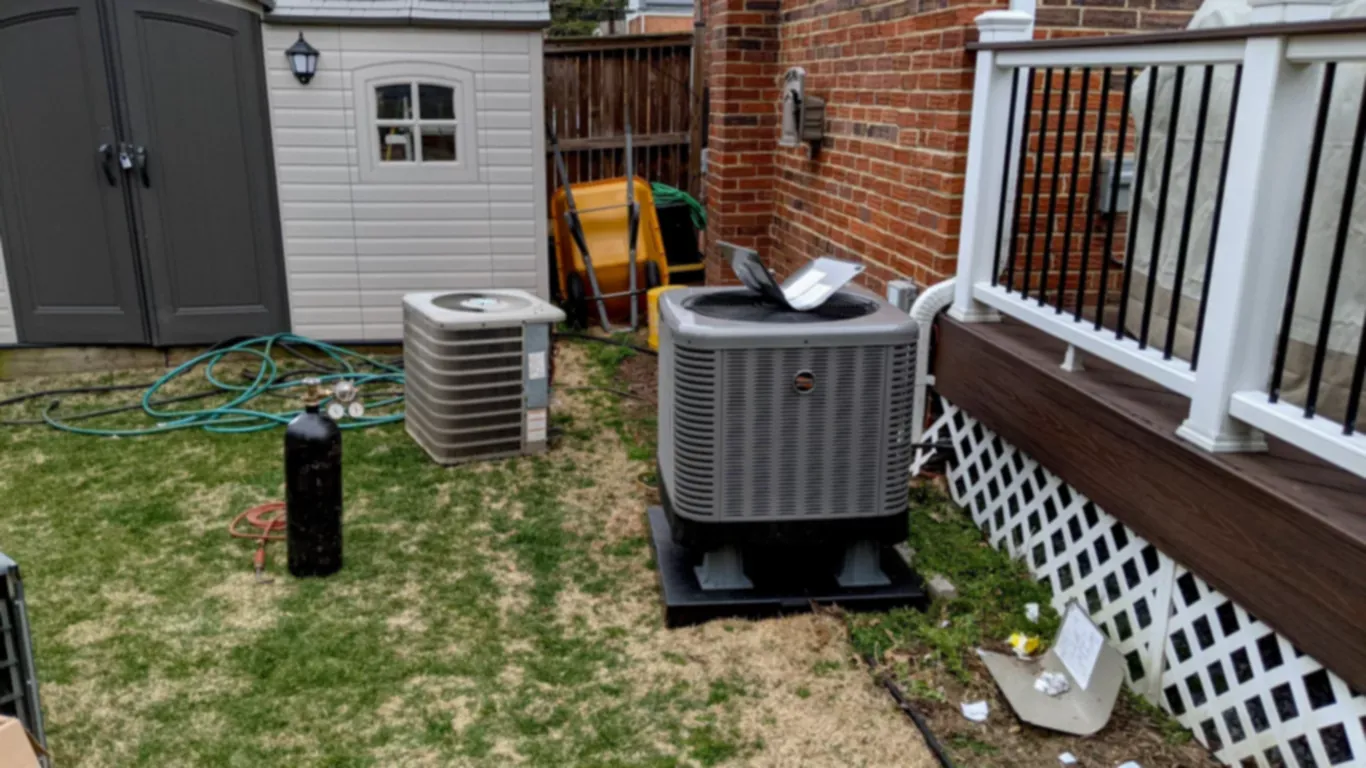
The fan spins but the compressor only hums.
Usually a weak capacitor, and each start attempt strains the compressor further.
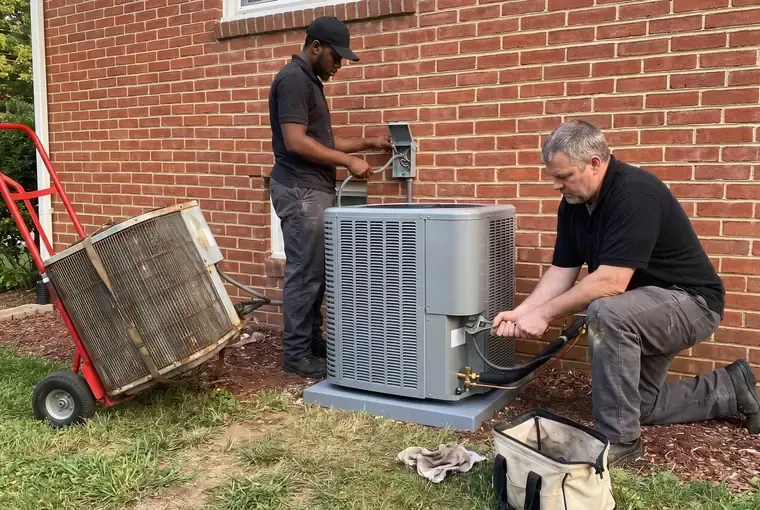
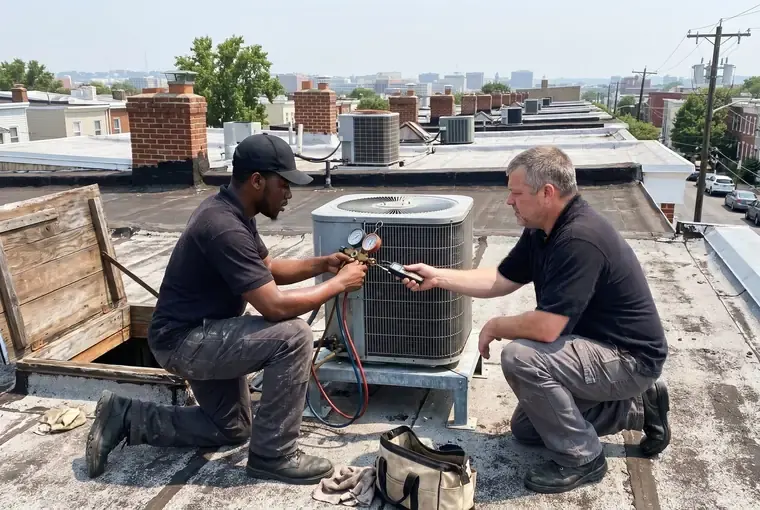

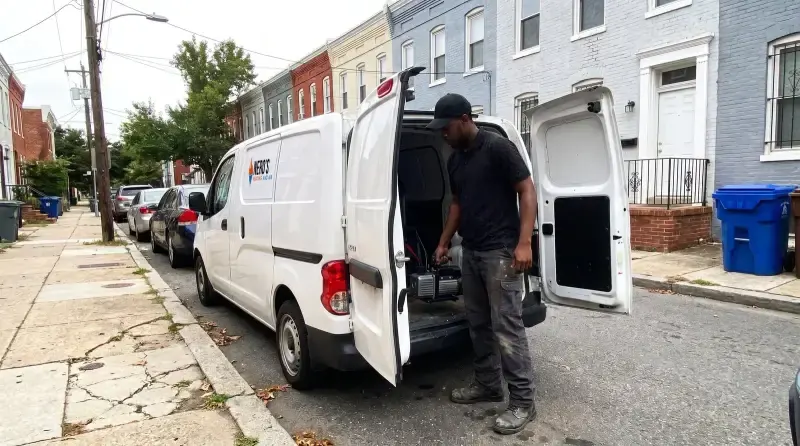
Serving Washington, DC, Prince George's County, Montgomery County & Northern Virginia, including Upper Marlboro, Hyattsville, District Heights and Silver Spring.
When your AC stops cooling in a DMV summer, the failed part is often smaller than you think. Weeks of 90-degree heat wear down capacitors, contactors and fan motors fast. You can hear it happen. The outdoor unit hums, the fan never turns, and the house gets warmer by the hour.
Nero's Heating & Air repairs AC systems across Cheverly, Prince George's County, Montgomery County and Washington DC. We usually have a guess before we open anything, but we still test before we say it out loud. If your AC blows warm air, shuts down early or leaves rooms hot, we find the fault first. You learn what broke, what it costs and whether the repair is still worth doing.

| 5 to 10 years | How long a capacitor lasts here. It is the part we replace most often |
|---|---|
| 40 days | Days at or above 90 degrees in a normal Washington year, 15 in July |
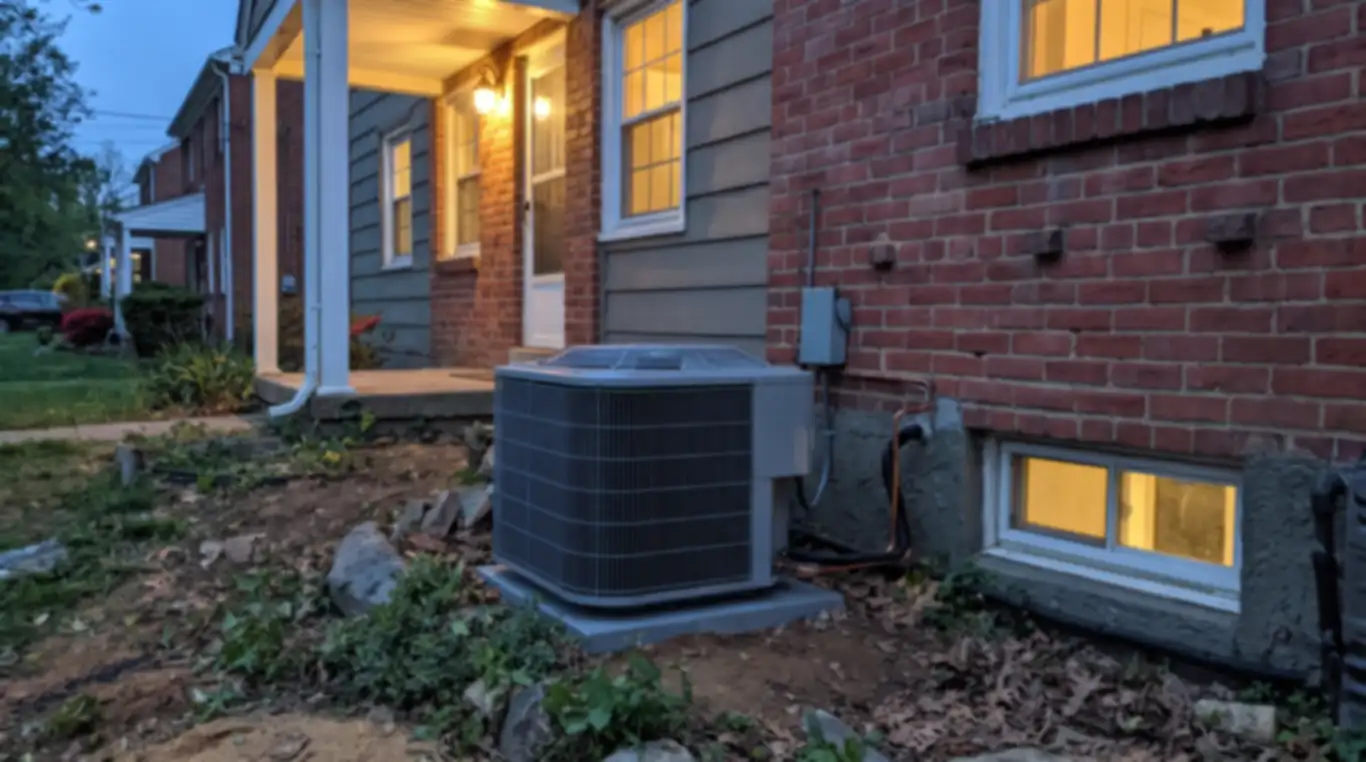
| 24 inches | Clearance your outdoor unit needs, or it keeps pulling its own hot air back in |
| 10 years | How long a registered parts warranty usually runs. Your part may cost nothing |
Not every AC problem looks the same from inside the house. Some show up as a strange sound outside. Others look like higher bills, water around the unit or cooling that disappears every afternoon. The symptom matters because it gives us somewhere useful to start. Here are a few of the patterns we run into regularly on DMV repair calls.
Usually a weak capacitor, and each start attempt strains the compressor further.
Head pressure climbs when the outdoor coil cannot shed its heat fast enough.
A charge fault often shows itself first at peak load, not early in the morning.
The condensate line may be blocked or the pump may have stopped working.
A fouled outdoor coil can make the compressor work harder for less cooling.
A stuck contactor may be keeping the unit energized, so shut it off at the disconnect.
Most repairable faults can be priced and handled during the same visit. If the numbers say putting more money into the system does not make sense, we will show you why. From there, you can compare AC Installation & Replacement, schedule AC Maintenance & Tune-Ups, or call for Emergency AC Repair when the system cannot wait until morning.
A capacitor and a compressor can both leave you with a warm house, but they do not leave you with the same repair bill. Most AC repairs stay in the few-hundred-dollar range, while larger component failures can run into the thousands. When that happens, we talk through what failed, what the repair would cost and whether putting that money into the system still makes sense.
Our diagnostic is $75 and is waived on the repair, while Sunday, after-hours and rooftop visits are $169 and are not waived. Once we know exactly what is wrong, you see the full repair price before we order anything or begin the work.

Nobody should need a contractor to figure this out for them, so here is the line we use. It is a guide rather than a ruling, and where your system sits between the two columns we will say so rather than pushing you toward the more expensive one.
| Repairing usually wins | Replacing is usually the better buy |
|---|---|
| Under about ten years old | Past fifteen, and this is not its first repair |
| First failure in several seasons | Something has gone wrong every summer lately |
| A small electrical part or a blocked drain | The compressor or the indoor coil |
| It still holds temperature, just not comfortably | It has never kept up, even when it was healthy |
| You have never had it topped off | It has needed refrigerant more than once |
The Evidence Behind the Recommendation
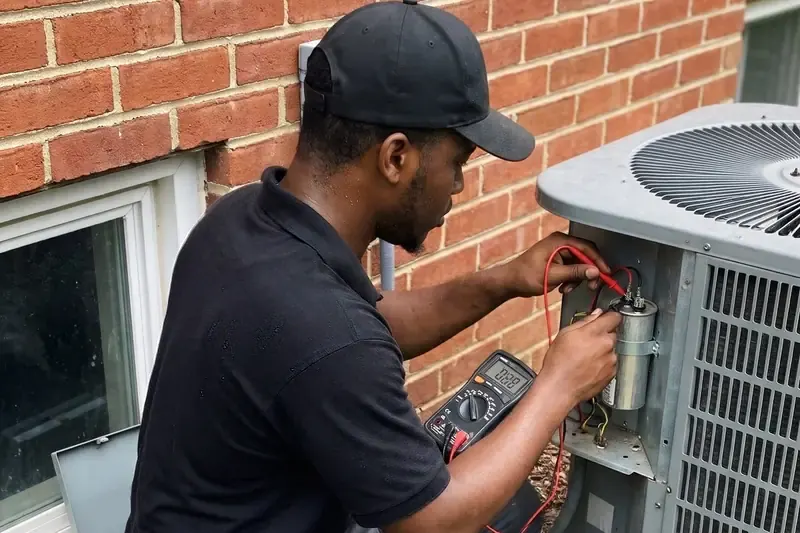
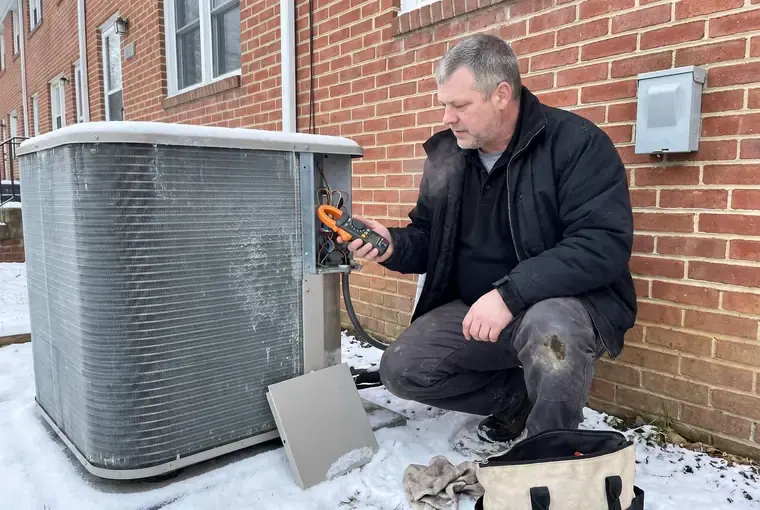
A capacitor weakens slowly, so we meter it against the figure printed on its label. More than about six percent down and it is finished. Still in tolerance and it stays where it is, and you pay for a diagnosis instead of a part.
A hard start kit gives a tired compressor an extra jolt to get it turning. On a compressor that is wearing out, that buys you months rather than fixing anything, and we say so before you pay for it.
A reading either confirms a fault or rules it out, so the part we name is the one the meter points to rather than the one that sounds most likely. That is also what stops a cheap fault being billed as an expensive one.
Tell us what the AC is doing, when it started and anything that changed before it happened. That gives the technician somewhere useful to begin before the tools come out.
The technician works through the likely causes until the readings point to the fault. You are not getting a repair recommendation based on the symptom alone.
We explain what failed, what the repair involves and what it will cost. If a part has to be ordered, we tell you that too.
When the part is available, many repairs can be finished during the same visit. Before we leave, we run the system again to make sure it starts, cools and operates the way it should.
We are based in Cheverly, and repair calls take us across the District, most of Prince George's County, north into Montgomery County, south through Charles County and the Southern Maryland waterfront, and over the river into Virginia. If your town is not listed, call and ask. Coverage at the edges changes with the day.
If you know the system brand, approximate age and what it is doing, have those details ready when you call. A photo of the equipment label can help too. If the problem started after a power outage, thermostat change or another repair, mention that as well.
Make sure the indoor and outdoor units are reachable before the technician arrives. If the condenser is boxed in by shrubs, stored items or fencing, clearing some working room around it means we can get straight to the system when we arrive.
Sunday, after-hours and rooftop calls carry a $169 fee that is not waived. We tell you that before dispatch so you can decide whether the problem needs attention now or can wait for a standard appointment.
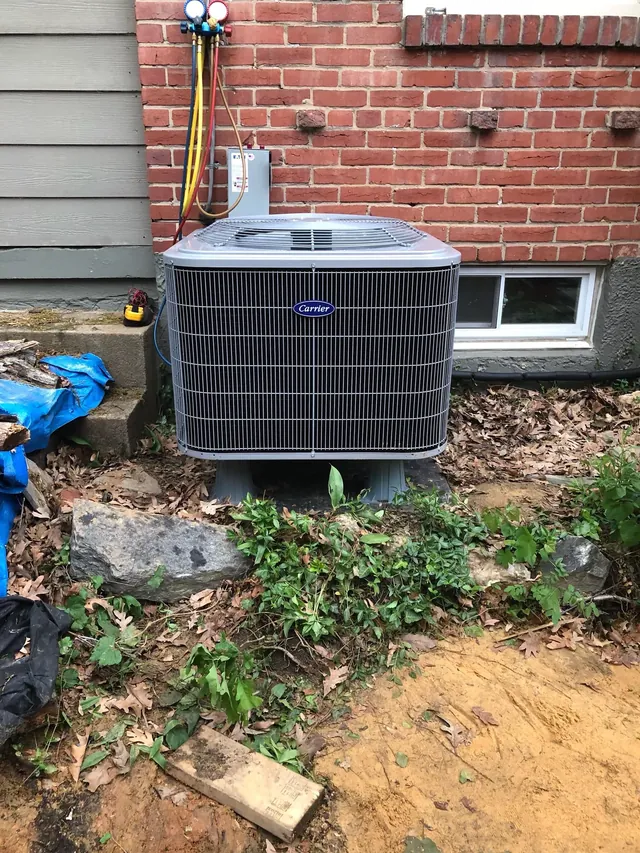
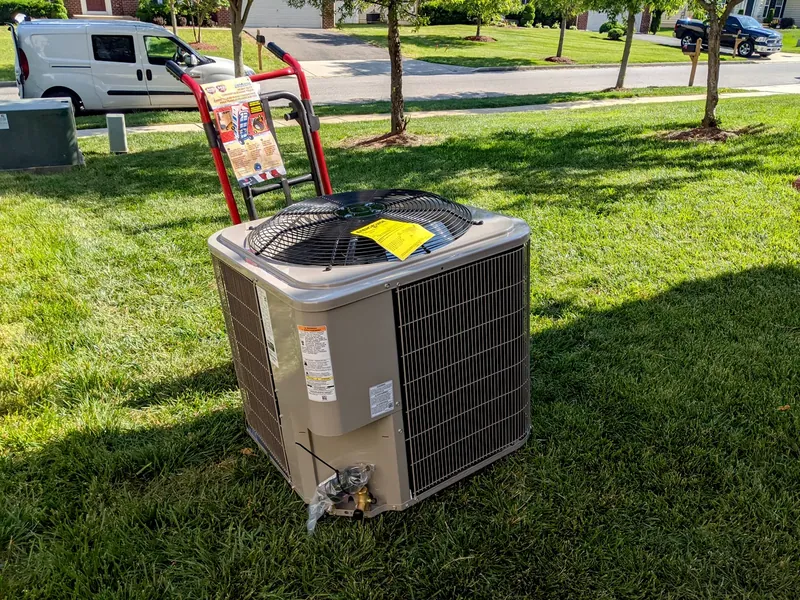
“[He] explained us why one of the older systems was not communicating well with our Nest thermostat and why instead of repairing and wasting our money we should consider a newer more efficient communicating system.”
 Rohit S.
Often. Dead batteries or a loose low-voltage wire mean the thermostat never signals the equipment, so nothing starts and the machine looks dead from indoors. Worth checking before you call.
A surge from a utility fault or a nearby lightning strike weakens components instantly rather than gradually. If your street loses power often, ask an electrician about surge protection.
Rarely. Standard policies exclude wear and tear and mechanical breakdown. They may pay where a covered peril caused the damage, such as lightning, a windstorm or a fallen tree.
No. EPA Section 608 restricts buying and handling refrigerant to certified technicians. The leak has to be found first in any case, because a system that lost charge will lose it again.
A full wrap traps moisture against the metal and gives rodents somewhere dry to chew wiring. A board laid across the top to stop falling ice is enough.