

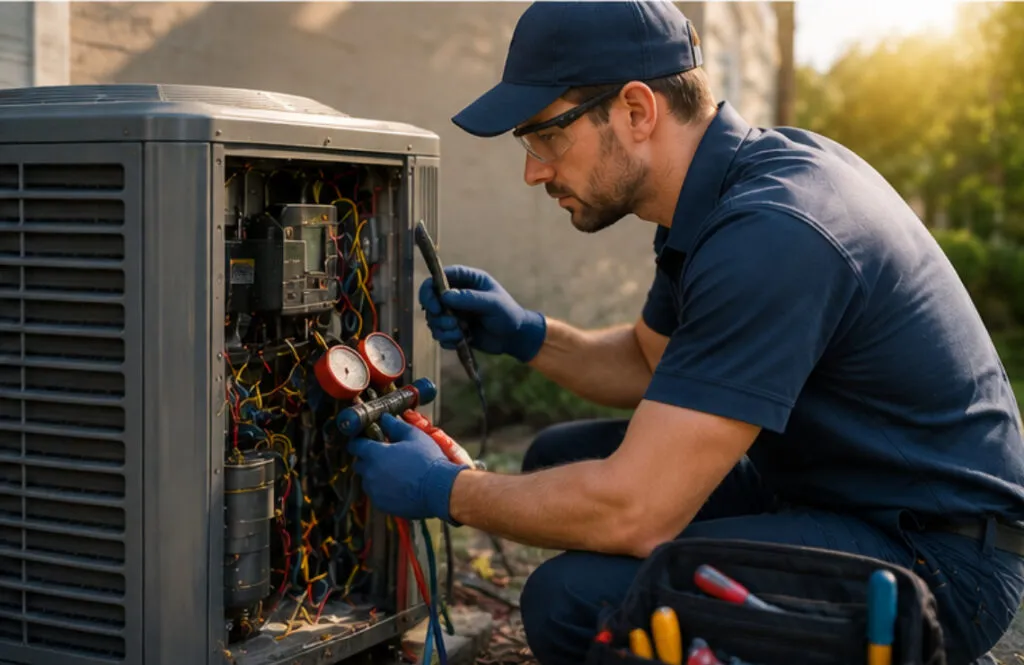
An air conditioner that runs without cycling off is one of the most common complaints homeowners deal with during a Maryland summer, and it’s also one of the most misdiagnosed. Some causes are minor and fixable in a single service visit. Others, like a failing compressor or a severely undersized system, point toward a more serious conversation. Either way, a system running nonstop is costing you money, wearing out components ahead of schedule, and usually failing to keep your home as comfortable as it should be.
Before assuming the worst, it’s worth understanding the specific reasons an AC falls into continuous operation and what each one requires to correct. This guide covers the most common causes, how to recognize which one is affecting your system, and why a professional diagnosis is always the faster and more reliable path to a solution. Staying current with routine AC maintenance in Cheverly is one of the most effective ways to prevent most of these issues from developing in the first place.
Why Your AC May Run Longer During Extreme Summer Heat
Not every extended run time signals a problem worth worrying about. When outdoor temperatures push into the upper 80s and humidity settles over the Cheverly area for days at a time, your air conditioner has to work harder and longer to maintain comfortable indoor temperatures. This is expected system behavior under high thermal load, not a symptom of something failing. A healthy system running long cycles during a genuine Maryland heat wave is doing exactly what it was designed to do.
The difference between normal extended operation and a problem worth investigating comes down to a few key performance indicators. A system that never cycles off even during cooler morning hours, fails to reach the thermostat setting after hours of runtime, or delivers noticeably weak airflow despite continuous operation is telling you something more than summer heat is working against it.
How to tell the difference between normal and problematic runtime:
- Morning Cycle-Off: A healthy system should cycle off occasionally even on hot days, particularly in early morning hours when outdoor temps drop.
- Temperature Achievement: If the home reaches and holds the thermostat setting by evening, long daytime runtimes are generally normal for peak summer load.
- Airflow Strength: Strong, cold supply air during a long cycle suggests the system is performing well under demand, not struggling to keep up.
- Indoor Humidity: Comfortable indoor moisture levels alongside extended runtime indicate the system is managing latent heat load as designed.
If your system passes all four of these checks, long summer runtimes are not a cause for concern. If any of them fall short, one of the causes below is almost certainly the reason your system won’t stop.
Cause #1: A Clogged Air Filter Is Choking System Airflow
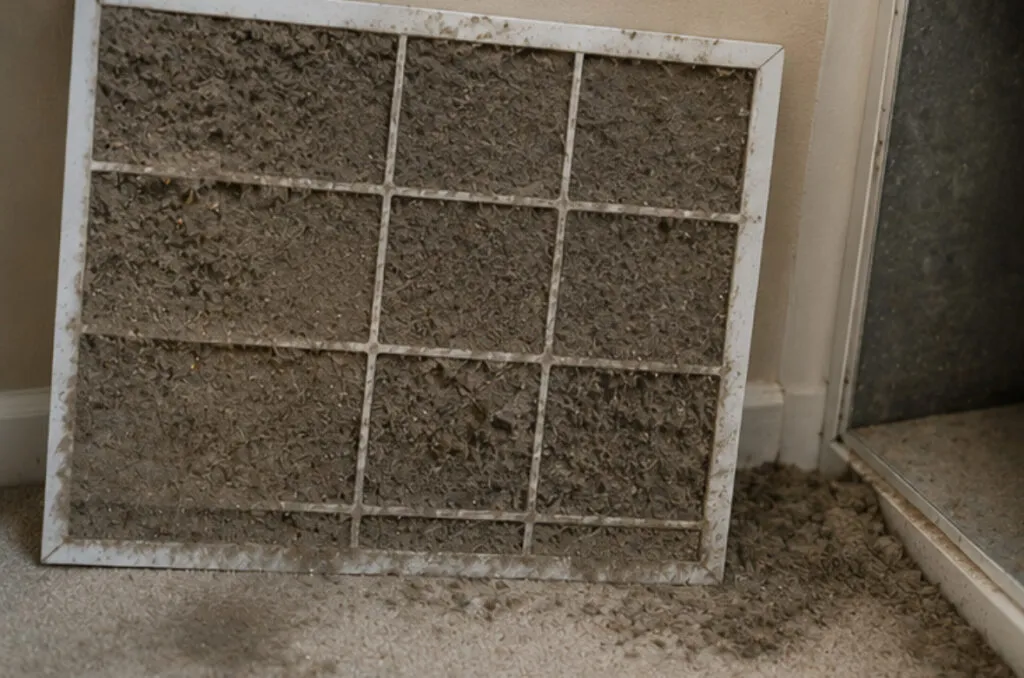
The most common and easiest-to-fix cause of nonstop AC operation is a dirty air filter starving the system of the airflow it needs to function. When the filter loads up with dust, pet dander, and seasonal debris, the blower motor works harder to pull air through, less air passes over the evaporator coil, and the system’s ability to absorb heat from the home drops significantly. The AC compensates by running longer, but since the root problem, restricted airflow across the coil, is never addressed, runtime keeps extending without any meaningful improvement in comfort.
In Maryland, air filters often clog much faster during spring and early summer because of heavy pollen, cottonwood, and outdoor debris. Homes with pets or heavy tree coverage may see standard 1-inch filters become heavily restricted within 30 days, even though the AC still appears to run normally. During cooling season, most 1-inch filters should be checked monthly and replaced every 30 to 60 days depending on indoor conditions.
| Household Type | Recommended Filter Change Interval | Filter Type to Use |
|---|---|---|
| Single occupant, no pets | Every 90 days | MERV 8, 1-inch |
| Average household, no pets | Every 60 days | MERV 8-10, 1-inch |
| Household with 1-2 pets | Every 30-45 days | MERV 10-11, 1-inch |
| Allergy sufferers or multiple pets | Every 20-30 days | MERV 11, 1-inch or 4-inch media |
| Homes near heavy tree cover (Maryland) | Every 30 days during pollen season | MERV 10-11, 1-inch |
Warning signs a clogged filter is behind your nonstop runtime:
- Weak Register Airflow: Reduced airflow at supply vents is typically the first symptom homeowners notice, often before indoor temperatures change.
- Sticky Indoor Air: Restricted airflow cuts the system’s moisture removal capacity, leaving the home feeling humid even with the AC running continuously.
- Coil Icing: Ice forming on the refrigerant lines or evaporator coil, followed by water near the air handler, signals a severe restriction causing coil temperatures to drop below 32°F.
- Higher Energy Bills: A filter-choked system draws more amperage from the blower motor while delivering less cooling per cycle, a combination that shows up fast on a summer utility bill.
Pulling the filter and holding it up to a light source is the quickest diagnostic step. If you can’t see light through it, replace it before anything else. If continuous operation continues after a fresh filter is installed, professional AC maintenance in Cheverly is the right next step to identify what else is limiting system performance.
Cause #2: Low Refrigerant Is Reducing Cooling Capacity
When refrigerant charge falls below manufacturer specification, your air conditioner loses the ability to absorb heat efficiently and runtime increases dramatically to compensate. A system running on low refrigerant is attempting to move the same thermal load with a depleted working fluid. The evaporator coil cannot absorb enough heat per cycle, the condenser cannot reject it outside at the required rate, and the system runs continuously while still failing to bring the home to the setpoint temperature. This operating condition accelerates compressor wear faster than almost any other failure mode and, left unaddressed, can turn a straightforward refrigerant repair into a compressor replacement.
Unlike a dirty filter, low refrigerant cannot be resolved by the homeowner. It requires an EPA-certified HVAC technician to locate the leak using electronic detection equipment, perform a verified repair, pressure test the circuit, and recharge the system to the exact factory specification measured against suction and discharge pressures. Adding refrigerant without finding and fixing the source of the leak is a temporary measure that will require the same service call again within a season.
| Symptom You Notice | What It Indicates | Why It Causes Nonstop Operation |
|---|---|---|
| Warm or lukewarm supply air | Evaporator coil not absorbing sufficient heat | System runs longer trying to reach thermostat setting |
| Ice on refrigerant lines or indoor coil | Coil surface temperature falling below 32°F | Icing further reduces heat transfer and cooling output |
| Water pooling near the air handler | Ice melting after extended nonstop cycles | Repeated freeze-thaw cycles prevent any meaningful cooling |
| Sharp increase in energy bills | Extended, inefficient runtime per degree of cooling | More electricity consumed while comfort drops |
| Hissing or bubbling near the unit | Refrigerant actively escaping through a leak | Progressive charge loss worsens performance over time |
If two or more of these symptoms are present together, scheduling AC repair in Cheverly promptly is the right move. Running a refrigerant-deficient system for weeks risks compressor damage that significantly changes the scope and cost of what could have been a straightforward service call.
Cause #3: Leaky Ductwork Is Losing the Air You’re Paying to Cool
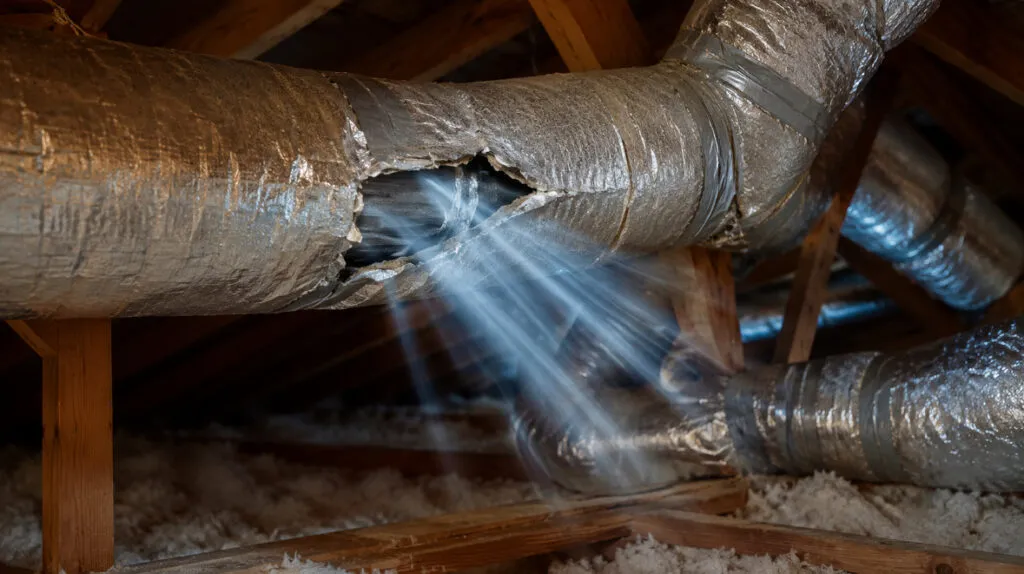
An air conditioner can be fully charged, correctly sized, and mechanically sound and still run nonstop if the duct system distributing its output is leaking. In many Cheverly homes, supply ducts run through unconditioned attic space where summer temperatures can exceed 130°F. When joints separate, tape dries out, or flex duct connections loosen over time, conditioned air escapes into that attic before it ever reaches a bedroom or living area. Research from the Department of Energy estimates that duct leakage accounts for 20 to 30% of conditioned air loss in homes with significant sealing deficiencies, and in older homes that number can be higher.
The air conditioner responds to this distribution loss the only way it can: by running longer. But since the cooled air isn’t reaching the rooms where the thermostat is located, the system can never satisfy the call for cooling regardless of runtime. The result is continuous operation, rooms that never quite reach the setpoint, elevated indoor humidity, and energy bills that climb while comfort stays flat.
Signs that duct leakage may be driving your continuous runtime:
- Persistently Warm Upper Floors: Upstairs bedrooms that stay warm despite long system runtimes often indicate supply duct leakage before cooled air reaches those zones.
- Uneven Room Temperatures: Noticeable temperature differences between rooms on the same floor point to duct runs losing airflow unevenly across different zones.
- Thermostat Never Satisfied: A system that runs for hours without reaching setpoint in a home with no obvious equipment problems almost always has a duct leakage issue worth testing.
- Increased Surface Dust: More dust than usual on furniture and near registers can indicate the return side of the duct system is drawing unconditioned attic air into the system.
A duct leakage test quantifies exactly how much conditioned air the system is losing before any repair work begins. Sealing with mastic, foil-rated tape, or aerosol duct sealant for inaccessible sections consistently resolves nonstop runtime complaints in homes where the HVAC equipment itself is in sound mechanical condition.
Cause #4: Aging or Undersized Equipment Can’t Meet Cooling Demand
An air conditioner that was correctly sized at installation can become effectively undersized over time as system efficiency declines and the home’s cooling load increases. Additions, finished attics, large new windows, and changes to insulation all add to the thermal load the system must manage. Simultaneously, a unit past its tenth or twelfth year is operating at a fraction of its original rated efficiency, delivering less cooling per hour of runtime than its nameplate SEER rating indicates. The combination of a higher load and reduced capacity is what produces nonstop operation that no repair can fully resolve.
This is a fundamentally different situation from a mechanical failure that a single service call can correct. Recognizing the distinction between equipment capacity decline and a specific repairable component failure is what determines whether professional AC repair in Cheverly resolves the problem or whether a replacement conversation is the more honest recommendation.
| Factor | Points to Capacity or Age Issue | Points to a Repairable Mechanical Problem |
|---|---|---|
| System age | Over 12 years with gradual performance decline | Under 10 years, previously performed reliably |
| Temperature achievement | Never reaches setpoint even on moderate days | Was reaching setpoint recently, stopped suddenly |
| Comfort change pattern | Slow worsening over multiple cooling seasons | Sudden drop in performance within a single season |
| Energy bill trend | Slowly rising over several years | Sharp unexplained spike in a single billing period |
| Technician diagnosis | Low system capacity, worn compressor, low SEER output | Specific failed part: capacitor, contactor, coil, motor |
When the diagnosis points toward capacity loss rather than a repairable component, the most financially sound decision involves comparing the ongoing cost of maintaining an aging system against the efficiency and reliability gains from a properly sized replacement.
How Professional AC Repairs Restore Normal Run Times
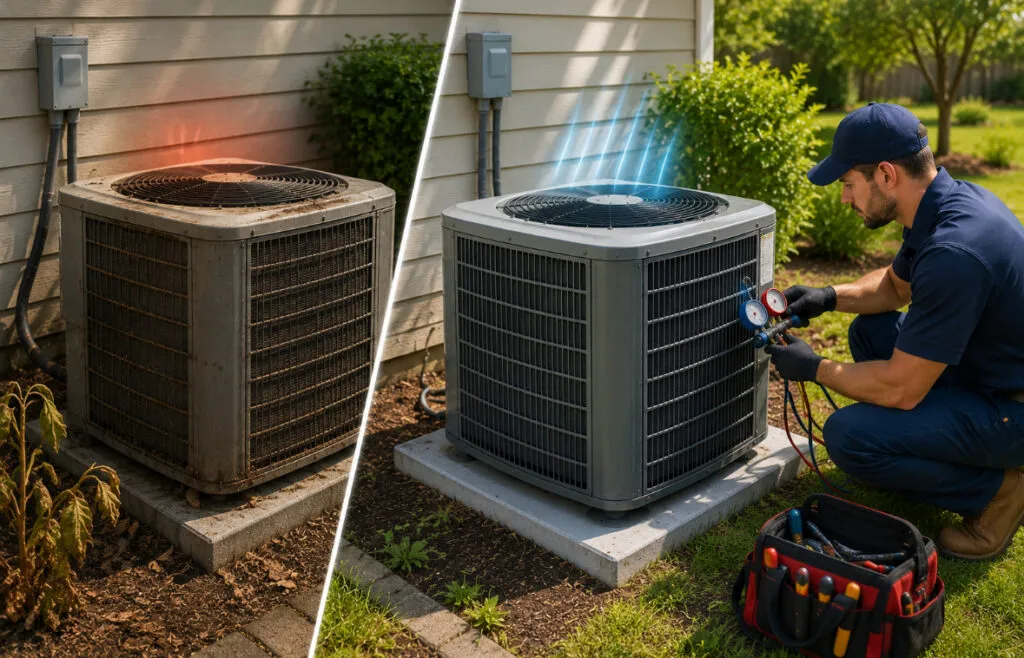
When nonstop operation is caused by a repairable condition, targeted service from a qualified HVAC technician typically resolves the problem within a single visit. Each repair type addresses a specific failure that was pushing your system beyond its normal cycle pattern, and knowing what each one involves helps you understand what to expect when a technician shows up at your door.
Refrigerant Leak Repair and System Recharge
When refrigerant is low, the right fix starts with finding the actual leak, not just topping off the charge. Your technician locates the source using electronic detection equipment, repairs it, and pressure-tests the circuit before any refrigerant goes back in. Once the system is evacuated and recharged to factory specification, most homeowners feel the difference within the first full cooling cycle after the service is complete.
Evaporator and Condenser Coil Cleaning
Both the indoor and outdoor coils need to be clean to transfer heat at the rate your system was designed for. A condenser coil caked in pollen, cottonwood, or yard debris can no longer release heat to the outdoor air fast enough, which forces the compressor to run longer and work harder than it should. Your technician rinses the condenser from the inside out, checks the indoor evaporator for dust buildup that restricts airflow or causes icing, and confirms airflow is restored before wrapping up the visit.
Electrical Component Testing and Replacement
Capacitors, contactors, and condenser fan motors are small components that cause big problems when they start to weaken. A failing run capacitor lets the compressor operate but at reduced output, meaning the system runs longer without delivering the cooling you expect. Your technician tests each component against rated specifications, measures motor amp draw, and replaces anything outside of tolerance so the system is back to running the way it should.
Duct Leakage Testing and Sealing
If leaky ducts are identified as the cause, the repair starts with a pressurization test that puts a real number on how much conditioned air your system is currently losing. Accessible gaps get sealed with mastic or foil tape, and harder-to-reach sections are treated with aerosol duct sealant. Static pressure readings taken before and after confirm that airflow has genuinely improved and that your system is no longer running against the losses that were driving the problem.
Each of these repairs is straightforward when the right technician performs it, but the diagnostic step that comes first is what determines the outcome. Choosing a technician who measures actual system performance before recommending any repair is the difference between solving the problem for good and dealing with the same situation again next summer.
Why Cheverly Homeowners Call Nero’s Heating and Air First
At Nero’s Heating and Air, we don’t guess at what’s causing your AC to run nonstop. Every diagnostic visit starts with measuring actual system performance, including airflow volume, refrigerant pressures, electrical component values, and duct system static pressure, so every finding is based on data rather than assumptions. We explain what we find in plain language and give you repair options that are matched to your system’s actual condition and your budget.
We’ve worked in Cheverly homes long enough to understand how Maryland’s heat, humidity, and older housing stock interact with HVAC equipment in ways that aren’t always obvious from a quick visual inspection. Whether your system needs a targeted air conditioner repair or a preventive AC maintenance visit to address the conditions that cause nonstop operation, we approach every job the same way: thorough diagnostics, honest findings, and repairs focused on the root cause.
If your AC has been running without a break, reach out to our team for a diagnostic visit. We’ll tell you exactly what we find and exactly what it will take to fix it.


