Skip to content


Your House Feels Damp in Summer but the AC Seems Fine. What’s Actually Going On?
Your Cheverly home can reach the thermostat setting while still feeling damp, sticky, or uncomfortable. If the AC is blowing cold air but indoor humidity remains high, the problem may not be its ability to cool. The system also needs enough runtime and proper airflow to remove moisture from the indoor air.
This is especially noticeable during humid Mid-Atlantic summers. A properly operating air conditioner should cool and dehumidify at the same time, but issues such as oversized equipment, excessive airflow, a continuously running fan, or condensate drainage problems can interfere with moisture removal.
Why Does My House Feel Humid When the AC Is Running?
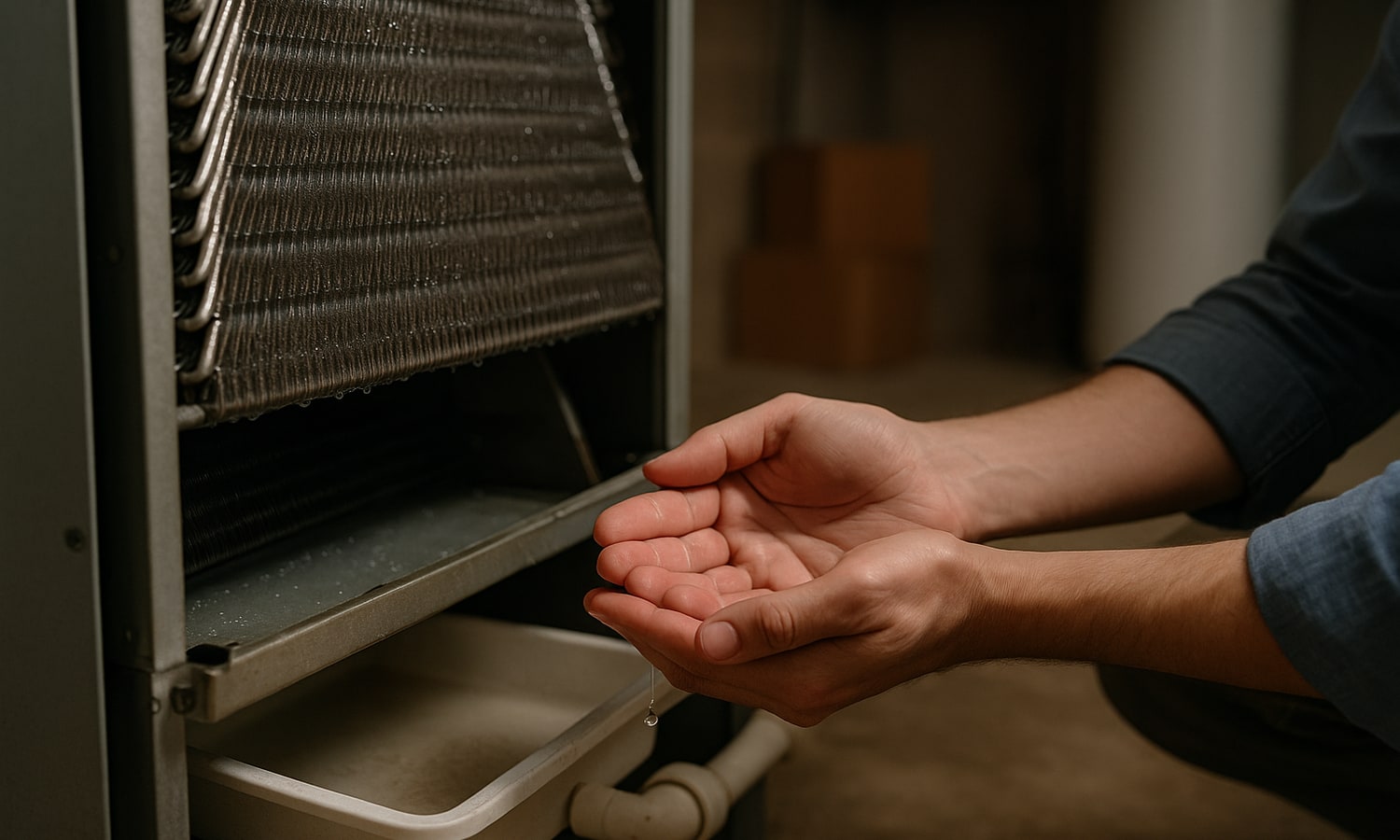
An air conditioner removes heat and moisture through the indoor evaporator coil. Warm indoor air passes over the cold coil, causing some of the water vapor in that air to condense. The moisture collects in the drain pan and should leave through the condensate drain while the cooled air returns to the home.
The important detail is runtime. Cooling the house from 78°F to 74°F does not necessarily mean the system has removed enough moisture. If the AC reaches the thermostat setting quickly and shuts down, it may not operate long enough for the coil to remove a significant amount of humidity.
For Cheverly homeowners, this distinction matters because summer outdoor air can carry substantial moisture. A home can therefore feel uncomfortable even when the thermostat shows a normal temperature. Checking indoor relative humidity with a basic hygrometer can help confirm whether the problem is actually moisture rather than simply how the temperature feels.
What Affects How Much Moisture Your AC Removes?
Cold supply air alone does not guarantee dry air. Runtime, airflow, filter condition, coil cleanliness, and condensate drainage all affect how much moisture the system removes.
AC Runtime and Moisture Removal
Frequent starts and stops are an important clue. Instead of lowering the thermostat to force longer cycles, pay attention to whether the compressor is repeatedly running for only a few minutes. Persistent short cycling can be associated with equipment sizing, airflow, thermostat, or mechanical problems that need to be evaluated.
Airflow and Evaporator Coil Performance
Airflow across the evaporator coil also affects dehumidification. If air moves through the coil too quickly, there may be less opportunity for moisture to condense. However, changing blower settings without testing the system can create other problems, including inadequate cooling or coil icing.
A technician can measure airflow and evaluate the equipment and ductwork before making adjustments. The objective is to maintain the airflow the system was designed for while allowing the coil to operate under conditions that support effective moisture removal.
Thermostat Fan Setting and Indoor Humidity
The thermostat fan setting can influence how the home feels after a cooling cycle. When the fan is set to ON, the blower continues circulating air after the compressor stops. Moisture remaining on the evaporator coil can then be carried back into the indoor air rather than simply draining away.
Setting the fan to AUTO allows the blower to stop when the cooling cycle ends. This is a simple homeowner check, although it will not correct an oversized AC, airflow restriction, or other underlying issue causing excessive humidity.
Condensate Drainage and Moisture Control
Every cooling system needs a functioning condensate drain to remove the water collected from indoor air. A restricted drain, standing water in the pan, or drainage problem can interfere with normal moisture removal and may contribute to damp conditions around the indoor equipment.
If your Cheverly home remains humid even though the AC is maintaining temperature, a dedicated dehumidifier may also be worth considering after the HVAC system has been properly evaluated. The right solution depends on whether the humidity is caused by AC operation, moisture entering the home, or a combination of factors.
Can an Air Conditioner Be Too Big for the House?
Yes. An oversized AC can cool a home quickly but still provide poor humidity control. When the equipment reaches the thermostat setting too quickly, the compressor shuts off before the system has had sufficient runtime to remove moisture consistently.
For example, a system that repeatedly runs for only a few minutes before shutting down deserves closer attention than one that operates in longer, steady cycles. The exact runtime depends on outdoor conditions, indoor load, equipment, and thermostat settings, so there is no single number that defines normal operation.
When it is time for AC installation or replacement, equipment sizing should be based on the home’s cooling load rather than a simple square-footage rule or the capacity of an old system. A proper load calculation considers factors such as the home’s size, insulation, windows, orientation, and other sources of heat gain.
What Can You Check Yourself Before Calling an HVAC Professional?
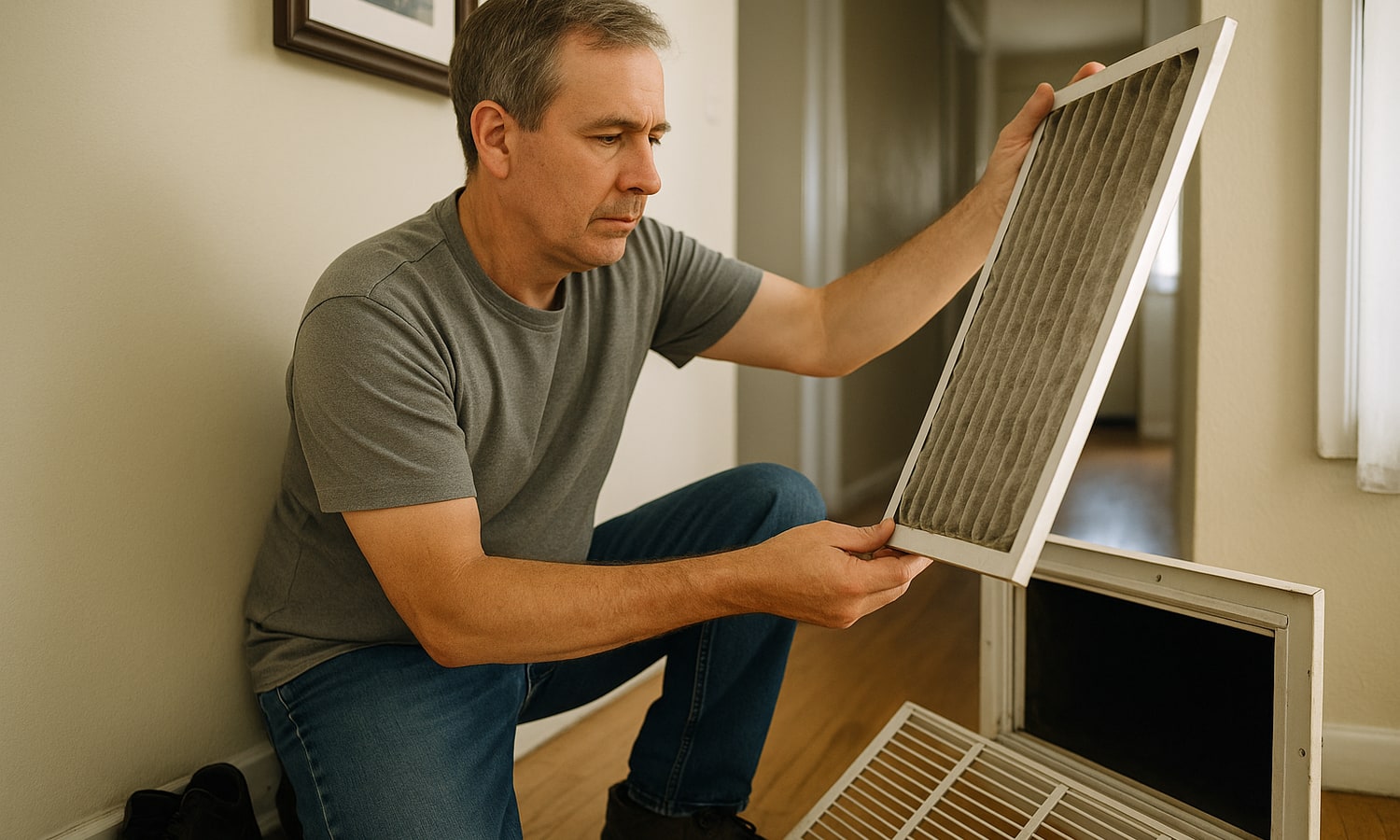
A few basic checks can help determine whether the humidity problem has an obvious cause. These checks do not replace professional testing, but they can give you useful information before scheduling service.
- Check indoor humidity: A hygrometer can show whether relative humidity is consistently above about 55% to 60%.
- Inspect the filter: A heavily loaded filter can restrict airflow across the evaporator coil.
- Check the thermostat fan: Set the fan to AUTO rather than ON if appropriate for your system.
- Clear supply and return vents: Furniture, rugs, or other obstructions can restrict air movement.
- Watch the AC cycle: Notice whether the system repeatedly starts and stops after only a short run.
- Look around the indoor unit: Standing water or visible condensate problems warrant professional attention.
- Watch for ice: If you see frost on the refrigerant lines or indoor coil, switch the cooling off and call for service rather than letting it keep running.
If these basic checks do not explain the problem, avoid adjusting refrigerant, opening the equipment, or changing internal blower settings yourself. A professional air conditioner repair service in Cheverly, MD can measure system operation and determine whether the humidity is related to airflow, equipment performance, sizing, or another condition.
AC Not Removing Humidity: Is It a Fault, a Design Problem, or a Dehumidifier?
Once you confirm that indoor humidity remains high, the next step is determining why. A correctly operating AC can still leave a home damp if the cooling equipment is oversized, the moisture load is unusually high, or the system cannot provide enough dehumidification during normal operation.
| What You Notice | Possible Cause | What to Check |
|---|---|---|
| AC runs briefly and shuts off | Oversized equipment | Equipment sizing and cooling load |
| Weak airflow with high humidity | Filter or airflow restriction | Filter, returns, ductwork, blower |
| Humidity rises when fan runs continuously | Fan set to ON | Change to AUTO and monitor |
| Water around indoor equipment | Drainage issue | Condensate pan and drain |
| AC runs normally but humidity stays high | High moisture load | Humidity readings once the AC is confirmed working |
These symptoms are useful starting points, not definitive diagnoses. A professional should evaluate the equipment and operating conditions together rather than replacing parts based on humidity alone.
When Does a Whole-House Dehumidifier Make Sense?
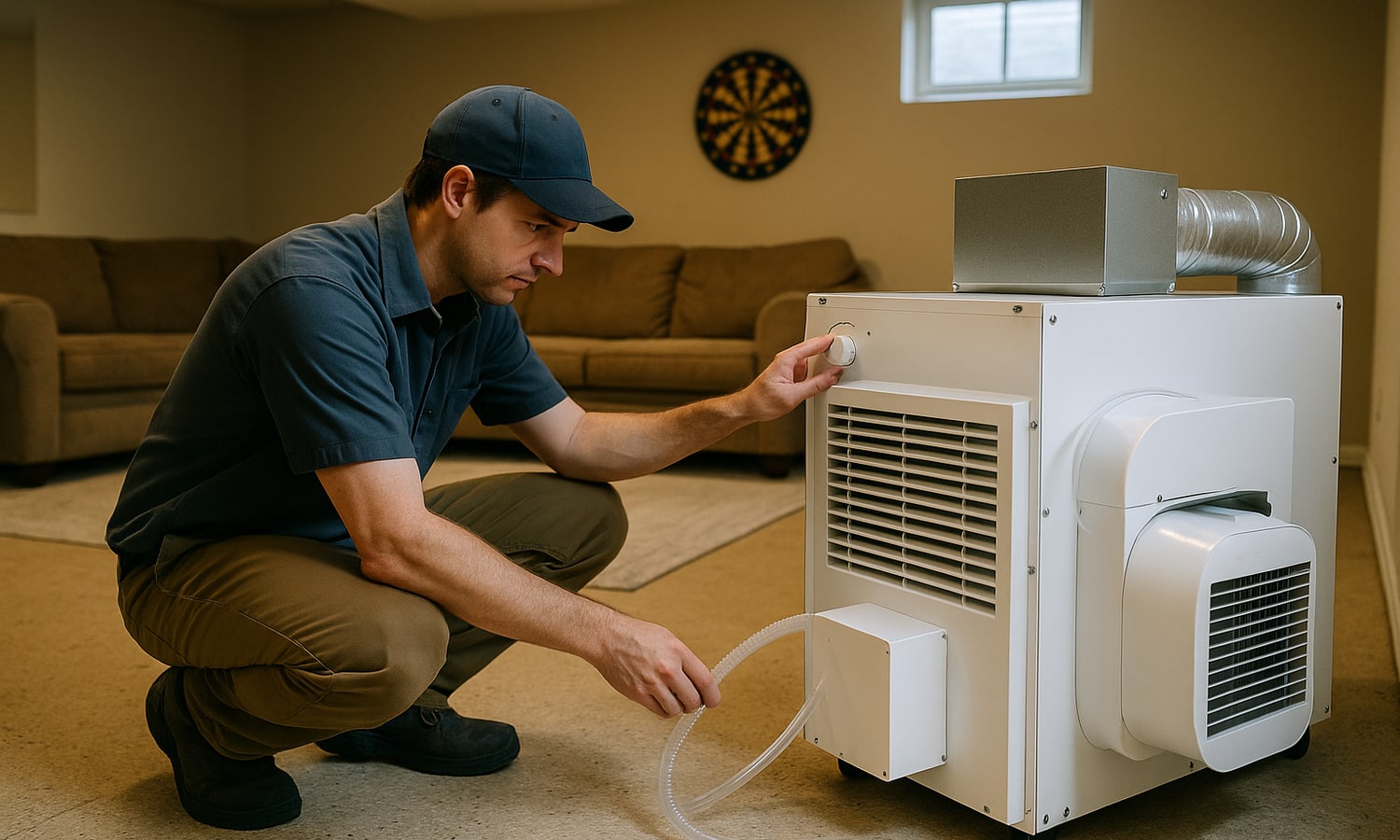
A dedicated dehumidifier can be useful when the AC is correctly sized, operating properly, and still cannot keep indoor humidity at a comfortable level. Unlike the air conditioner, a dehumidifier is designed specifically to remove moisture without requiring the home to become colder.
This can be particularly useful when the thermostat already reaches its setpoint but the house continues to feel damp. Instead of lowering the thermostat several more degrees just to make the air feel drier, a properly selected whole-house dehumidifier can work alongside the HVAC system to control moisture.
A dehumidifier is not automatically the answer to every humidity complaint. If the real problem is a clogged filter, restricted airflow, incorrect fan operation, condensate drainage, or an improperly sized AC, those issues should be addressed first.
What Humidity Level Should You Aim for in Summer?
Indoor relative humidity around 40% to 55% is generally a comfortable target for many homes. Once humidity remains around 60% or higher, rooms can feel noticeably muggy, and persistent moisture can contribute to conditions favorable to mold and dust mites.
A small digital hygrometer can help you track the pattern instead of relying only on how the room feels. Check readings in several areas of the home and at different times of day. If humidity stays elevated despite normal cooling operation, those readings give an HVAC professional useful information during diagnosis.
Frequently Asked Questions
Why does my house feel damp when the AC is cooling normally?
Cooling and dehumidification happen together, but they are not identical. If the AC reaches the thermostat setting quickly, has excessive airflow, or operates with another problem that limits moisture removal, the home can become cool without becoming sufficiently dry. Measuring indoor relative humidity helps confirm the issue.
Can an oversized AC cause high indoor humidity?
Yes. An oversized air conditioner can reach the thermostat setting quickly and shut down before providing enough runtime for consistent moisture removal. Proper equipment sizing should be based on the home’s cooling load rather than simply matching the capacity of an older unit or choosing a larger system.
Should I leave my AC fan on AUTO or ON?
If humidity is a concern, AUTO is generally preferable because the blower stops when the cooling cycle ends. With the fan continuously running, moisture remaining on the evaporator coil can potentially evaporate back into the indoor air. Changing the setting will not solve underlying equipment or airflow problems.
Can a dirty AC filter make my house feel humid?
A heavily clogged filter can restrict airflow through the system and interfere with cooling and moisture removal. Check the filter regularly, replace it when it is dirty, and keep the coil clean with routine AC maintenance. Homes with pets, renovation dust, or heavier particle loads may require more frequent filter changes than the commonly used 30- to 90-day range.
Do I need a dehumidifier if my AC is working?
Not necessarily. First determine whether the AC is correctly sized, has adequate airflow, drains condensate properly, and provides appropriate cooling operation. If those conditions are satisfactory but indoor humidity remains elevated during humid weather, a whole-house dehumidifier may provide additional moisture control without requiring you to overcool the home.
Why Choose Nero’s Heating & Air for Humidity Control in Cheverly?
A comfortable summer home needs more than a thermostat reading that looks normal. Nero’s Heating & Air can evaluate the factors that influence indoor humidity, including AC operation, airflow, equipment sizing, condensate drainage, and overall moisture load.
If your AC cools the house but the rooms still feel damp, our dehumidifier services can provide another option when cooling alone is not adequately controlling moisture. The goal is to address the reason your home feels humid rather than simply lowering the thermostat.
If your Cheverly home remains sticky despite normal AC operation, call Nero’s Heating & Air at (202) 750-9543 to schedule an evaluation and determine whether the issue is airflow, equipment performance, sizing, or a need for dedicated dehumidification.