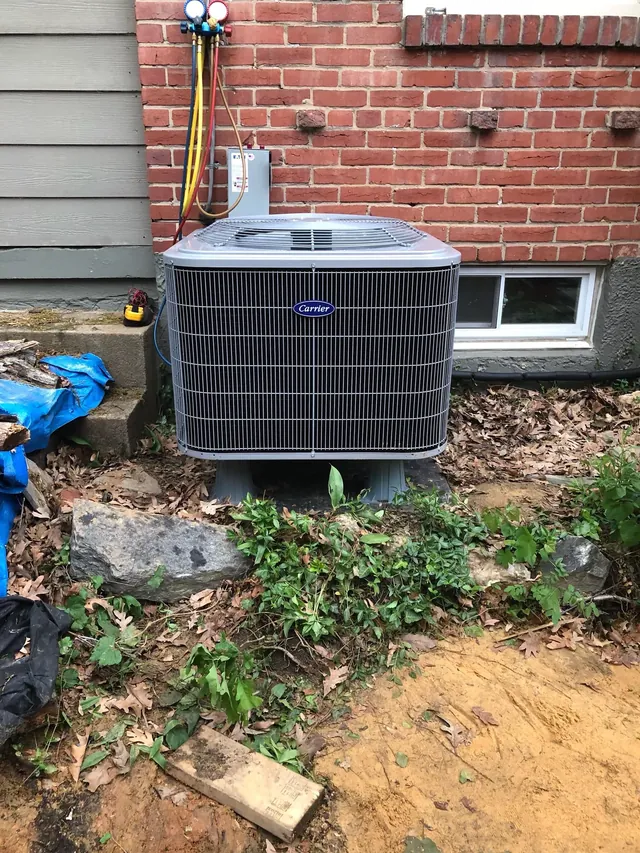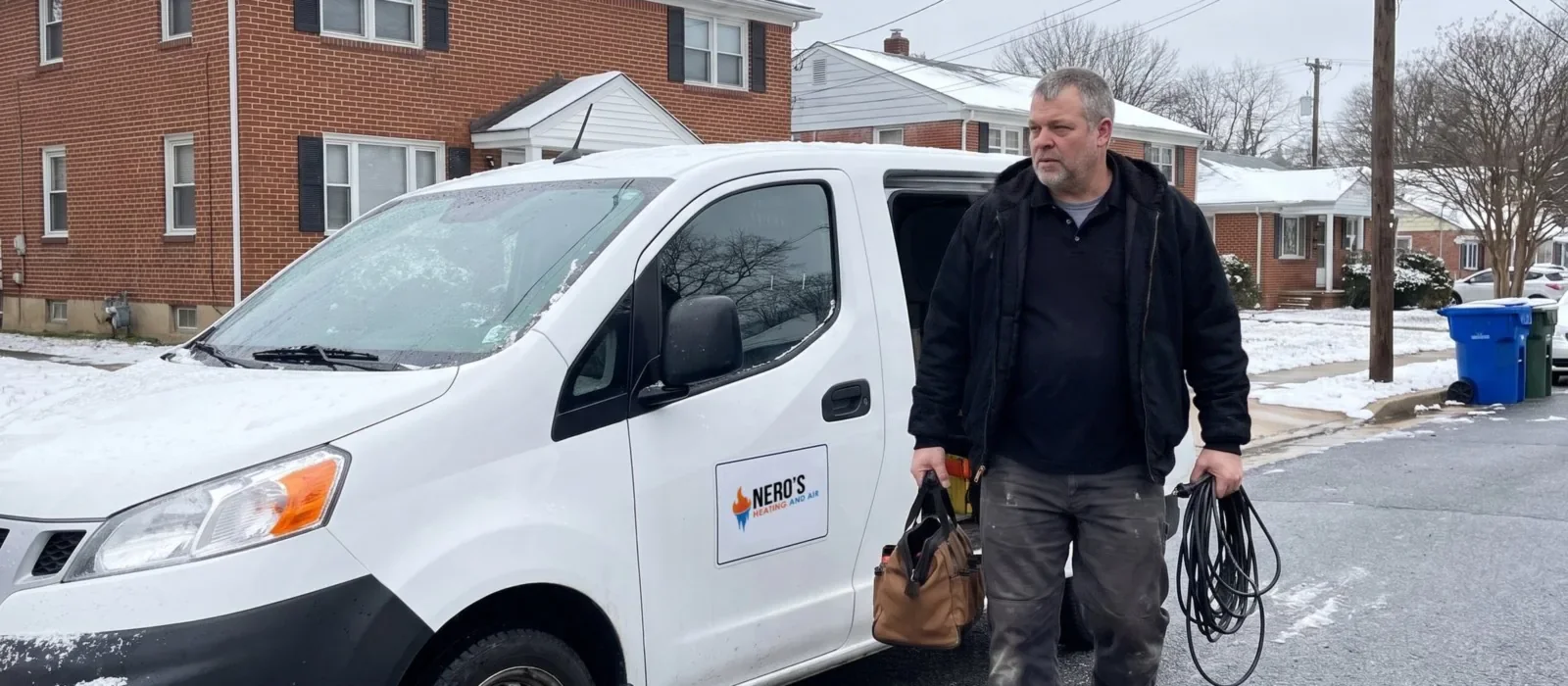

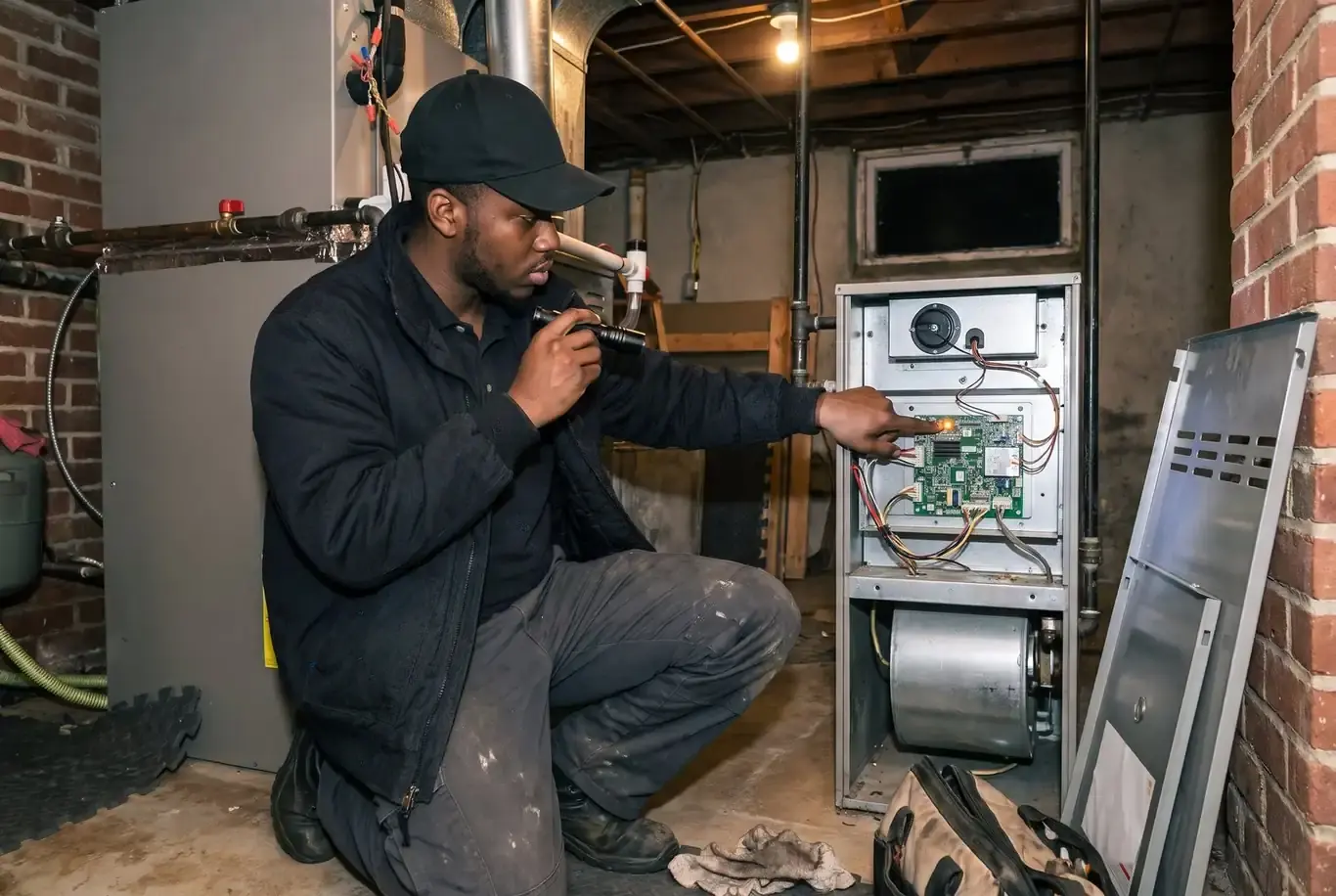



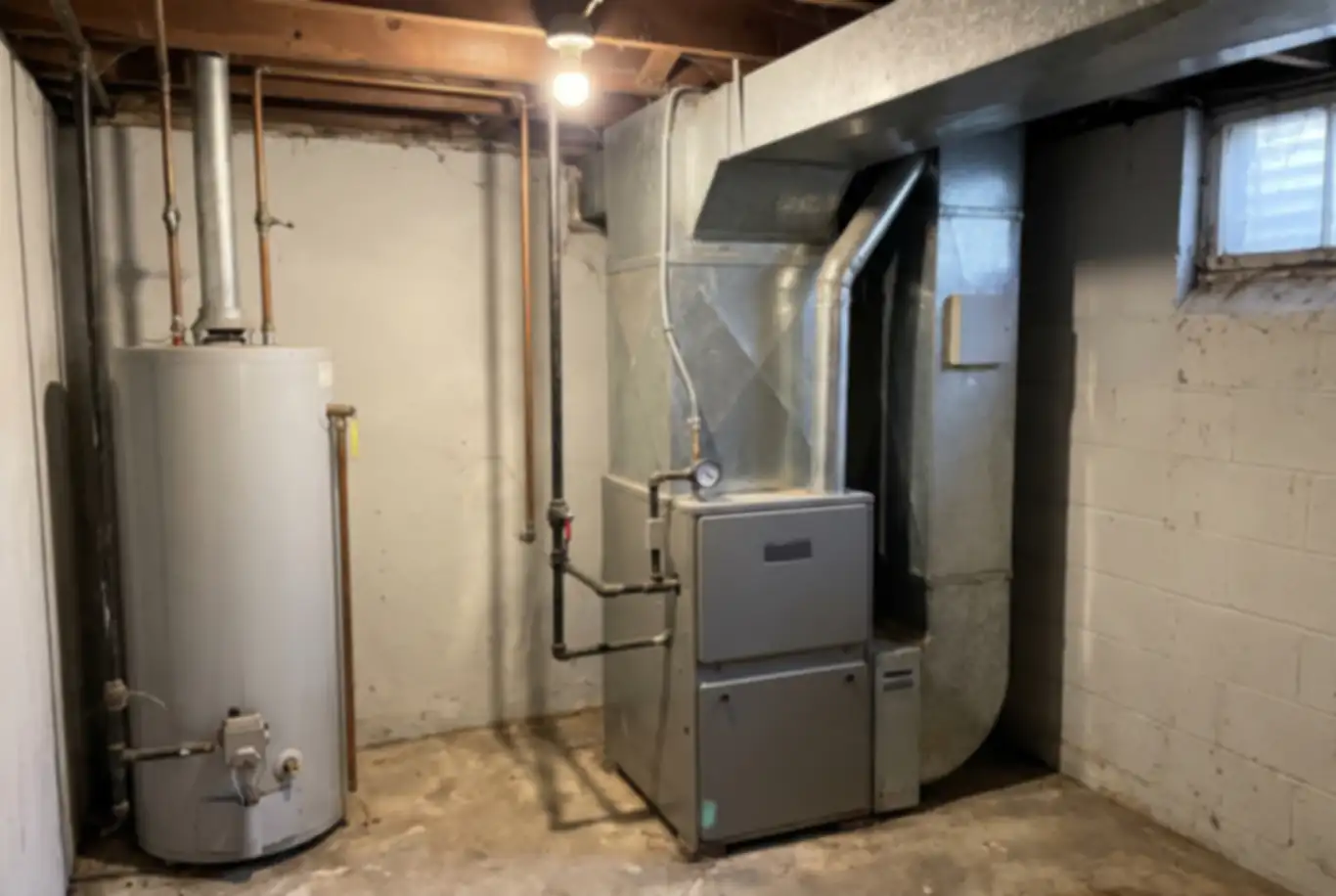
The Reversing Valve, in Both Directions
This is the part that decides whether the system heats or cools. It is switched and watched both ways, because one that sticks will leave you cooling the house in December.
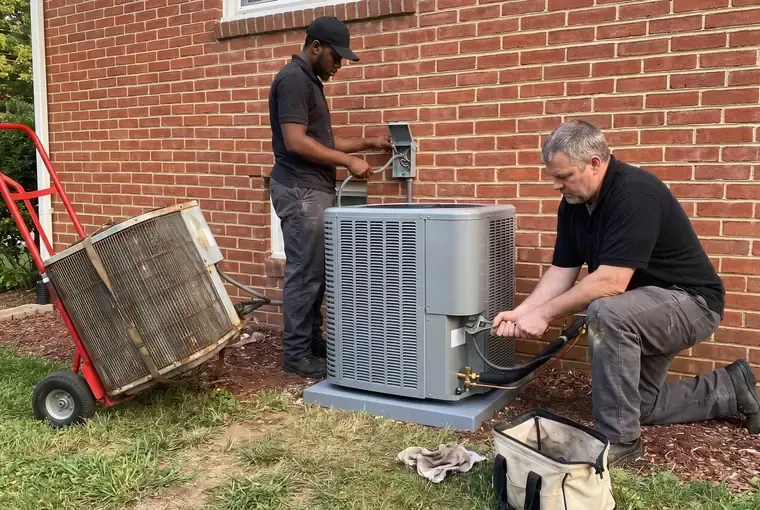
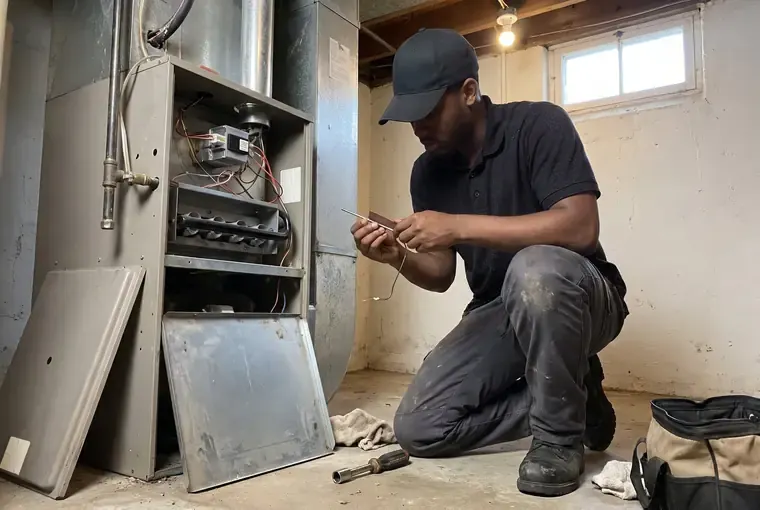
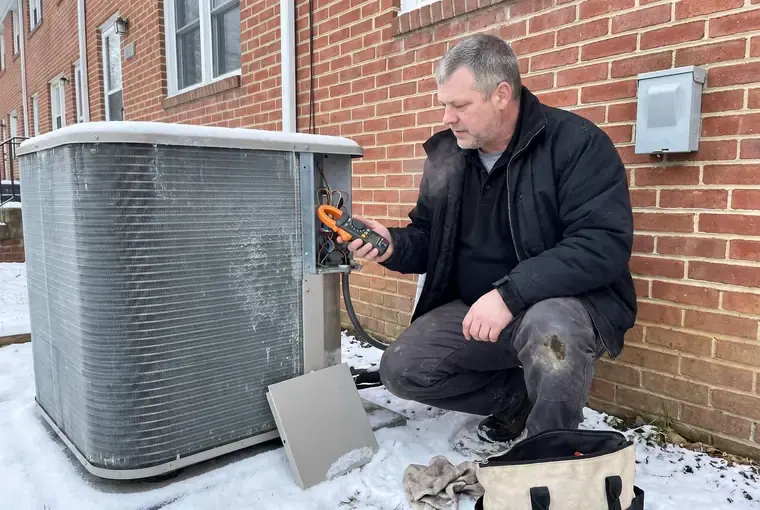

Serving Washington, DC, Prince George's County, Montgomery County & Northern Virginia, including Upper Marlboro, Hyattsville, District Heights and Silver Spring.
An air conditioner rests for half the year. A heat pump never does. It is the same compressor, the same coils and the same fan carrying summer and winter, which means the hours accumulate at roughly double the rate and the parts that wear do so on a shorter clock.
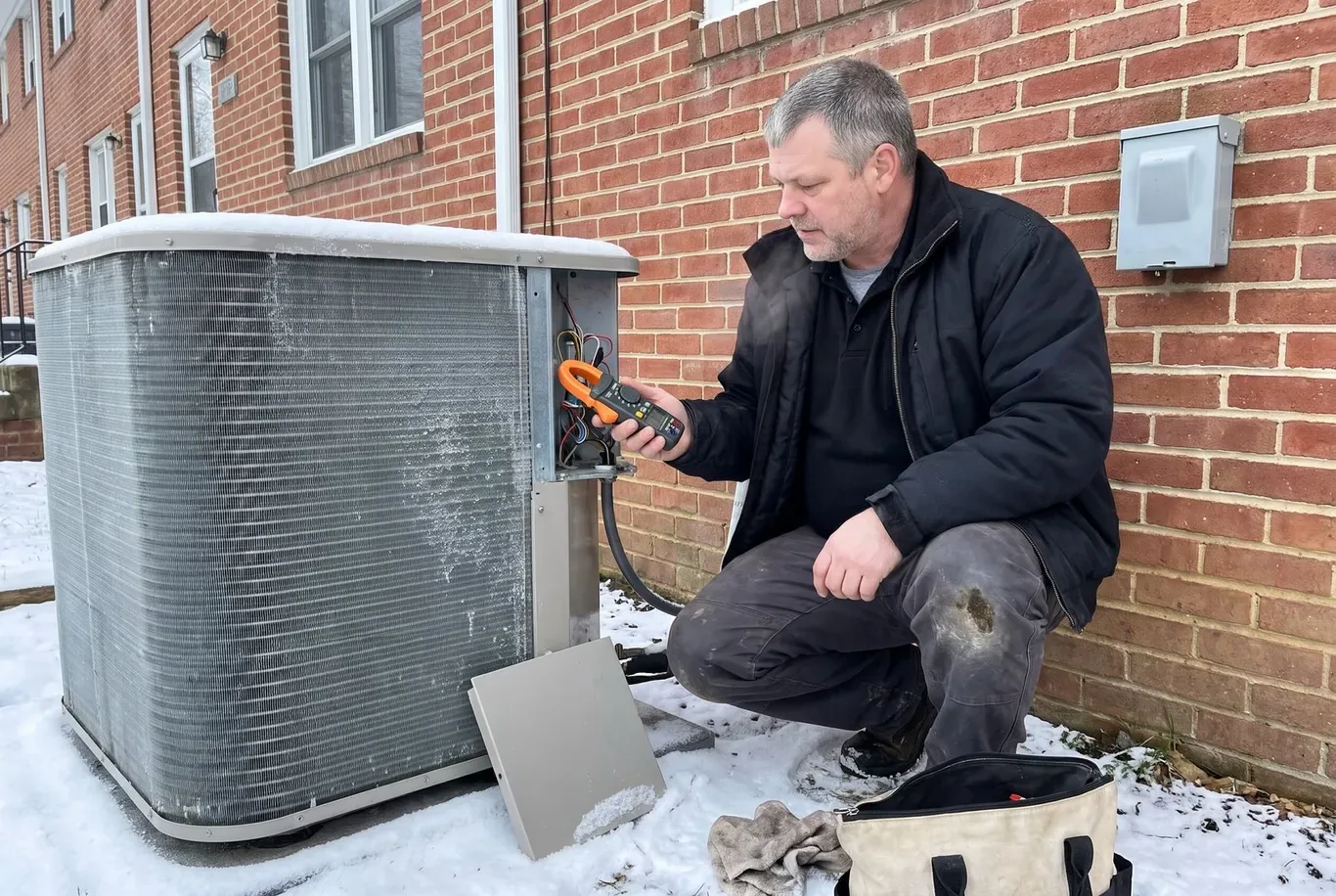
At Nero's Heating & Air, a heat pump visit is run in both modes for exactly that reason. Cooling gets tested first, then the system is deliberately reversed and heating gets tested on its own terms, because a component can behave perfectly well in one direction and fail completely in the other. You end up knowing the system works the way it will need to in January, not just the way it happened to in July.
| Stat | What it means for your system |
|---|---|
| 2 seasons | A heat pump works in both, so the running hours build at roughly twice the rate. |
| 1 reversing valve | The part that makes it a heat pump, and the one a cooling-only visit never touches. |
| 2 jobs | The outdoor coil is the condenser in summer and the evaporator in winter. |
| 12 months | How much of the year that outdoor unit spends exposed and working. |
Most of a heat pump tune-up looks like a cooling tune-up, and then there is a second half that has no equivalent. That second half is what these five cover, and it is why the visit takes longer.
This is the part that decides whether the system heats or cools. It is switched and watched both ways, because one that sticks will leave you cooling the house in December.
The board and its sensor are put through a cycle and timed rather than assumed to work. A defrost that never completes is invisible until the first hard frost proves it.
Strips are checked to confirm they come on when needed, and the lockout settings are checked to confirm they stay off when they are not. Both halves matter on the bill.
Winter meltwater has to leave, not pool under the coil and refreeze. The pad, the base and the clearance beneath get looked at, which a summer visit has no reason to do.
The same duct system moves cooler, higher-volume air in heating mode. Airflow adequate in July can be marginal in January, and it is checked against the heating requirement.
Heat pump maintenance is $150 for two visits a year, because the same system has two different jobs to do. One visit checks how it is cooling, and the other makes sure the heating side is ready when the season changes.
If you are calling because something is already wrong, that is a separate $75 diagnostic visit. Any repair we find is priced before the work begins, and completed repairs carry a 30-day labor warranty.

Two visits are the standard recommendation, and on most heat pumps, it is the right one, because the equipment works in both seasons. There is a real exception, though, and we would rather name it than sell around it.
| Two visits | One visit | |
|---|---|---|
| Who it suits | A heat pump doing the heating and the cooling, which is most of them | A system used almost entirely for cooling, with another heat source carrying winter |
| What the second visit adds | Heating mode, the reversing valve, defrost and the backup strips | Nothing you are using, if winter heat comes from elsewhere |
| What it costs | The agreement, covering both | A single visit, booked when it suits |
| What you risk skipping it | A defrost or reversing fault found by the first hard frost instead | Very little, where the heating side genuinely sits idle |
| Where it goes wrong | Paying twice for a system that only cools | Assuming yours only cools when the backup has quietly been running |
What Our Team Does Differently in the Second Half of the Visit
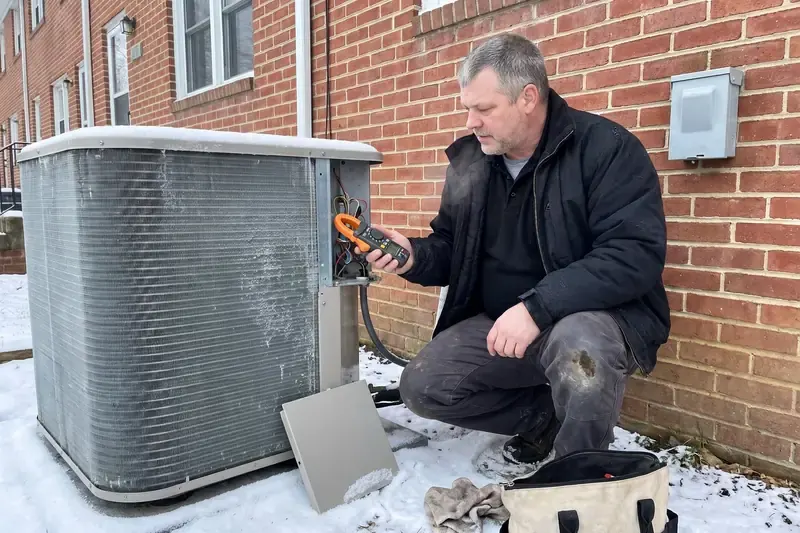
Testing the heating mode in August means deliberately forcing the changeover and watching what the system does. It is the only way to know the reversing valve and the defrost board will still work when the weather finally gets around to asking them.
Factory defaults are written for anywhere at all, not for the DMV in particular. We check the temperature at which backup heat is permitted to engage and adjust it to your house, which is the difference between a normal January bill and a memorable one.
Pressures, temperature differences and defrost timings go on paper at every visit. One set of numbers on its own tells you very little, while the same numbers a year apart tell you exactly what has been drifting and how quickly.
Whether the backup ran a lot, whether it iced up, and whether any room struggled. Those answers point at what to look hardest at.
Whichever season the visit falls in gets tested first, properly and on its own terms, before anything is reversed or forced into the opposite mode.
The changeover is triggered deliberately rather than waiting for it; the reversing valve is watched as it moves, and a defrost cycle is timed from start to finish.
Every reading, what has changed since the last time, and the lockout temperatures as we have left them. Anything needing repair is priced separately.
Heat pump work reaches right across the region, and a tune-up is booked rather than squeezed into a day, so it travels further than an urgent call does. The towns below are where this work goes most often. A town missing from the list is still worth a call.
A heat pump does not get much of an off-season, so maintenance is easiest to schedule before temperatures swing and the system starts working harder. Call us when you want to get ahead of the next heating or cooling season rather than wait for comfort to drop first.
If the heat pump is working normally, book a tune-up. If it is already making unusual noises, icing over, losing heating or cooling power, or refusing to switch modes, call us so we can schedule the right kind of visit.
We can help you find a visit that fits before the next stretch of heavy use, whether you are preparing for cooling season, heating season or both.
“Nero’s Heating & Air saved me in a pinch. I called and within an hour Julian was at my door and fixed my heat within 5 minutes. Unbelievable customer service. Very grateful for the quick response. Highly recommend to others.”
 Caleb Hart
Rinsing from the outside with a garden hose is fine, with the power off and no pressure washer. Anything involving removing panels is better left to the visit.
No. A sealed system does not consume it, so a unit that is low has a leak, and adding more without finding that leak just postpones the same conversation.
No. It runs all winter and covering it traps moisture against the coil. Keeping the top clear of leaves and the base clear of drifting snow is the useful version.
Either, so long as it is before a season of hard use. Fall is the more useful of the two here, because winter asks more of the equipment than summer does.
Usually yes, right up until a major component fails. The visits are what tell you the failure is coming rather than letting it arrive on the coldest night.