



The Balance Point
This is the outdoor temperature where the heat pump alone stops keeping up. Below it, backup heat carries the difference. Where that line falls is the single most important number in the design.

Serving Washington, DC, Prince George's County, Montgomery County & Northern Virginia, including Upper Marlboro, Hyattsville, District Heights and Silver Spring.
Replacing or installing a heat pump is not just about choosing a new unit and setting it where the old one sat. The system has to match the home's heating and cooling load, the airflow the ductwork can handle, and the electrical capacity available to support it.
Nero's Heating & Air looks at all three before recommending equipment. For a replacement, that also means checking whether the existing setup still makes sense or if anything around it needs to change. You get the full installation scope and price in writing before the job moves forward, so you know exactly what is being replaced, what is being added and what the new system is expected to handle.
| Stat | What it means for your house |
|---|---|
| 25 to 40°F | The range a balance point falls in, set by the house rather than the equipment. |
| 30°F | The ceiling a balance point should stay under on a correctly sized system. |
| 62 amps | What a 15 kW backup strip draws while it is running. |
| 100 amps | A common older service size, and where that backup draw starts to be a problem. |
The equipment is the predictable part. What moves both the sizing and the number is the house around it, and on an older DMV property, two of these five turn up far more often than people expect.
This is the outdoor temperature where the heat pump alone stops keeping up. Below it, backup heat carries the difference. Where that line falls is the single most important number in the design.
Electric strips or an existing gas furnace. That choice changes the running cost on every freezing night for the life of the system, and it is worth deciding deliberately rather than by default.
Is there a spare pair of slots in your panel? Backup strips draw real current, and an older hundred-amp service with nothing free is a genuine obstacle rather than a detail.
Heat pump air is cooler and there is more of it, so the ductwork has to move a greater volume than a furnace ever asked of it. Undersized returns show up immediately.
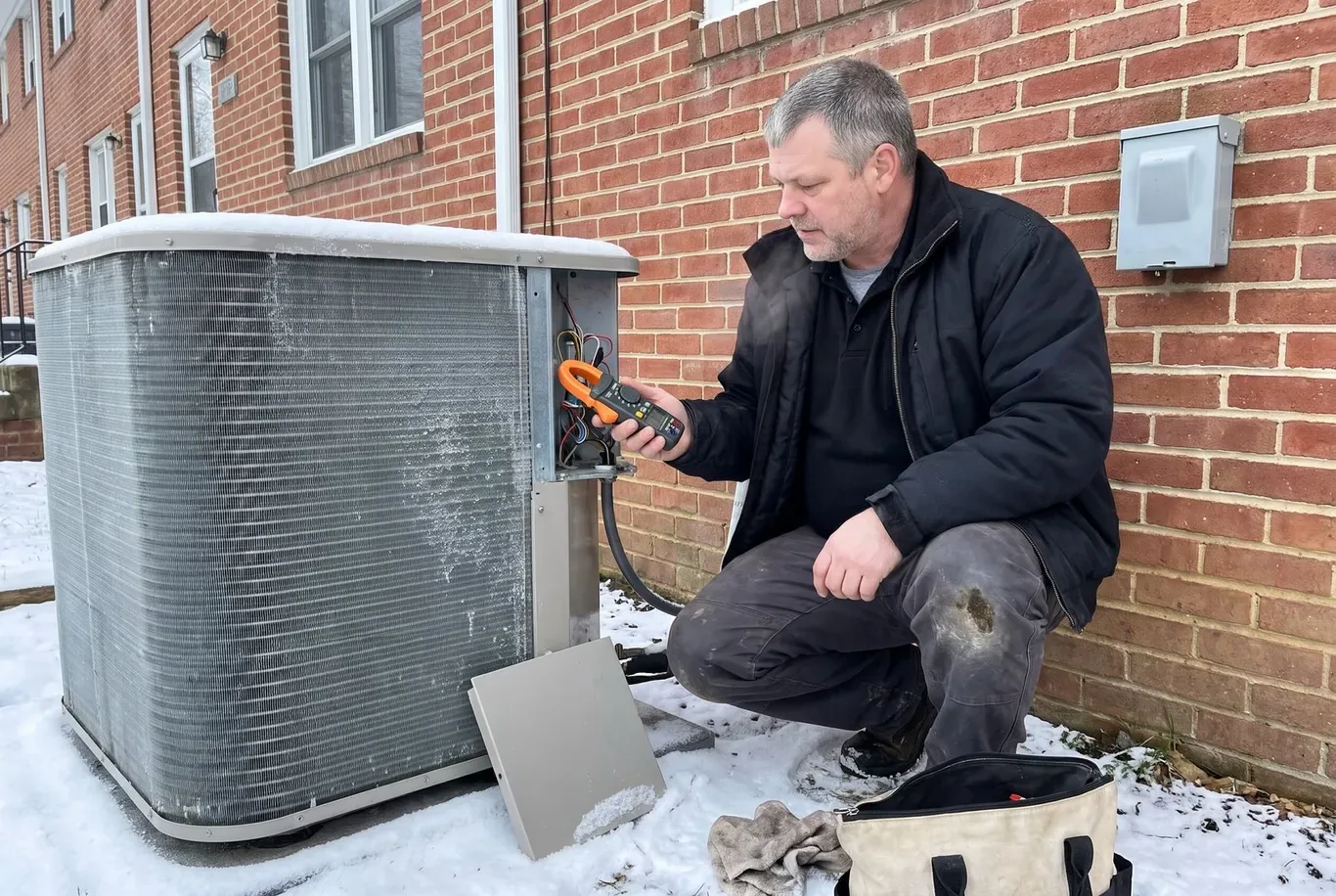
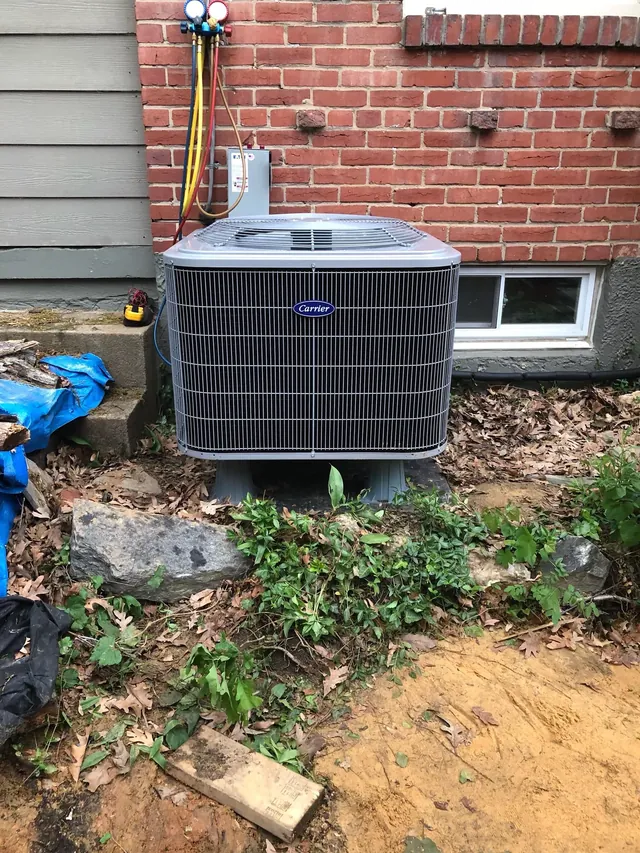
It runs all winter, so it needs to sit clear of roof runoff, drifting snow and the spot where meltwater collects and refreezes. That is a different siting question from an air conditioner.
Coming out to quote a replacement costs you nothing. The $75 diagnostic applies only while the question is still what has gone wrong, rather than what to put in its place.
After that, the number depends on three things: the house's capacity needs, what you choose to carry on cold nights, and whether the panel needs to be worked on first. The figure is written down and fixed at the signature.

Both are real designs and we install both. Pairing a heat pump with an existing gas furnace lets the cheaper fuel take the coldest nights, while electric strips are simpler and need no gas at all. What we will not do is quote strips into a panel that cannot carry them and leave you to find out on install day.
| Electric backup strips | Dual fuel, with the gas furnace | |
|---|---|---|
| What happens below the balance point | Resistance heat takes over, at full electrical draw | The gas furnace takes over and the heat pump stands down |
| What it needs from the house | Panel capacity, and often a dedicated circuit or two | A working furnace, its gas line, and a safe flue |
| What it costs to run in hard cold | The most expensive heat in the house, by some distance | Whatever gas costs that winter, which is usually less |
| What it costs to install | Less, where the panel already has room | More, because you are keeping and integrating two systems |
| The catch | A long cold spell is visible on the bill immediately | You still own a furnace, so you still maintain and vent one |
Three Things We Make Clear Before and After Installation
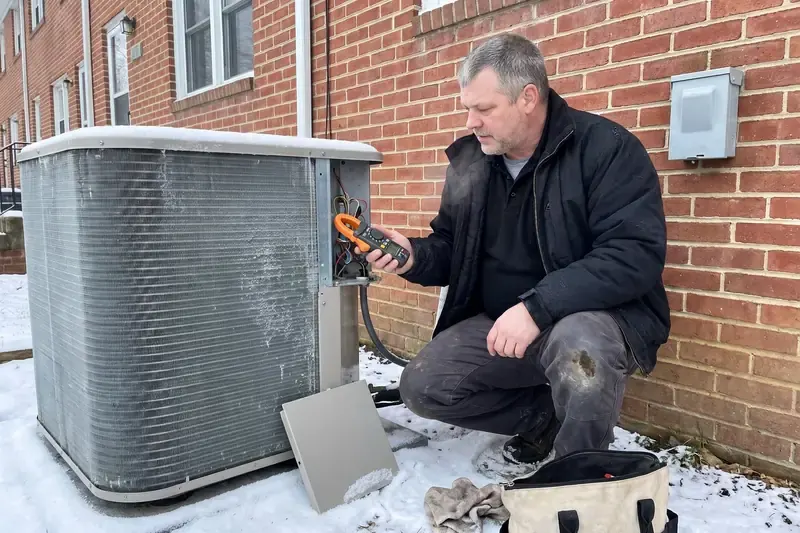
A heat pump, especially one using electric backup heat, can place a significant load on the electrical system. We check the available capacity before equipment is selected so upgrades are identified before installation starts, not halfway through the job.
Every new system is quoted in writing, and once you sign, the price is binding. You can see what the installation includes before anything moves forward, and the completed installation carries a one-year labor warranty.
Installation is not where the relationship ends. Around six months later, our team checks in to see how the heat pump has been performing and whether anything needs another look after the system has had real time to run.
Room sizes, insulation, windows and what the ducts can actually move. The outgoing system's capacity is evidence, not an answer.
The outdoor temperature at which backup takes over, and roughly how many nights a year that means in this region.
Equipment, the outdoor pad, the backup arrangement and any electrical work the design depends on. The figure is binding from the moment you sign it.
The system is run in both modes, the defrost cycle is programmed, and the auxiliary and compressor lockouts are set for your house rather than left at default.
Installation work is booked rather than squeezed into a day, so it reaches further across the region than an emergency call does. The towns below are where this work goes most often, and the list is a guide rather than a boundary. If yours is not on it, it is still worth asking.
Say what you have now and what you want changed about it, because replacing like-for-like and moving from gas to a heat pump are different conversations. Anything about the building that has changed since the last system went in is worth saying out loud. A room added on, insulation improved, a basement brought into use: each of them moves the sizing.
Bring whatever you have been told and by whom. There are good reasons to do it and some poor ones, and the panel usually settles the argument faster than anybody's opinion does.
Say how old it is and whether it still runs well. A sound furnace is worth keeping as the backup rather than scrapping, and that decision changes the whole shape of the quote.
“Nero’s Heating & Air saved me in a pinch. I called and within an hour Julian was at my door and fixed my heat within 5 minutes. Unbelievable customer service. Very grateful for the quick response. Highly recommend to others.”
 Caleb Hart
Most are a single day. Where the electrical service needs work first, or the outdoor pad has to be built up before anything sits on it, allow for a second.
Yes, and that is the same equipment running the other way around. A heat pump is an air conditioner that can reverse, so summer cooling comes built into it.
Programs change and lapse, so what was true last year often is not. Ask at the estimate visit and you will get what currently applies rather than a brochure.
Modern units sit roughly at the level of an ordinary conversation, and quieter on low stages. Where it is placed matters more than the rating does, particularly near a bedroom.
Nothing at all until the power returns. There is no version of a heat pump that runs without electricity, so a generator is the only workaround worth considering.