



Hot Water That Runs Out Sooner Than It Did
The tank has not shrunk. Sediment on the floor is taking up volume that used to hold water, so there is less of it and the burner heats it less efficiently.
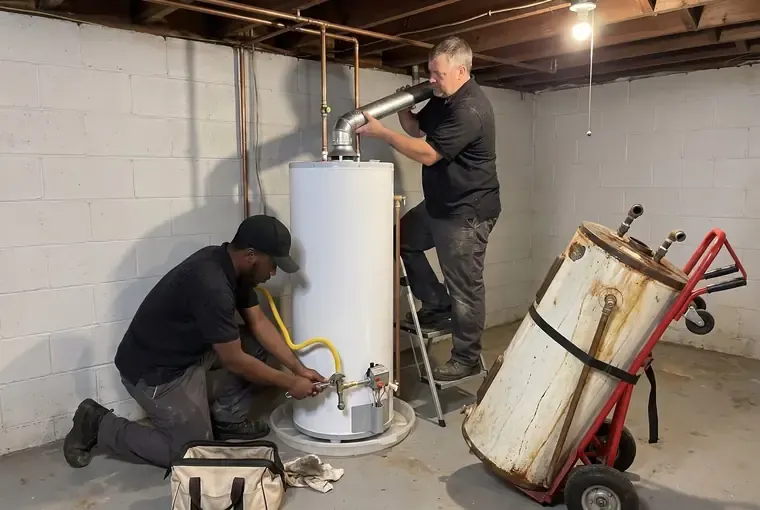

Serving Washington, DC, Prince George's County, Montgomery County & Northern Virginia, including Upper Marlboro, Hyattsville, District Heights and Silver Spring.
Water heater problems usually show themselves before the tank stops working completely. You may notice the hot water running out faster, hear popping or rumbling from the tank, see water around the base, or wait longer than usual for the water to heat.
Nero's Heating & Air starts by finding what changed and which part of the system is causing it. We check the tank, controls, heating components and signs of buildup or wear, then explain what can be repaired and what the repair will involve before any work begins.
| Stat | What it means for your tank |
|---|---|
| 1 anode rod | A sacrificial bar that corrodes in place of the steel tank, until it is gone. |
| 8 to 12 years | Typical service life before replacing a tank beats repairing it again. |
| 40 or 50 gallons | The two common residential sizes, and what decides how long hot water lasts. |
| 120°F | The setpoint most tanks are meant to hold, and the one worth checking first. |
Water heater faults sort into three: the burner or element is not doing its job, the tank is full of something it should not be, or the tank itself has failed. Only the first two are repairs.
The tank has not shrunk. Sediment on the floor is taking up volume that used to hold water, so there is less of it and the burner heats it less efficiently.
That is water boiling underneath a hardened sediment layer and escaping through it. The burner is now heating through an insulating crust rather than heating water.
Is it only on the hot side? Then it is the tank's interior, and usually the anode rod having been consumed. Cold water running rusty too is a plumbing question rather than ours.
Often the thermocouple or the flame sensing arrangement rather than anything structural. This is among the cheaper and more satisfying things that go wrong.
Find out where from before anything else. A fitting, a valve or the drain can all be dealt with. The tank wall itself cannot.
Water heater repair starts with a $75 diagnostic, and that fee is waived on the repair if you move forward. Sunday, after-hours and rooftop visits are $169 and are not waived.
The final price depends on what failed and how much of the tank is still worth saving. A thermocouple, thermostat or heating element is usually a simpler repair. Sediment buildup or a worn anode rod takes more work. If the tank itself has failed, we will tell you plainly rather than put money into something that cannot be repaired.

Almost everything on a water heater is replaceable. The one thing that is not is the tank, and once it has rusted through, there is no repair at any price, by anyone. We would rather you hear that from us than pay somebody to try.
| A fixable fault | A failed tank | |
|---|---|---|
| What you see | Noise, lukewarm water, a burner misbehaving | Water seeping from the body of the tank itself |
| What has happened | A component has worn out or sediment has built up | The steel has corroded through from the inside |
| What it costs | A part, or a flush and an anode rod | A replacement, and the sooner the better |
| How long it buys | Often several more years on a sound tank | Nothing. There is no repair for this |
| Where it goes wrong | Flushing a tank so far gone the sediment was holding it together | Paying for a diagnosis on a tank that is visibly weeping |
What Nero's Heating & Air Checks Before Quoting Anything
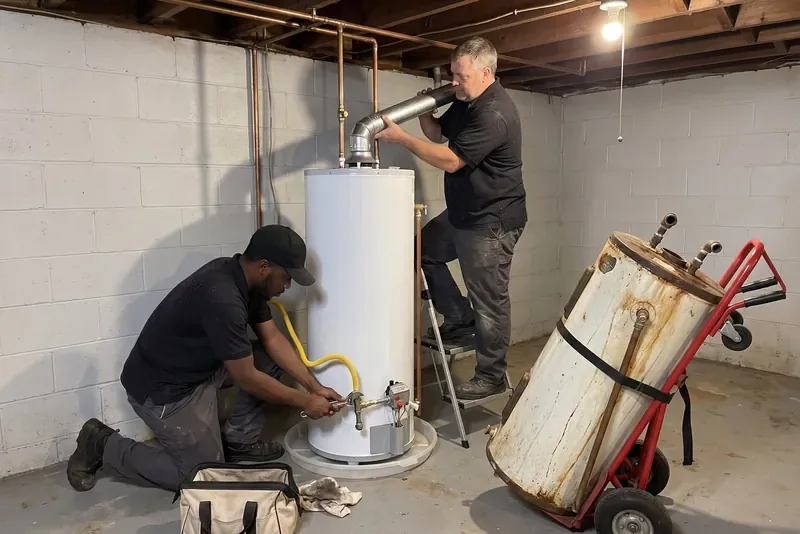
The anode rod is designed to corrode before the tank does. Its condition can tell us a lot about what has been happening inside the heater and whether the tank still has useful life left.
Water on the floor does not automatically mean the tank has failed. It may be coming from a fitting, valve or connection instead. We trace the leak first, because the difference between a small repair and a failed tank starts there.
A water heater can still make hot water and be performing poorly. We look at how well it recovers after use, which can point toward a weak heating element, a burner problem, or buildup inside the tank that is slowing the system down.
Whether hot water runs short, whether there is a noise, and whether anything is wet. Those three sort most faults before we arrive.
The base, the fittings and the anode rod first. There is no point in diagnosing a thermostat on a tank that has already failed.
What it is, whether it is worth doing, and roughly how much life a repair buys on a heater of that age.
The repair is made, the tank brought back up, and the delivered temperature checked at a faucet rather than read off the dial.
Water heaters are in every house in the region, so this work spreads evenly rather than clustering anywhere in particular. The towns below are where these calls come from most often, and the list is a guide rather than a boundary. If yours is not on it, it is still worth asking.
Say roughly how old the heater is and whether it is gas or electric, because those two answers halve the possibilities immediately. Describe what actually changed, whether that is less hot water than before, a new noise, or something wet on the floor. If there is water, say whether it appears constantly or only when the burner has been running.
Check where it starts. Water tracking from a fitting at the top is a very different call from water appearing under the middle of the tank.
Mention whether the smell is only on the hot side. Hot-only points at the anode rod and the tank interior, while both sides points somewhere else entirely.
“Nero’s Heating & Air saved me in a pinch. I called and within an hour Julian was at my door and fixed my heat within 5 minutes. Unbelievable customer service. Very grateful for the quick response. Highly recommend to others.”
 Caleb Hart
Once a year in most DMV homes, and more where the water is noticeably hard. Leaving it longer lets the sediment harden, at which point flushing does much less.
You can, with the gas or power off and a hose on the drain valve. On an older tank that valve sometimes refuses to reseal afterward, which is the real risk.
Usually a reaction between the anode rod and bacteria in the water. Changing the rod type is the common fix, and it costs far less than replacing a heater.
Often, yes. Elements and thermostats are inexpensive and easy to reach, whereas a gas unit adds a burner, a thermocouple and a flue to the list of things that can be wrong.
On an older tank, there is a case for it. A planned replacement costs the same as an emergency one and does not involve a flooded floor first.