


A burning smell from the AC.
Shut the system off at the breaker first, because overheating wiring can start a fire.
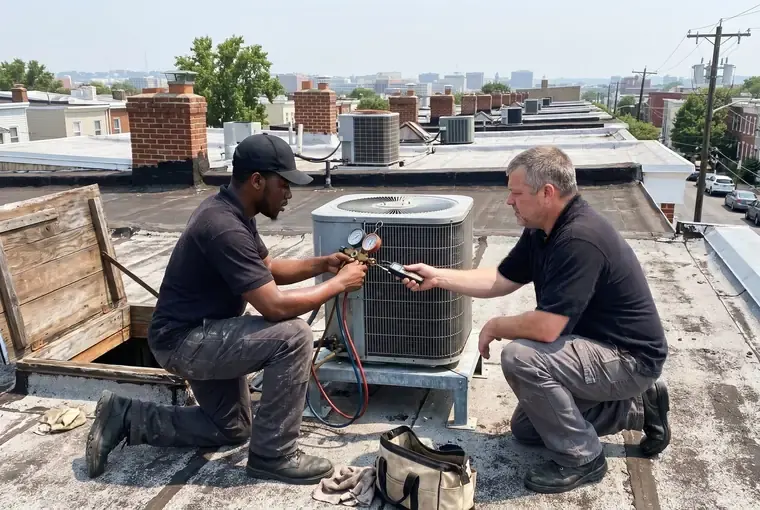

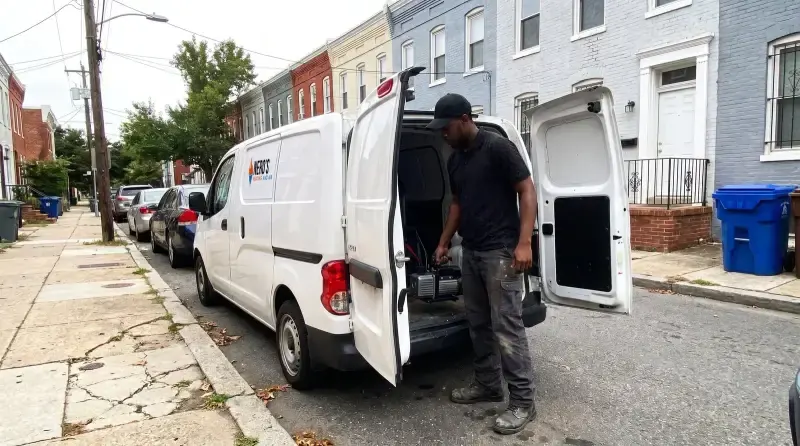
Serving Washington, DC, Prince George's County, Montgomery County & Northern Virginia, including Upper Marlboro, Hyattsville, District Heights and Silver Spring.
Summer here does not let go after dark. Washington's July nights sit near 71 degrees with the humidity still in them, so a house in Hyattsville, District Heights, or Upper Marlboro that lost its cooling at four in the afternoon is often still warm at six the next morning. The top floor of a rowhouse holds that heat longest.
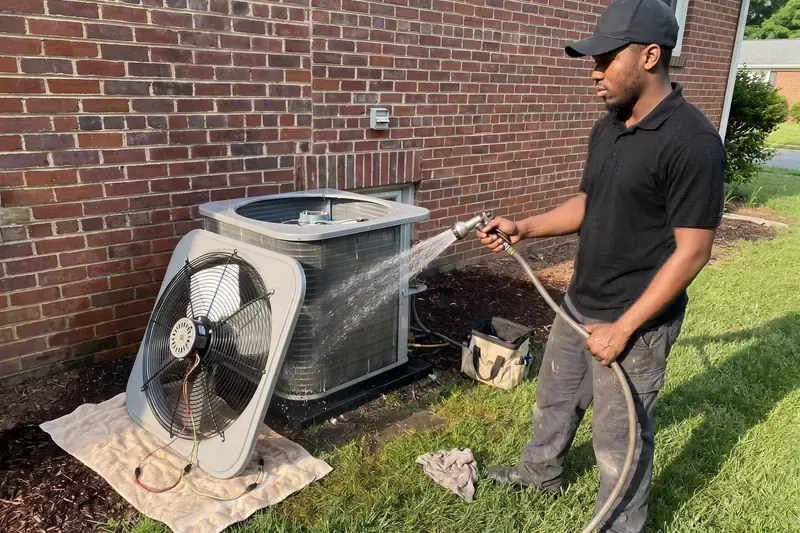
Nero's Heating & Air takes emergency AC repair calls across the DMV, and the first question is what actually failed. If your AC stopped blowing cold overnight, the breaker will not stay in, or water is spreading under the indoor unit, we work through it with you before anyone is dispatched. You end up knowing what we think broke, what tonight would cost, and whether waiting is the cheaper call.
| Stat | What it means on the night |
|---|---|
| 95°F | The heat index at which the District opens its emergency cooling centers. |
| 71°F | Washington's average July overnight low, so a hot house does not reset by morning. |
| 1 to 4 hours | How long a frozen coil needs to thaw before any pressure can be read. |
| 90°F | Above this indoor temperature a fan raises body temperature instead of lowering it. |
Not every failure needs someone out tonight, and a few genuinely do. The faults below fall into three groups: electrical problems that carry a fire risk, water that damages your house the longer it sits, and heat that's stopped being a comfort issue and started being a safety one. The last one on the list is the one that usually keeps until morning.
Shut the system off at the breaker first, because overheating wiring can start a fire.
A compressor shorted to ground keeps feeding current into a fault.
A blocked drain damages ceilings and floors long before it damages the equipment.
Nothing can be measured until that thaws, so the clock starts before anyone arrives.
Infants, older adults, and anyone unwell set the timing here, rather than the equipment does.
Often airflow or charge, and this one usually holds until a standard appointment.
Our diagnostic is $75 and is waived on the repair, while Sunday, after-hours, and rooftop visits are $169 and are not waived. That fee pays for someone coming out and finding the fault, not for fixing it. What the repair adds on top depends on the part, the labor it takes, and whether that part is on the van or has to be ordered when the supply house opens. You see and approve that figure before anything is opened up.
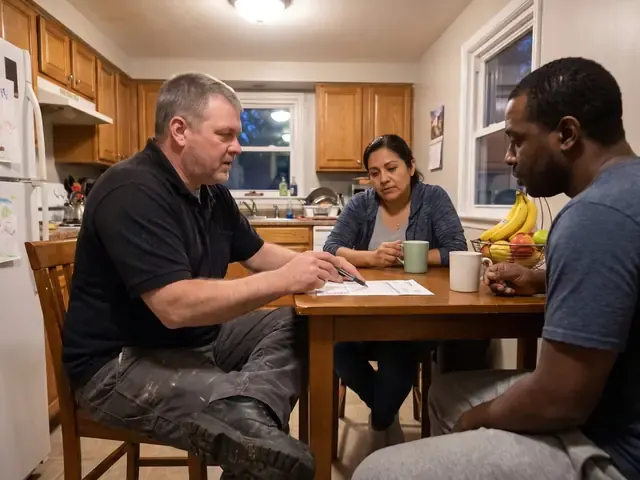
Nine out of ten people who call us after hours decide to wait for the morning, and most of the time they are right to. This is roughly how we think it through with you on the phone, before anyone is dispatched and before the emergency fee applies at all.
What we will not do is take the emergency fee to get a system limping through the night when the real repair needs a part nobody can supply before morning. We will say that on the phone, and it costs us the call.
| Wait for a standard appointment | Call us out after hours | |
|---|---|---|
| What the visit costs | The diagnostic, waived if you go ahead with the repair | The emergency fee, charged on top and not waived |
| When someone looks at it | The next working day, same or next day depending on the route | That night, when a technician is reachable and the fault is worth seeing in the dark |
| What tends to get fixed | Most faults, with the part either on the van or collected that morning | Electrical and drainage faults. A part that has to be ordered still waits for the supply house |
| What the wait costs you | A hot night, and on most faults nothing beyond that | Nothing, though water and burning smells get more expensive by the hour |
| Who should not wait | Anyone whose fault is on the first half of the list above | Homes with infants, older adults, or anyone unwell, on a heat emergency night |
What Changes When You Call Us
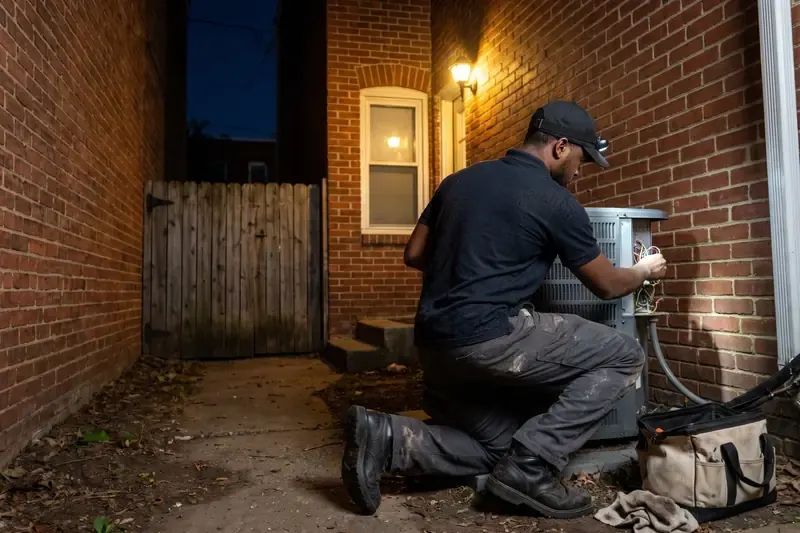
Nero's Heating & Air works the fault through with you on the phone first, because what you describe decides whether this is a tonight problem or a morning one. That conversation costs you nothing either way.
An after-hours call at Nero's Heating & Air does not get handed to someone reading from a script. The judgment about what is worth coming out for is made by people who do the repairs themselves.
Nero's Heating & Air diagnoses the fault and prices the repair, even at the hour when a new system is the easiest thing in the world to sell. If the system genuinely is finished, that conversation happens in daylight, in writing.
What it sounds like, what it smells like, what the thermostat reads and what the house reads. Those four answers narrow the fault more than the model number does.
We tell you what we think failed, whether it gets worse before morning, and the figure for tonight against the figure for a standard visit. That call is not charged for.
Plenty of people hear the answer and book the morning instead. That is a normal outcome of the conversation rather than a lost customer.
Electrical and drainage faults are usually finished on the visit. If a part has to come from a supplier, we tell you that before you agree to the visit.
Cheverly is home base, but on a night call the map matters less than you would think. The distance that counts is from whoever is already out, not from the shop. The list below is where these calls come from. Coverage at the edges shifts week to week, so a town that is missing here is still worth a phone call.
The system's age, the brand on the outdoor unit, and what changed just before it stopped. A storm, a power outage, a filter change, or another company's visit last week all point somewhere. If you can safely read the label on the equipment, have it in front of you. It saves a round of questions while your house is hot.
Leave it off. A system that has iced up, tripped a breaker, or started smelling like something burning is safer turned off at the breaker than turned back on to test. Tell us what it did before you shut it down.
Say so, and we will book you into the standard schedule instead. Same or next day, depending on how the day's route runs. Nothing about the repair itself changes, and the emergency fee does not apply.
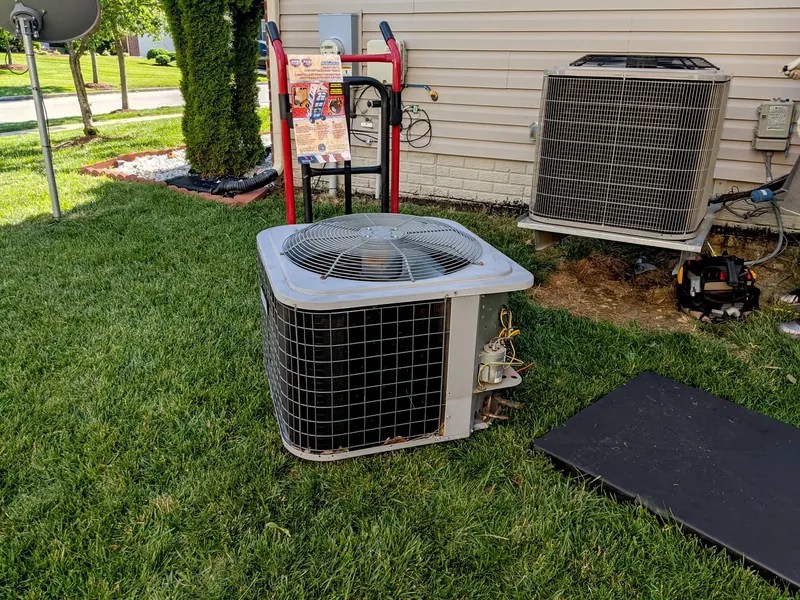
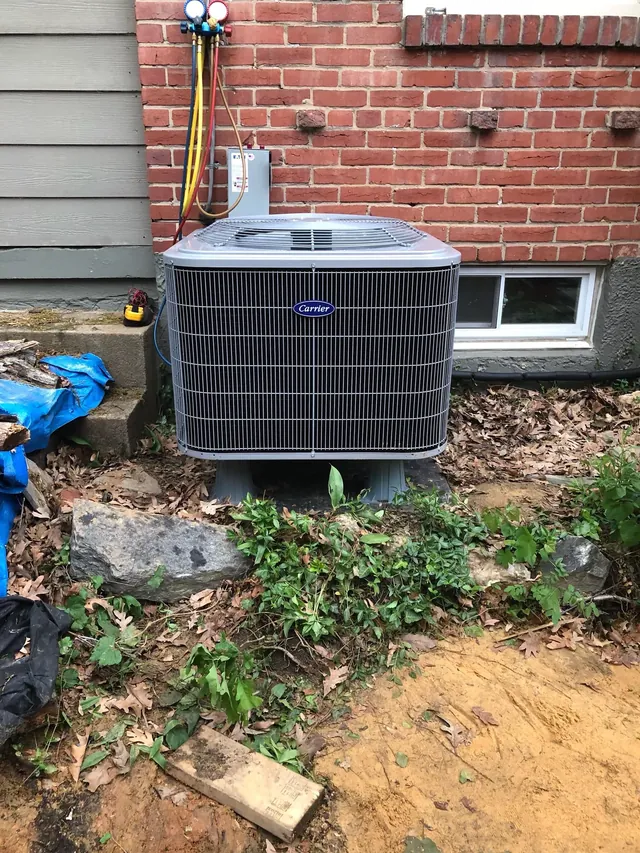
“[He] explained us why one of the older systems was not communicating well with our Nest thermostat and why instead of repairing and wasting our money we should consider a newer more efficient communicating system.”
 Rohit S.
Only where the lease provides it. A landlord who supplies air conditioning in the District must then hold 78 degrees indoors between mid May and mid September. Maryland covers only larger buildings.
In a heat wave, yes. A system can run fifteen hours or more holding temperature, and long steady cycles wear a compressor less than switching on and off repeatedly.
For one room, yes. Around 20 BTU per square foot cools a bedroom, so a 5,000 BTU unit covers most sleeping spaces until the system is back.
Small household leaks rarely cause lasting harm, though the vapor sinks and can bring on headaches, dizziness or nausea. Ventilate the room and keep children and pets clear.
No. The system removes heat at one rate whatever the number reads, so a lower setting only makes it run longer and costs you more on the bill.