



A Radiator Cold Across the Top
That's air. It rises to the highest point in the panel and sits there, so hot water can't reach the top. Bleeding lets it out and it's the one case you may never need us for.

Serving Washington, DC, Prince George's County, Montgomery County & Northern Virginia, including Upper Marlboro, Hyattsville, District Heights and Silver Spring.
Pre-war rowhouses in DC, Mount Rainier and Hyattsville are full of cast iron that has been on the wall longer than anyone living in the house. The panels themselves almost never fail. What goes wrong is what reaches them, and a radiator is unusually good at telling you which part of that journey broke.
At Nero's Heating & Air, we bleed, balance, and repair radiators across DC and the Maryland suburbs. If one room never warms up while the rest are fine, or the same panel needs bleeding every winter, the answer is usually somewhere specific rather than everywhere. You end up knowing what's wrong, whether it's something you can do yourself, and what it costs if it isn't.
| Stat | What it means for your radiators |
|---|---|
| Top vs bottom | A radiator that is cold at the top points to a different problem than one that is cold at the bottom. |
| 5 minutes | Bleeding a single radiator usually takes only a few minutes with a bleed key and cloth. |
| Lowest first | When bleeding several radiators, start downstairs and work your way up through the house. |
| Decades | Cast-iron radiators can stay in service for decades when the system around them is properly maintained. |
Put your hand flat on a cold radiator and work down it. Whether the cold part is the top, the bottom or all of it separates three completely different faults, and one of the three you can fix yourself in five minutes without calling anybody.
That's air. It rises to the highest point in the panel and sits there, so hot water can't reach the top. Bleeding lets it out and it's the one case you may never need us for.
That's the opposite fault and it isn't air. Sludge settles along the floor of the panel over years and blocks the flow through it, so the bottom stops heating while the top still does.
Air won't do this and neither will sludge. It's usually a valve closed or seized on that radiator, or a loop that's drifted out of balance so the flow is going somewhere easier instead.
Is it always the same panel? Air that keeps coming back isn't really a radiator fault. Something is drawing it into a sealed system, and that question belongs on the boiler side.
Does the panel heat evenly and still lose the room? It may simply be too small for what the room became after an extension, a conversion, or the day somebody boxed it in.
Radiator work can be as simple as getting air out of the system or as involved as clearing a blocked panel. Bleeding and rebalancing usually sit at the lower end, while replacing a seized valve, flushing buildup or removing a radiator to clear it takes more time and labor.
The visit starts with a $75 diagnostic, which is waived on the repair if you move forward. Sunday, after-hours and rooftop visits are $169 and are not waived. Once we know what the system actually needs, you get the price before any work begins.
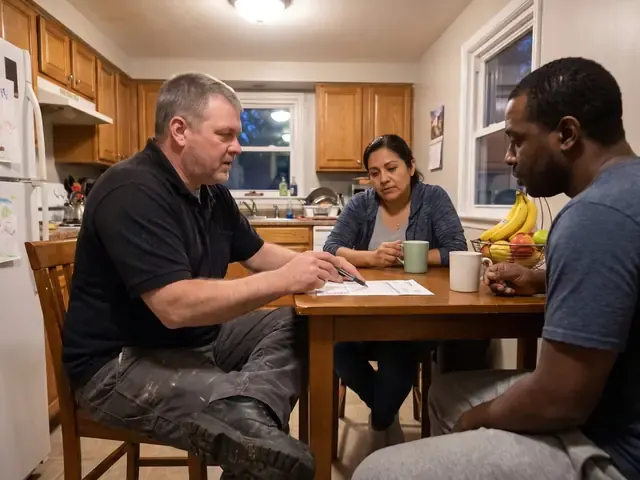
A radiator that is cold at the top often has trapped air and may only need bleeding. When the bottom stays cold, the whole panel refuses to heat, or the same problem keeps returning, there is usually more going on in the system.
| Likely Needs Bleeding | Likely Needs Repair or System Work | |
|---|---|---|
| What you notice | Cold across the top but warmer below | Cold at the bottom, cold all over, or repeatedly losing heat |
| What may be happening | Air has collected inside the radiator | Sludge, a valve problem, poor circulation or another system fault |
| What the work involves | Releasing trapped air from the radiator | Checking valves, flow and the rest of the heating loop |
| How involved it is | Usually a simple service | May require balancing, valve work, flushing or further diagnosis |
| When to have it checked | If bleeding does not restore even heat | If the problem returns or affects more than one radiator |
What Nero's Heating & Air Does Differently Here
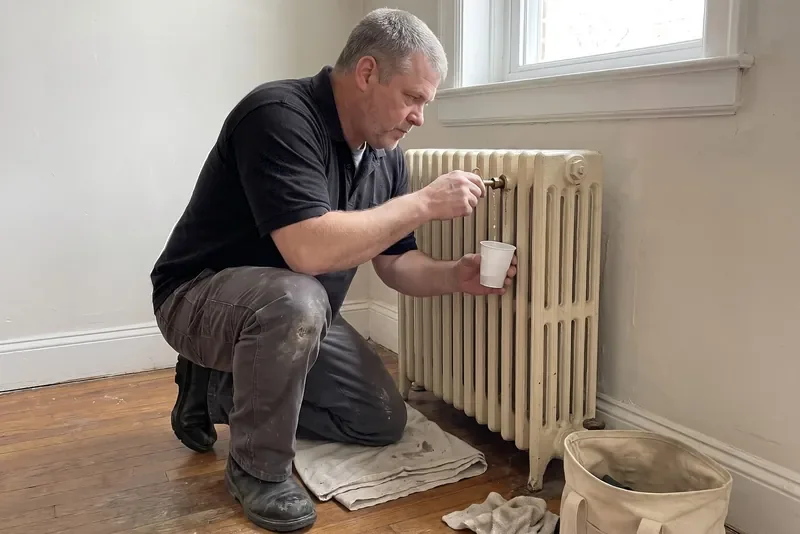
Some radiator problems come down to trapped air and may only need bleeding. If the symptoms point that way, we will say so instead of treating every cold radiator like a major repair.
Bleeding removes trapped air, but it does not correct poor circulation through the rest of the system. When one room heats while another stays cold, we check how water is moving through the loop and whether valves, flow or balancing are part of the problem.
Nero's Heating & Air holds Maryland HVAC/R license HVAC R 47671, along with a Master HVAC license and EPA 608 certification. The company also carries general liability and workers' compensation coverage, so you can verify who is working on the heating system before the visit begins.
Which room, and whether the cold part is the top, the bottom, or the whole panel. Those three answers point to three different faults before anyone sets off.
Every radiator felt top and bottom, valves checked open, and the pressure read at the boiler, because a distribution fault and a supply fault can look identical from one room.
Whether it's air, sludge, a valve, or a balance, what the work involves, and the figure. Nothing starts until you've said yes to it.
The loop is balanced, the system is brought back to pressure, and the radiator you called about is checked, warm, top to bottom, before we leave.
Radiator heat sits in the older housing stock, so these calls come from DC, the inner Prince George's towns and the parts of Montgomery County built before the war far more than from the newer suburbs.
If your town is not below, it is still worth asking.
Tell us which room, and put your hand on the radiator before you phone so you can say whether it's cold at the top, cold at the bottom or cold all through. That one answer changes what the technician brings. Mention it too if the same panel has needed doing before, because a fault that keeps returning is a different conversation from one that has just appeared.
Say which ones you did and whether the pressure dropped afterward. If the panel warmed up and then went cold again within weeks, that's the useful detail and it points somewhere quite specific.
That usually isn't the radiators. Check the boiler's pressure gauge first, tell us the number, and we'll work out on the phone whether this is a radiator visit or a boiler one.
“Nero’s Heating & Air saved me in a pinch. I called and within an hour Julian was at my door and fixed my heat within 5 minutes. Unbelievable customer service. Very grateful for the quick response. Highly recommend to others.”
 Caleb Hart
Hot enough that you would not keep a hand on it, evenly from top to bottom. Merely warm all over points at the supply temperature rather than the panel itself.
Sometimes, depending on whether the boiler and the pipework have any capacity left. Adding one without checking often means the new radiator heats beautifully while two older ones stop.
Yes, though it has to be isolated at both valves and drained first. Wall-hung cast iron is heavy enough that two people and a plan beat enthusiasm on your own.
Barely, if it's a thin coat. Layers built up over decades do insulate, though, and metallic finishes cut radiant output rather more than ordinary emulsion or gloss does.
You can, but not fully on every radiator at once. Closing too many raises pressure in the loop and starves the rest, which is how balance drifts in the first place.