



Condensation Keeps Showing Up on the Windows
Water collecting on the inside of the glass usually means indoor moisture is meeting a cold surface. The amount matters, along with the outdoor temperature and the humidity level inside the house.

Serving Washington, DC, Prince George's County, Montgomery County & Northern Virginia, including Upper Marlboro, Hyattsville, District Heights and Silver Spring.
Dry air can leave you dealing with static, irritated skin and shrinking woodwork. Too much humidity can show up as condensation, musty rooms or a house that still feels clammy even when the temperature is comfortable. The tricky part is that not every symptom points where you expect it to.
Nero's Heating & Air checks the humidity level before recommending equipment. We install whole-home humidifiers and dehumidifiers when the house actually needs one, and we will say so if the problem is coming from somewhere else. The goal is to fix the moisture problem you have, not simply add another machine to the HVAC system.
| Stat | What it means for your house |
|---|---|
| 30 to 50% | The indoor humidity band to aim at, in both directions and both seasons. |
| 2 humidifier types | Bypass and steam, and only one of them works when the furnace is off. |
| 50 to 70 pints | What a whole-home dehumidifier removes daily, against 30 to 50 for a portable. |
| Below 30% | Where a heated DMV house tends to land in January without any help. |
Humidity problems tend to show up in the house before they show up on a thermostat. Some signs point toward air that is too dry, others toward excess moisture, and a few can have another cause entirely.
Water collecting on the inside of the glass usually means indoor moisture is meeting a cold surface. The amount matters, along with the outdoor temperature and the humidity level inside the house.
Frequent static shocks, gaps opening in wood floors or trim, and a noticeably dry feel during heating season can all point toward indoor air that is too dry.
A basement that feels noticeably heavier or develops a musty smell during humid weather may be holding more moisture than the rest of the house. We check the humidity level before deciding whether dehumidification is the right answer.
Temperature and humidity are not the same thing. If the house reaches the thermostat setting but still feels sticky, the cooling system may not be removing enough moisture during its run cycles.
Sometimes, humidity is not the problem at all. If the measurements fall where they should, we look elsewhere instead of recommending equipment that will not solve the complaint.
A new installation starts with a free estimate. We check the humidity where you are actually feeling the problem, then figure out what size system makes sense for the house instead of guessing from square footage alone.
If you already have a humidifier or dehumidifier that is acting up, the $75 diagnostic applies and is waived on the repair if you move forward. For new whole-home equipment, the price comes down to the unit size, where it needs to go and how easily it can connect to the existing ductwork. You see the full number before anything gets installed.

Whole-home equipment treats the whole house and needs no emptying. A portable costs a fraction and handles one room. For a single damp basement with a floor drain nearby, the portable is often the sensible buy, and we will tell you so rather than quote the ducted version.
| Whole-home | Portable | |
|---|---|---|
| What it treats | Every room the ductwork reaches | The room it is standing in |
| What it costs | Installed equipment, quoted and installed | A fraction of that, off the shelf |
| What it asks of you | Almost nothing, once it drains away | Emptying a tank, or a hose to a drain |
| When it is right | A whole house out of band, or a humidifier tied to the heating | One damp basement, or one dry bedroom |
| Where it goes wrong | Installing ducted equipment to solve one room's problem | Expecting one portable to change a whole house |
What Nero's Heating & Air Does First
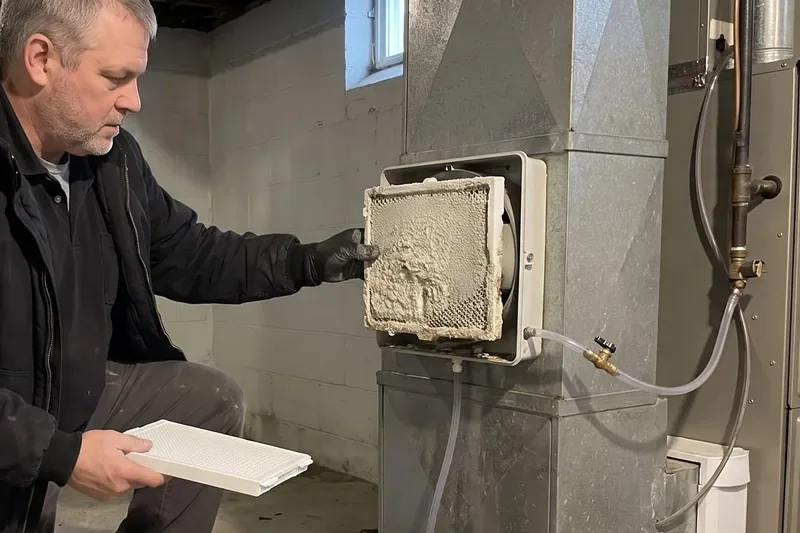
Humidity is one of the few things in this trade settled by a cheap instrument in two minutes. We read the room you have complained about and one you have not, because the comparison tells you whether the problem is the house or that room.
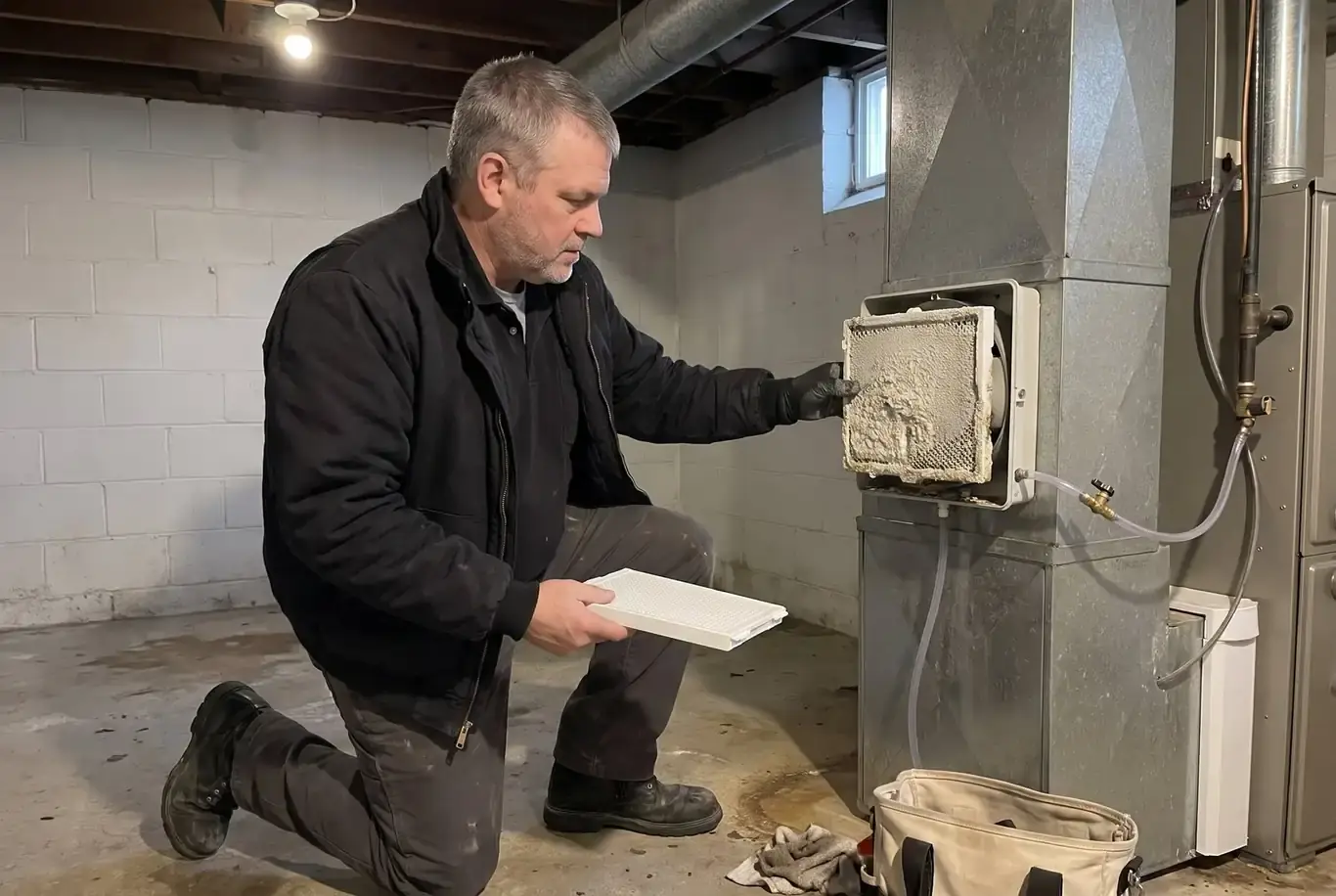
It borrows air from the supply duct, so on a mild day with the heating barely firing it adds very little. If your house needs moisture regardless of whether the furnace is on, that points at a steam unit rather than the cheaper option.
If water is coming through a foundation wall or a bathroom fan is venting into an attic, a dehumidifier treats the symptom forever. We will point at the actual cause, tell you it is somebody else's trade, and leave it there.
Once we know what the house needs, we look at the ductwork, drainage and available space to decide where the humidifier or dehumidifier can work properly without complicating the rest of the HVAC system.
The equipment has to work with what is already there. We map out the duct connection, drain route and controls before installation starts so you know what is being added and where it will go.
The new equipment is mounted, connected to the HVAC system and tied into the required drainage and controls. We then check the connections before putting the system into operation.
We do not leave the equipment sitting on a factory default. We set an appropriate starting level, show you how the control works and explain what changes you may notice as the house settles into the new humidity range.
This work spreads across the region, though the damp basements cluster in the older housing and the dry winters affect everybody. The towns below are where these calls come from most, and the list is a guide rather than a boundary. If yours is missing, it is still worth asking.
You do not need to decide between a humidifier and dehumidifier before calling. Tell us what has been bothering you at home, whether that is dry air, condensation, a damp basement or rooms that never feel quite comfortable. We can help you get the right visit scheduled from there.
If you are unsure whether whole-home equipment even makes sense, call or text us first. We would rather help you understand the next step than have you book the wrong service.
Our team includes Filipino-speaking staff who can help with scheduling and questions, if that makes the conversation easier.
“[…] They actually took the time to look at my entire existing HVAC setup and figure out why I wasn’t getting the airflow I should have been getting. They found several issues, corrected them, opened up the system, improved the ductwork, made my returns larger, and massively improved the airflow in my home. […]”
 Kwame East
Slightly, at the same thermostat setting. Moist air carries heat to the skin more readily, which is why a dry house feels colder than the number on the wall suggests.
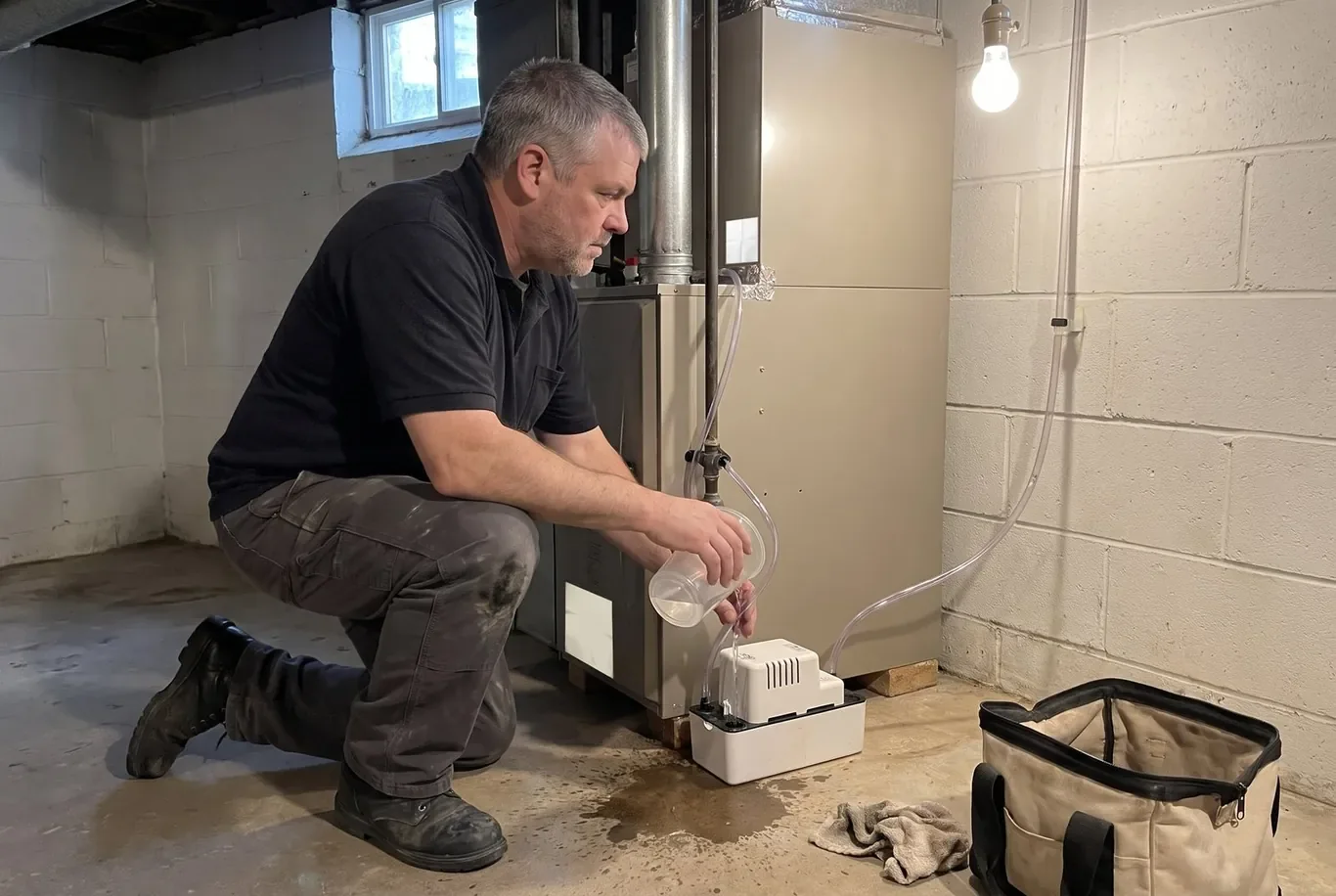
Yes, or a condensate pump in the places gravity will not reach. That is one of the things that decides where the unit can practically be installed in the first place.
Only certain models will. Standard units ice up below about sixty degrees, so a cold crawlspace needs equipment specifically rated for low temperature operation to be any use at all.
Less than most people expect, and less than the cooling it takes some load off. A whole-home unit running in summer is a modest addition to a bill.
They can be, if run above the band. Dust mites and mold both do better in humid air, which is why the upper limit matters as much as the lower one.