



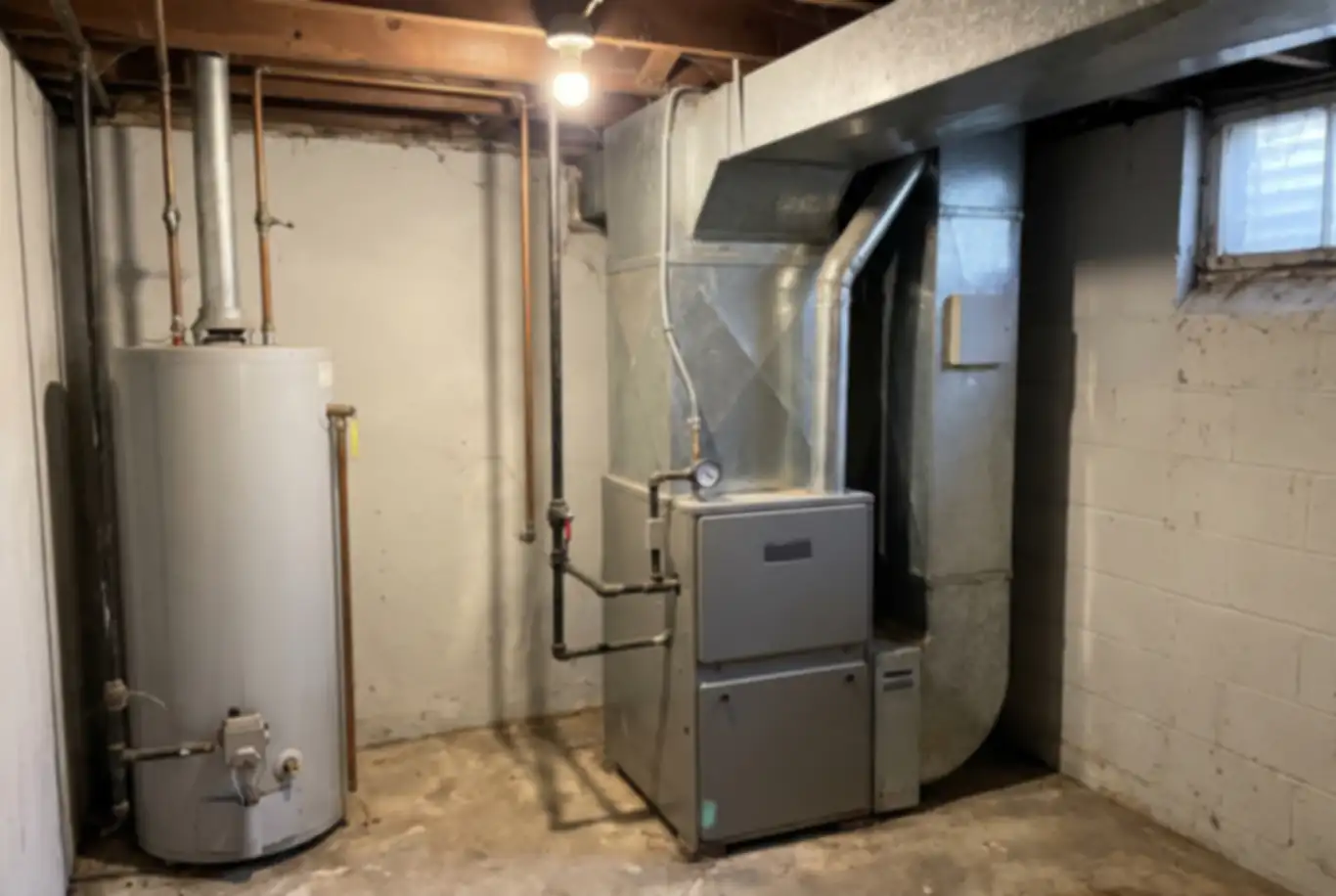
Water Dripping Under the Boiler Relief Valve
Is there a bucket under a pipe near the boiler? That valve opens at 30 psi, so one that weeps is telling you pressure climbs too far when the system heats. The valve is the messenger here.
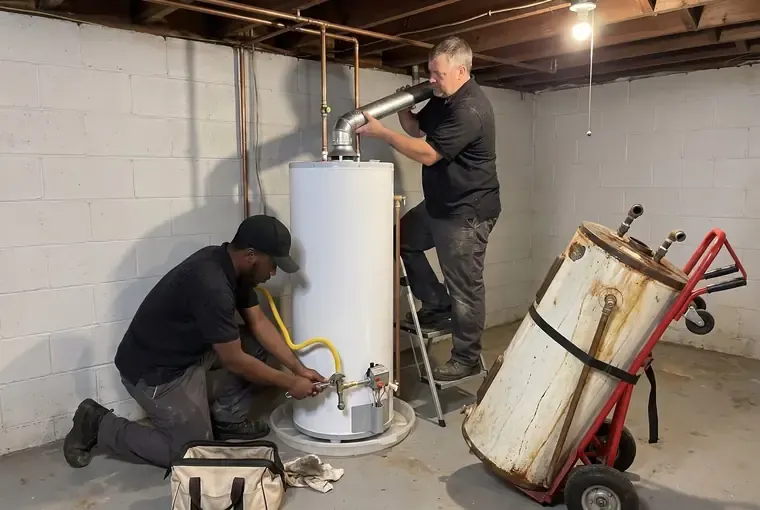
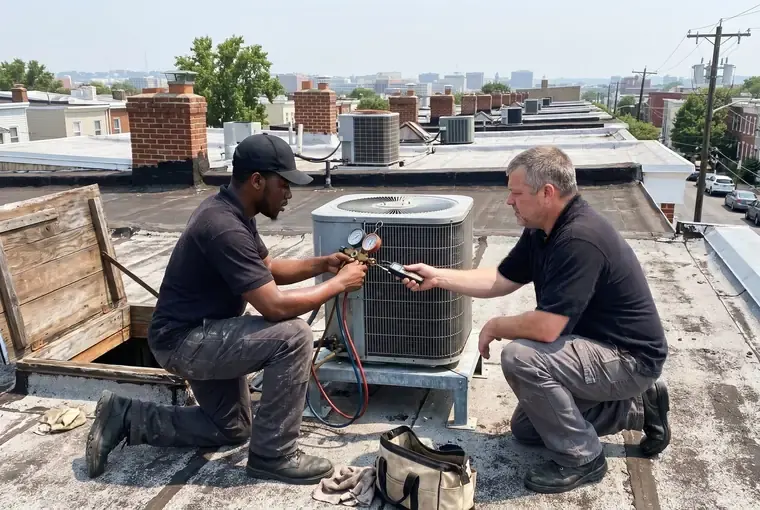

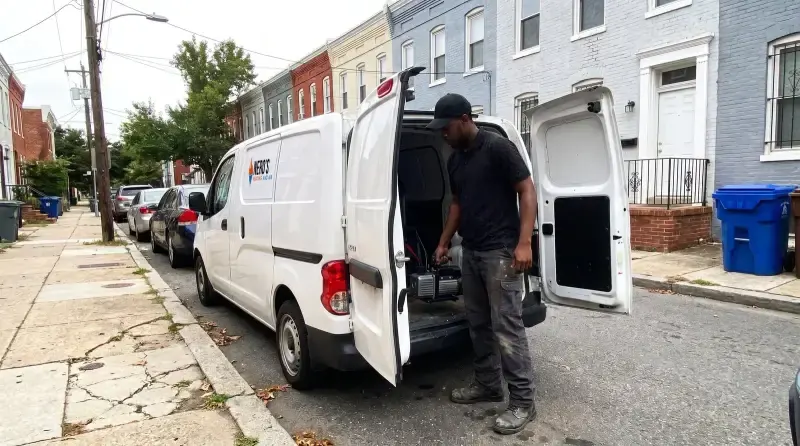
Serving Washington, DC, Prince George's County, Montgomery County & Northern Virginia, including Upper Marlboro, Hyattsville, District Heights and Silver Spring.
Plenty of older houses across DC, Bladensburg and Riverdale Park still run on a hot water boiler, and those units outlast nearly everything else in the building. When one does start failing, it rarely announces it with a breakdown. It tells you through the pressure gauge, weeks before anything stops.
At Nero's Heating & Air we service hot water boilers across DC and the Maryland suburbs. Pressure that keeps dropping, a drip under the unit, or a burner that fires and cuts out within minutes are all worth a look. We read the pressure at rest and again with the burner running, because the gap between those two numbers separates most faults. You end up knowing what's wrong, whether the fix holds, and what it costs.
| Stat | What it means for your system |
|---|---|
| 12 psi | The cold pressure a two-story system sits at, and what the expansion tank is charged to match. |
| 30 psi | Where the relief valve opens, which is why a dripping one is a pressure problem. |
| 180°F | Typical supply water temperature a residential boiler is set to deliver. |
| 15 to 30 years | Service life of a residential boiler, routinely outlasting two furnaces in the same house. |
Almost everything that goes wrong on a hot water boiler shows up first as pressure behaving oddly, or as the burner running in the wrong pattern. These five cover most of what we get called about. The pressure gauge on the front of the unit is the single most useful thing you can check yourself, and the number on it narrows the fault more than anything else you could describe.
Is there a bucket under a pipe near the boiler? That valve opens at 30 psi, so one that weeps is telling you pressure climbs too far when the system heats. The valve is the messenger here.
Watch the gauge as the burner fires. A healthy system barely moves off its cold pressure. One that jumps while heating and drops when the burner stops has usually lost the air cushion meant to absorb that.
Topping it off every few weeks? Something is letting water out. A weeping valve, a failed air vent, or a slow seep on a joint. Refilling hides the loss rather than finding it.
The burner lights, runs briefly and cuts out, then repeats the whole thing a few minutes later. That's short cycling. It means the boiler is making heat faster than the system can carry away, and it wears the unit out early.
The power is on, the thermostat is calling, and nothing happens. Check the pressure gauge before anything else. Most boilers carry a low-pressure cut-out that stops them firing on purpose rather than letting them run dry.
Our diagnostic is $75 and is waived on the repair, while Sunday, after-hours and rooftop visits are $169 and are not waived. That fee covers reading the system and finding the fault, not fixing it.
What the repair adds depends on which part failed. A thermostat, an air vent or a pressure-reducing valve sits at the low end. An expansion tank, a circulator, or a zone valve costs more, and on an older boiler, the deciding factor is often whether the part is still made. Nothing gets opened up until you have said yes to that number.

Most boiler faults are worth repairing, and on a sound unit, we will say so plainly. The ones that are not worth it share a pattern: the failure is in the body of the boiler rather than in a part bolted to it, or the part that would fix it is no longer made. That is the line, and it has more to do with what broke than with how old the unit is.
| Repairing it | Replacing it | |
|---|---|---|
| What failed | A part attached to the boiler: a circulator, a zone valve, an expansion tank | The body of the unit itself, or a part nobody manufactures anymore |
| What you pay | The part and the labor, once | A great deal more, all at once |
| How long it buys | Years, on a boiler that is otherwise sound | The full service life of a new unit |
| What happens to your bills | Nothing changes, which is fine if the boiler was efficient to begin with | An old unit swapped out usually costs less to run afterward |
| Where it goes wrong | Paying for one part after another on a boiler that is finished | Spending on a replacement when the old one had good years left |
What Nero's Heating & Air Checks First
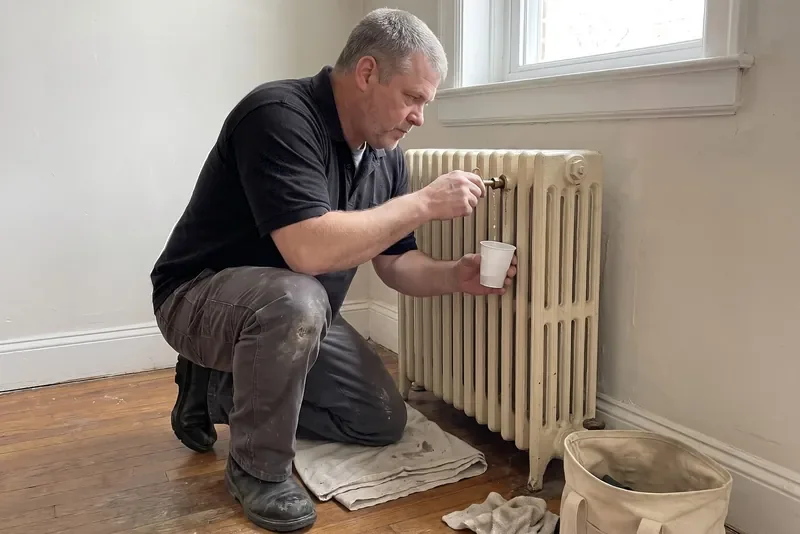
Cold pressure, then pressure with the boiler running. Those two numbers separate an air problem from a pressure problem before a single valve is opened, and they're the reason we can tell you what the visit will involve rather than guessing at it.
Every completed job gets a follow-up message about half a year later asking how the system is doing. On a boiler that matters more than on most equipment, because a repair that was going to fail early usually shows itself inside one heating season.
On a boiler old enough that parts are getting scarce, some repairs restore heat for a winter and no more. We say which one you are buying before the work begins rather than after, even when the honest answer costs us the job.
The pressure now, whether you've topped it off lately, and whether it's dripping, banging or shutting itself off. That decides what the technician brings.
Pressure at rest, pressure under fire, and the expansion tank checked for its air charge. Readings first, because a system topped off before it's read tells you nothing.
What's wrong, whether it holds or only buys time, and what it costs. Nothing starts until you've said yes to the number.
The system is brought back to pressure and the boiler taken through a full cycle, so the reading is proved under fire rather than assumed cold.
Boilers cluster in the older parts of the region, so this work takes us into DC, the inner Prince George's towns and the pre-war pockets of Montgomery County more than anywhere else. The list below is where these calls come from most often rather than a boundary. A town missing from it is still worth a phone call.
Read the pressure gauge before you call and tell us the number, because that one figure narrows the fault more than anything else you could describe. If you know roughly how old the boiler is, say so. If anyone has topped up the pressure recently, mention that too, since it usually means the system is losing water somewhere.
Say how often, and how far it falls between refills. A system losing pressure over months is a different job from one losing it over days, and the answer changes what we bring.
No heat in cold weather is an emergency, so call us right away. We triage it then and there, and you'll hear what we can do and what the visit costs before anyone is sent out.
“Nero’s Heating & Air saved me in a pinch. I called and within an hour Julian was at my door and fixed my heat within 5 minutes. Unbelievable customer service. Very grateful for the quick response. Highly recommend to others.”
 Caleb Hart
Once a year, before the heating season. The checks are combustion, system pressure, the expansion tank's air charge and the circulator, and an annual record also protects most manufacturer warranties.
Not necessarily. Efficiency comes from the boiler's own rating, and hot water systems avoid duct losses entirely, which on a forced air system can waste ten to thirty percent.
Only glycol made for heating systems, never the automotive kind. It protects an unheated space from freezing, though it carries heat less well, so the system must be sized around it.
The radiators. Air collects in them rather than in the boiler, though a system that keeps needing it is telling you air is getting in somewhere, which is a boiler-side question.
Better to leave it powered. Many circulators run themselves briefly through the off-season, and a pump left standing for months is the one most likely to seize come October.