


Water Running Down the Wall
Is there a stain below the indoor head? The condensate line drains by gravity through the wall, so a sag, a blockage, or a lost slope backs up and it comes out at the unit.


Serving Washington, DC, Prince George's County, Montgomery County & Northern Virginia, including Upper Marlboro, Hyattsville, District Heights and Silver Spring.
One room stops cooling, another head starts dripping, or the whole system suddenly feels weaker. With a mini split, the part showing the problem is not always the part causing it. The fault can start at the indoor head, the branch box or the outdoor unit they all share.
Nero's Heating & Air traces the problem through the system instead of replacing the first part that looks suspicious. By the end of the visit, you know where the fault actually started, what it will take to repair and whether the fix still makes sense for the age of the equipment.
| Stat | What it means for your system |
|---|---|
| 1/4 inch per foot | The slope a gravity condensate line needs if it is going to keep draining. |
| 3 suspects | A dead head could be the head itself, the branch box, or the outdoor unit. |
| 1 outdoor unit | Every head on a multi-zone shares it, so one fault can take out several rooms. |
| 3 runs | A refrigerant pair and a condensate line, all inside the wall behind each head. |
Ductless faults sort into three groups: water going where it should not, one zone behaving differently from the others, and the whole system down at once. Which group you are in narrows the cost considerably before anyone arrives.
Is there a stain below the indoor head? The condensate line drains by gravity through the wall, so a sag, a blockage, or a lost slope backs up and it comes out at the unit.
That points at the head or at its branch rather than the outdoor unit, because the others are proving the compressor still works. It is usually the cheaper half of the possibilities.
This is the outdoor unit or the power to it. The heads share one condenser, so a single fault out there takes every room with it, regardless of how many are installed.
Often the filter and the wheel behind it, which on a mini split are yours to clean rather than ours. Worth doing before you book anything, because it frequently is the whole answer.
Moisture sits on the indoor coil and in a drain pan that never fully dries. It is a cleaning job rather than a fault, and it returns if only the filter is done.
Mini split repair starts with a $75 diagnostic, and that fee is waived on the repair if you move forward. Sunday, after-hours and rooftop visits are $169 and are not waived.
From there, the price depends on where the fault is. A blocked condensate line is usually a simpler repair than a failed control board, while problems involving the outdoor unit or branch box can take more time and parts. Once we know what failed, you get the repair price before any work begins.

This is the most useful thing you can figure out before you call. A single dead zone and a whole system down are different price brackets, and you can tell them apart yourself in about a minute by turning on every head in the house.
| One head down | The whole system down | |
|---|---|---|
| What you see | One room untouched while the rest work normally | Nothing responds anywhere, in any room |
| What it points at | That head, its branch, or the wiring to it | The outdoor unit, its power supply, or the shared controls |
| What it usually costs | The lower end, since the expensive parts are proving themselves | The higher end, because the shared equipment is where the cost lives |
| How urgent | Usually not, unless that room is the only cooled one | More so, because every room is affected at once |
| Where it goes wrong | Assuming one dead head means the system is finished | Replacing an outdoor unit when a breaker had simply tripped |
The Difference Is in How the Fault Gets Traced
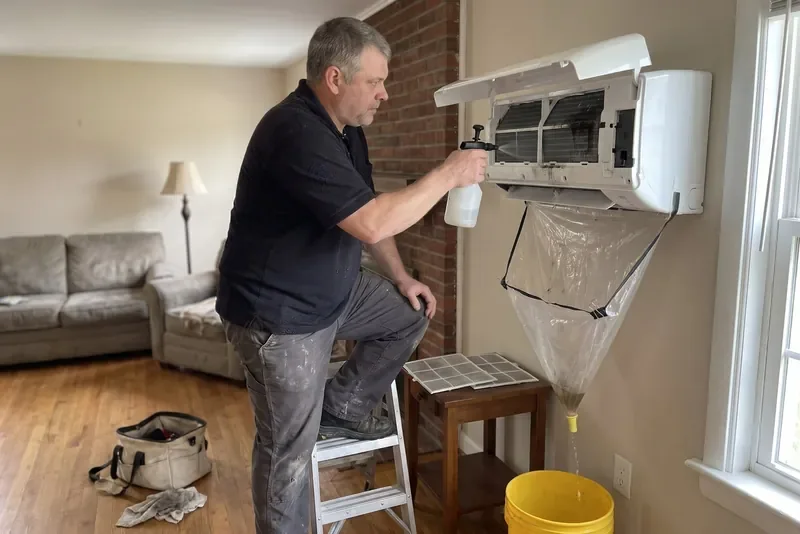
A dead zone has three plausible causes and they are not close in price. Testing the head, the branch and the outdoor unit in order is slower than guessing, and it is the difference between a board and a compressor on the invoice.
Flushing a blocked drain fixes today and nothing else. Finding the sag or the lost slope that allowed it to block in the first place is what stops it recurring next summer, and it is usually visible once somebody looks properly at the whole run.
On a single-head system out of warranty, a failed outdoor unit often costs more to put right than the system is worth. We say that before you pay for the diagnostic rather than after, even though it means we usually lose the job.
Turn every one on before you call. Which rooms respond and which do not is the single most useful thing you can hand us.
The head first, then the branch, then the outdoor unit, rather than starting at the expensive end and working inward.
Which part failed, what it costs, and on an older system whether the repair makes sense at all. Nothing starts until you say so.
All of them run, the condensate is checked draining, and the zone that failed is watched through a full cycle rather than switched on and assumed.
Ductless turns up most in the places ductwork never reached: converted attics, additions, rowhouses and finished basements. The towns below are where these calls come from most often, and the list is a guide rather than a boundary. If yours is missing, the call is still worth making.
Tell us how many indoor heads the system has, roughly how old it is, and if you know the brand or model. It also helps to mention whether the problem started suddenly or has been getting worse, and if you have seen water, an error code or unusual noise.
Write it down or take a photo before resetting anything. That code can give the technician a useful starting point once the system is tested.
Tell us which room it is in and where the water is appearing. A drip from the front of the unit can point us in a different direction than moisture showing up around the line-set opening.
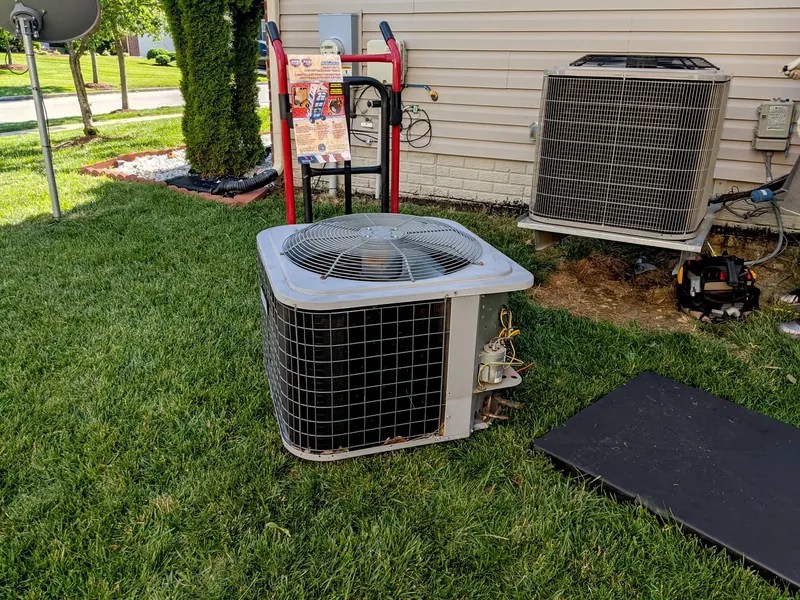
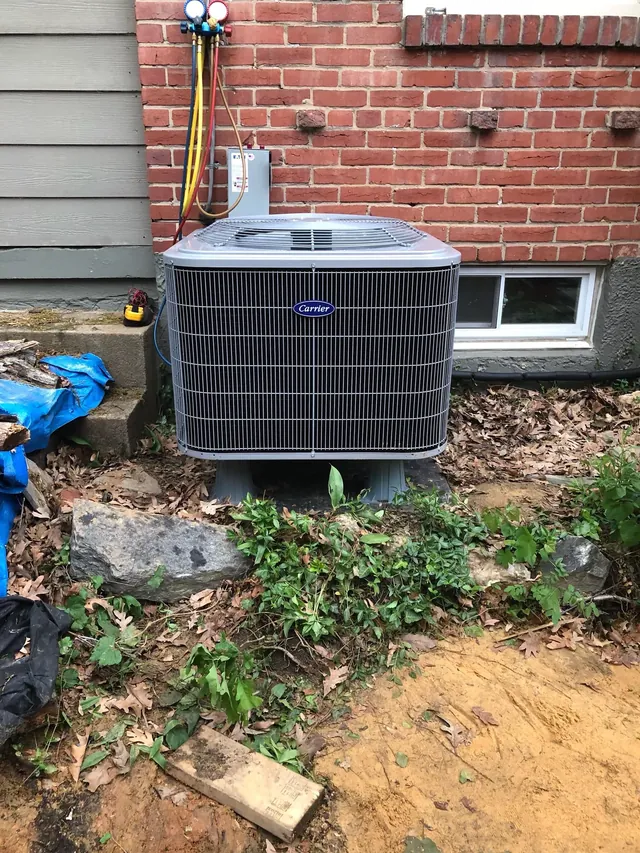
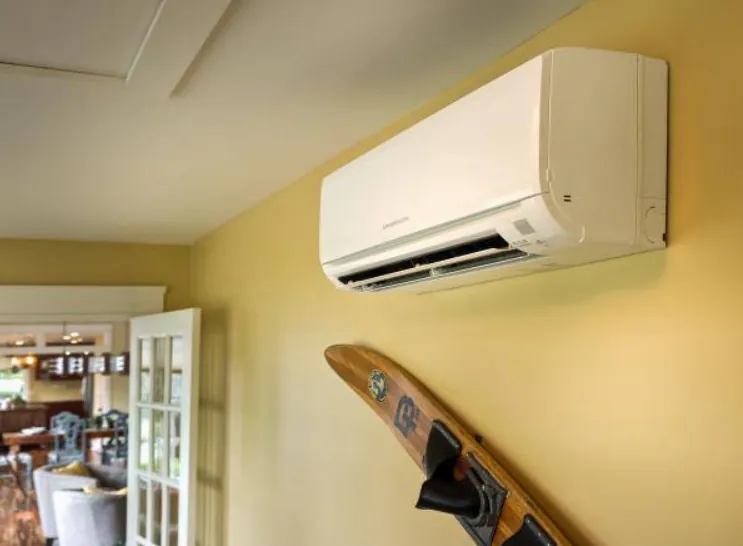
“[He] explained us why one of the older systems was not communicating well with our Nest thermostat and why instead of repairing and wasting our money we should consider a newer more efficient communicating system.”
 Rohit S.
Every few weeks through heavy use. They are washable rather than disposable, and they clog considerably faster than a ducted system's filter does because they are so much smaller.
Usually yes, provided the replacement matches the outdoor unit on both capacity and communication. Mixing brands across a single system is where this most often goes wrong.
Yes. Most modern heads heat as well as cool, and in a converted attic or an addition they are frequently the only practical way of doing both at once.
Only where gravity cannot do the work on its own, such as a basement head sitting below its outlet. Gravity is more reliable and gets used wherever the layout permits it.
Often, yes. Most modern heads modulate rather than switching on and off, so a long quiet run at low output is the efficient way for them to work.