Skip to content


A finished basement can add useful living space, but it often does not behave like the floors above it. You may find the room noticeably colder in winter, while summer brings a different problem: the basement stays cool but feels damp, stale, or musty. That combination usually points to an airflow, ductwork, or humidity problem rather than a furnace or AC that simply “isn’t working.”
The reason is often built into the house. Many basements were finished after the original HVAC system and duct layout were installed, so the downstairs space may be receiving whatever conditioned air is left after the main floors are served. Keeping the basement comfortable year-round starts with identifying whether the problem is delivery, air circulation, moisture, or a combination of the three.
Why Does a Finished Basement Run Cold in Winter and Muggy in Summer?
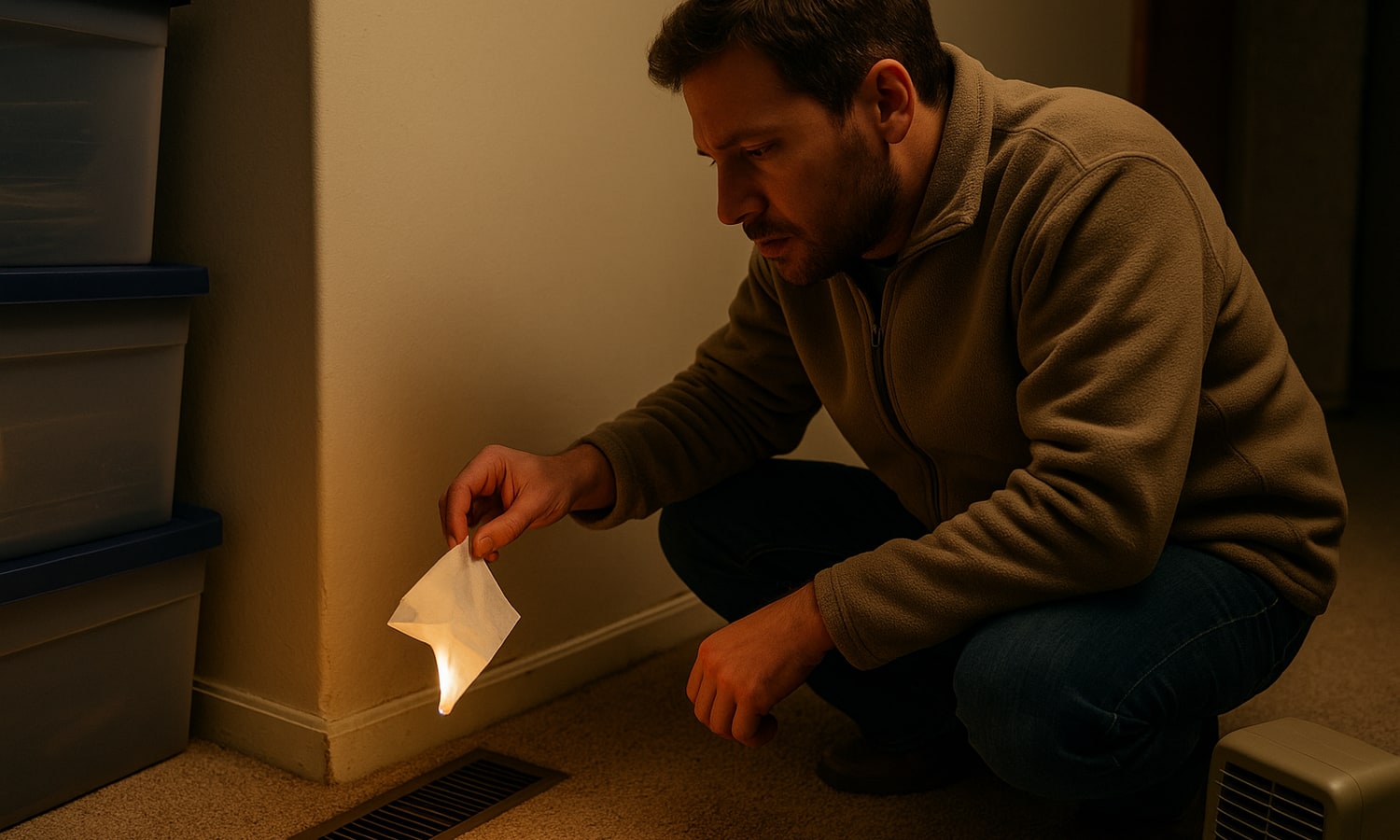
Winter and summer basement comfort problems can look unrelated, but they often have the same root cause: the HVAC system was designed around the home’s original layout, while the finished basement became living space later.
In winter, the basement is below grade and surrounded by cooler soil, so it naturally loses heat to the surrounding structure. At the same time, basement supply runs are often the longest or smallest branches on the system, so the room may receive weaker airflow than the floors above. If the basement has a small duct run or no dedicated return, the furnace can heat the upstairs normally while the finished room remains noticeably colder.
Summer creates the opposite experience. The surrounding ground helps keep the basement cool, so the upstairs thermostat may reach its setpoint without the central AC running long enough to remove much moisture downstairs. You can therefore have a basement that reads 68 to 72°F but still feels clammy. Relative humidity above about 55% starts to feel noticeably damp, and readings that sit around 60% or higher deserve attention because excess moisture can contribute to musty odors and moisture-related problems.
That distinction matters. Lowering the thermostat may make the basement colder without solving the humidity, while simply increasing airflow may not solve a duct that was never sized for the room. A proper diagnosis looks at temperature, airflow, ductwork, and moisture together.
Is It Airflow, Ductwork, or Humidity?
Before replacing equipment, determine what the basement is actually missing. A technician can compare supply airflow, return-air paths, room temperature, and humidity to identify whether the existing system can reasonably serve the finished space.
| What you notice | What it may indicate | Why it matters |
|---|---|---|
| Little or no air from basement registers | Airflow restriction or poor duct distribution | The room cannot receive enough conditioned air to keep up with its load. |
| Air is present but the room stays uncomfortable | Undersized or leaky ductwork | The duct may be losing airflow or simply cannot deliver enough capacity. |
| Basement is cool but damp in summer | Humidity control problem | The AC may satisfy the upstairs thermostat before removing enough moisture downstairs. |
| One part of the basement is comfortable and another is not | Poor air distribution or return-air limitations | Conditioned air may not circulate evenly through the finished space. |
| Basement has supplies but no return | Inadequate return-air path | Air has limited circulation back to the HVAC system, which can contribute to uneven comfort. |
This is especially important in Cheverly homes where a basement may have been remodeled long after the original ductwork was installed. A small branch added during a renovation may have been adequate for occasional basement use but not for a finished room used as a bedroom, office, family room, or workout space.
What Can You Check Before Calling an HVAC Professional?
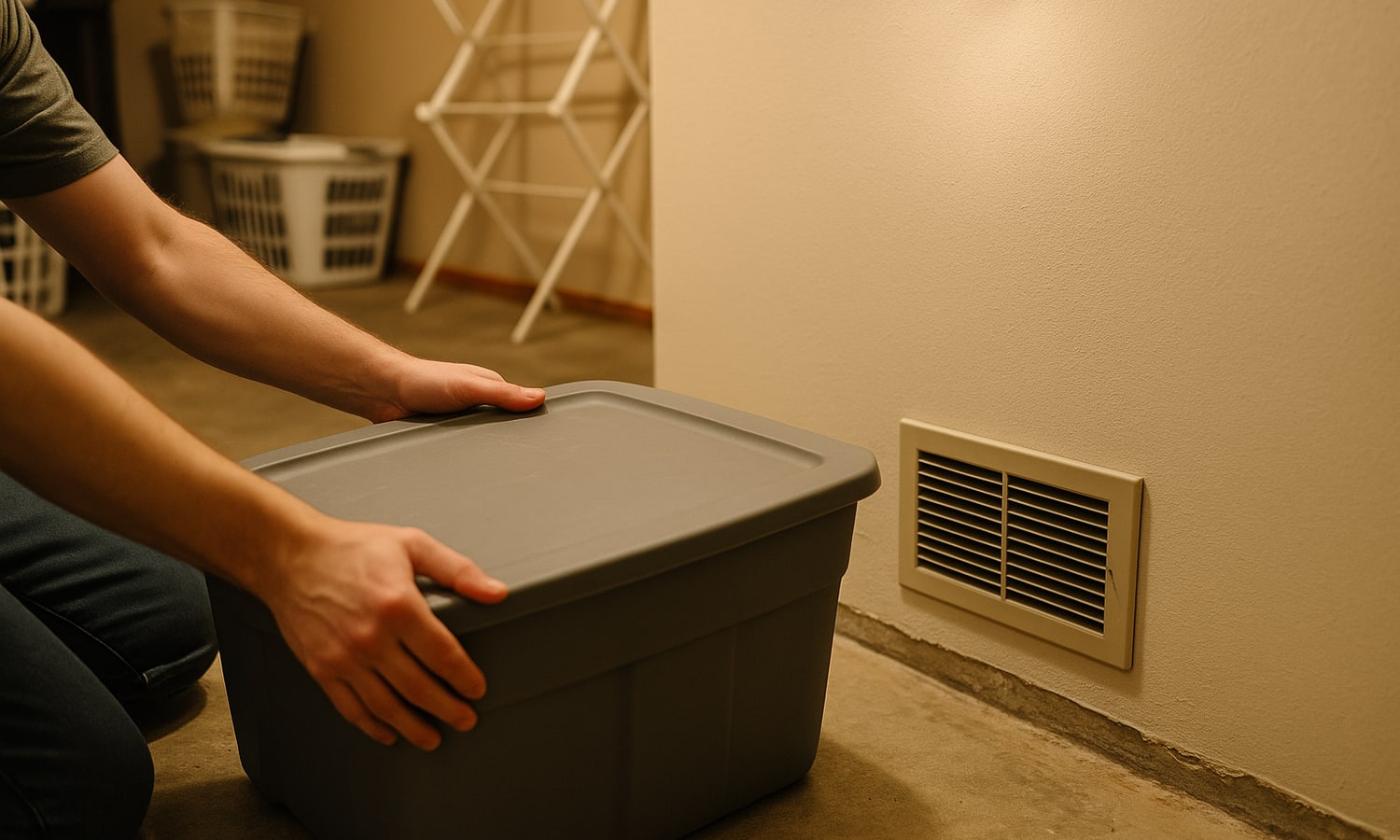
Before scheduling service, you can make a few safe observations to help identify what is happening in the basement. Focus on airflow, temperature, and humidity rather than opening HVAC equipment or making adjustments that could affect the rest of the home’s duct system.
- Check the basement registers: Make sure furniture, rugs, curtains, or storage items are not restricting airflow.
- Check for a return grille: Note whether the finished area has a dedicated return-air path.
- Inspect the filter: A visibly dirty filter can restrict airflow. Replace it according to the system’s needs rather than relying only on a fixed schedule.
- Look over exposed ducts: Check for disconnected sections, obvious gaps, or damaged insulation without disturbing the ductwork.
- Note damper positions: If accessible, record the position of manual dampers instead of randomly closing registers elsewhere in the house.
- Measure humidity: Use a hygrometer to record basement humidity at different times, particularly during humid summer weather.
- Confirm a CO alarm is in place: If the finished space is used for sleeping and shares the basement with a furnace or water heater, make sure a working carbon monoxide alarm is installed nearby.
These observations give a technician useful information before testing begins. If the basement continues to have weak airflow, uneven temperatures, or excessive humidity, professional measurements can determine whether the cause is duct distribution, sizing, return airflow, equipment capacity, or moisture control.
What Are Your Options to Make a Finished Basement Comfortable?
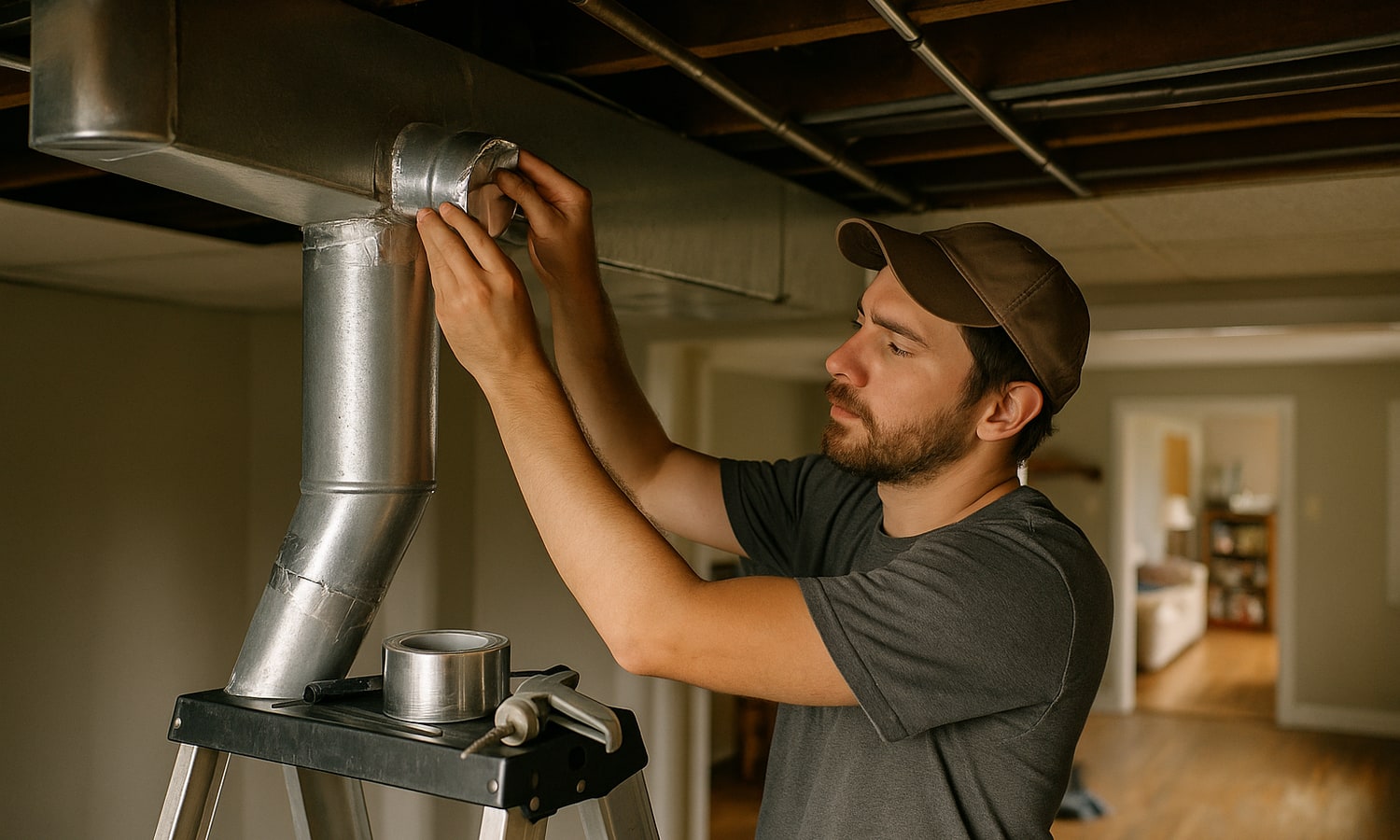
The right solution depends on what the evaluation finds. In many homes, the least disruptive fix is improving the existing air distribution. In others, the original HVAC system simply does not have a practical way to condition the finished basement independently.
Balance and Seal the Existing Ductwork
If conditioned air is reaching the basement but airflow is weak, balancing the system and sealing accessible duct joints may improve comfort without adding new equipment. The key is confirming that the existing branch duct is large enough for the room before expecting balancing alone to solve the problem.
Sealing can reduce unwanted air leakage, while proper balancing helps distribute available airflow more evenly. The exact improvement depends on the condition, layout, and sizing of the ductwork, so sealing alone may not solve a basement that was never given enough supply capacity.
Add a Return-Air Path
A finished basement with supply registers but no effective return path may struggle to circulate conditioned air. Adding a properly located return can help move air through the space and back toward the HVAC equipment.
The return should be planned around the basement’s layout and airflow requirements. Simply adding a grille in the most convenient location does not necessarily provide the circulation the space needs. Placement also matters for safety: a return should never pull air from a furnace or water heater room, because that can depressurize the space and draw combustion gases back into the house.
Consider Zoning When the Ductwork Can Support It
Zoning gives different areas of the house separate temperature control, typically through additional thermostats and motorized dampers. This can make sense when the basement has adequate duct capacity but the single upstairs thermostat satisfies the system before the basement reaches the desired temperature.
Zoning does not create additional heating or cooling capacity. If the basement duct is undersized, adding another thermostat will not create the airflow needed to condition the room. The duct system and equipment capacity need to be evaluated first.
Add Dedicated Dehumidification
If the basement holds a comfortable temperature but still reads above about 55% to 60% relative humidity in summer, more cooling is not the answer. Professional dehumidifier installation adds moisture removal without overcooling the space, and a ducted whole-house unit can serve the basement along with the rest of the home.
A dehumidifier works best once obvious moisture sources are handled, such as gutters or grading that send water toward the foundation, or a dryer that does not vent outside.
When Is a Ductless Mini Split the Right Fix?
A ductless mini split installation can be a practical option when the finished basement has no dedicated supply and return worth extending. A ductless system gives the basement its own indoor unit, thermostat, and heating and cooling capacity instead of making it depend on leftover airflow from the main system.
This approach can be especially useful for a single finished basement room or an area that is difficult to serve with new ductwork. Many modern mini splits can also provide dehumidification during cooling, although humidity performance depends on system sizing, operating conditions, and controls.
The equipment still needs to be properly matched to the basement. Room size, insulation, windows, occupancy, and the relationship between the basement and the rest of the house all influence the appropriate system capacity.
Frequently Asked Questions
Will closing upstairs vents push more air into my basement?
Not reliably. Closing too many supply registers can increase static pressure in the duct system and may create airflow problems elsewhere. If the basement is under-served, the better approach is to measure airflow and determine whether balancing, duct modifications, zoning, or independent equipment is appropriate.
Do I need a dehumidifier if my basement temperature feels comfortable?
Possibly. If the basement is already around 68 to 72°F but relative humidity remains above roughly 55% to 60%, adding more cooling may make the room colder without adequately addressing moisture. A humidity measurement helps determine whether dehumidification should be part of the solution.
Is a ductless mini split worth installing for one basement room?
It can be, particularly when extending the existing ductwork would be difficult or expensive and the room needs independent heating and cooling. A properly sized ductless system gives that space its own temperature control rather than relying on the upstairs thermostat.
Why is my basement cold when the furnace is working normally?
A properly operating furnace does not guarantee that every room is receiving enough heat. The basement may have weak supply airflow, an undersized duct, leakage, poor return-air circulation, or a design that prioritizes the upper floors. Airflow and duct measurements can separate a distribution problem from one that needs heating repair.
How much does it cost to make a finished basement comfortable year-round?
There is no single price because the solution depends on the cause. Duct sealing or balancing may be relatively limited, while adding a return, modifying ductwork, installing zoning, or adding a ductless system involves different levels of equipment and installation work. Diagnosing the basement first helps avoid paying for a larger solution than the house actually needs.
Why Choose Nero’s Heating & Air for Basement Comfort in Cheverly
A finished basement should be evaluated as part of the home’s HVAC system, not treated as a room that simply needs more heat or colder air. Nero’s Heating & Air can look at airflow, return-air circulation, humidity, ductwork, and system operation to identify what is keeping the space uncomfortable.
When the existing ductwork cannot reasonably serve the finished basement, a ductless mini split system can provide independent heating and cooling with its own control. The goal is to match the equipment and installation approach to the basement’s actual needs rather than adding capacity without addressing the underlying problem.
If your Cheverly basement is cold in winter, damp in summer, or both, start with measurements before choosing a fix. Call Nero’s Heating & Air at (202) 750-9543 to discuss the comfort problems you’re seeing and determine what type of solution fits the space.