Skip to content


You Just Bought a Home in Cheverly. How Do You Know If the HVAC System Is Ready for the Next Summer?
Buying a home in Cheverly is exciting, but the HVAC system usually comes with no manual and no history. You inherit whatever the previous owner left, from a well-maintained system with years of life to a neglected unit quietly nearing the end. Before your first Maryland summer, it is worth knowing which one you actually have.
A home inspection during purchase gives a general overview, but it rarely tells the full story of the heating and cooling system. Inspectors confirm the unit runs, not how efficiently it cools, how it was maintained, or how many summers it has left. That gap is exactly where new homeowners get caught off guard by a sudden mid-July breakdown.
This guide answers the question every new Cheverly homeowner should ask. How do you know if your inherited HVAC system is ready for the next summer? It covers what to check, how to read equipment age and history, the warning signs to watch, and when a professional inspection is worth scheduling before an emergency forces the decision.
What to Check After Buying a Home With an Existing HVAC System
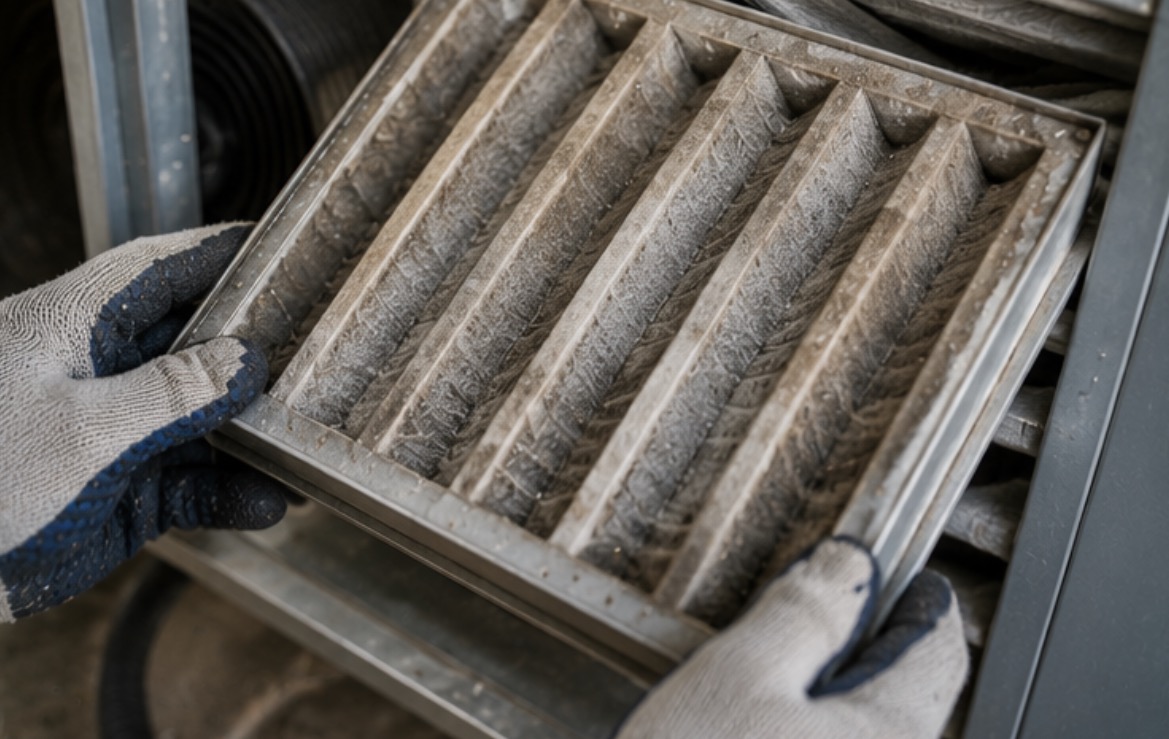
Start with the basics you can observe yourself. Locate the outdoor condenser and indoor unit, and note whether they look clean, rusted, or neglected. Check that the air filter is clean and correctly sized, since a clogged filter strains the whole system. Run the AC and confirm it produces cold air steadily and reaches the thermostat setting without struggling.
Then walk the home while it runs. Feel the airflow at registers in different rooms, listen for loud or unusual noises, and notice any rooms that stay warm or humid. These simple observations reveal a lot. If the system struggles now, in mild weather, it will struggle far more during a humid Maryland July when cooling demand peaks.
Start With These Simple Checks
| What to Check | What You Are Looking For |
|---|---|
| Outdoor unit | Excessive rust, debris, physical damage, or poor condition |
| Air filter | Heavy dust buildup or an incorrect fit |
| Supply registers | Consistent airflow from room to room |
| Thermostat | Whether the system reaches and maintains the set temperature |
| Indoor comfort | Warm rooms, excessive humidity, or uneven cooling |
| System sounds | Grinding, rattling, buzzing, or unusual operating noises |
You do not need to diagnose the equipment yourself. These observations simply give you a useful starting point and help you explain any concerns to an HVAC technician.
Understanding Equipment Age and Maintenance History
Age is one of the strongest predictors of reliability. Most air conditioners last 15 to 20 years, and furnaces a similar span, so a system past that range is living on borrowed time. You can estimate age from the manufacture date on the unit’s data plate, often decoded from the serial number, which a technician can read for you in minutes.
Maintenance history matters just as much as age. Ask the seller or agent for service records, and look for a maintenance sticker on the equipment showing recent tune-ups. A well-maintained 12-year-old system may outperform a neglected 8-year-old one. If no history exists, assume the system needs a full professional evaluation before you rely on it through summer.
What Your HVAC Records Can Tell You
If the previous owner left behind service records, look for information such as:
- Service dates: When was the system last inspected or maintained?
- Repair history: Have major components already been replaced?
- Repeated problems: Has the same issue appeared more than once?
- Equipment age: How long has the current system been operating?
- Previous recommendations: Did a technician suggest repairs or replacement?
A complete service history gives you a better picture of what you inherited. If there are no records at all, that does not automatically mean the system was neglected. It simply means you have less information to work with, making a professional evaluation more valuable.
Signs the System May Struggle During Maryland Summers

Certain warning signs suggest your inherited system may not survive a demanding Cheverly summer. If you notice several of the following, it is smart to plan ahead rather than waiting for an unexpected failure.
- Weak or uneven cooling: some rooms never reach a comfortable temperature.
- High or rising energy bills: an inefficient system works harder for less comfort.
- Humid, sticky indoor air: the system cannot manage Maryland’s summer moisture.
- Frequent cycling or constant running: signs of poor sizing or a tired system.
- Loud noises or strange smells: possible mechanical or electrical trouble.
- An aging outdoor unit: rust, the older R-22 refrigerant, or visible wear.
None of these guarantee an immediate failure, but together they signal a system that may not handle peak demand. Catching them in spring gives you time to plan calmly. Discovering them during a 95-degree heat wave, when contractors are booked solid, turns a manageable decision into a stressful and expensive emergency.
When an HVAC Inspection Is Worth Scheduling
A professional HVAC inspection is worth scheduling whenever the system’s age or history is unknown, which describes most home purchases. A technician measures performance, checks refrigerant and electrical components, inspects the ductwork, and reads the true equipment age. This goes far beyond the quick check a general home inspector performs during the sale.
Before the First Hot Spell
Scheduling the inspection in spring gives you time to address problems while the system is still operational. If the technician finds a worn component, restricted airflow, or declining cooling performance, you can repair it before your AC is working through a stretch of 90°F-plus Maryland weather.
When the System Has an Unknown History
A missing maintenance record is another good reason to have the system evaluated. You may not know whether the previous owner changed filters regularly, completed annual maintenance, repaired refrigerant leaks, or replaced major components. A professional inspection establishes a useful baseline for the system you have inherited.
The best time to schedule is spring, before the cooling season begins in earnest. An inspection then reveals whether the system is ready, needs a tune-up, or is heading toward replacement, all while you still have time to act. Booking a professional AC maintenance visit early is a small cost that prevents a large summer surprise.
Planning Repairs or Replacement Before an Emergency Happens
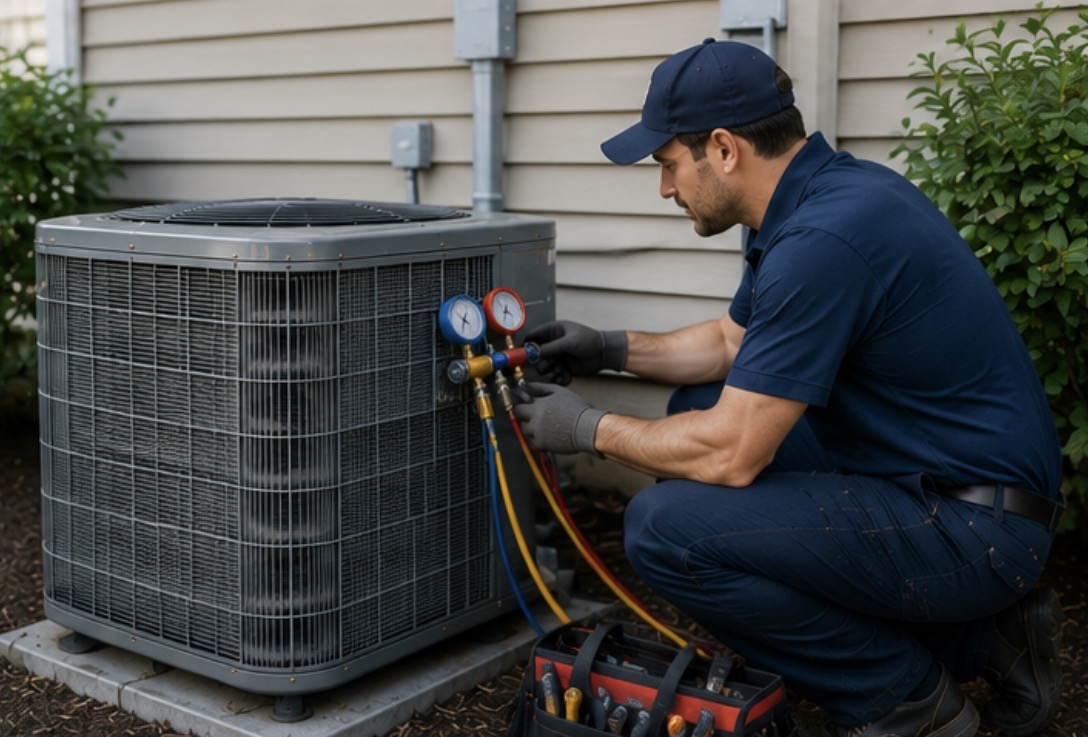
Once you know the system’s condition, you can plan on your own terms. A newer, healthy system may only need routine maintenance to stay reliable. An older or struggling one gives you a choice, and making it in spring means you can compare options and schedule the work calmly rather than accepting whatever is available during a breakdown.
If replacement is on the horizon, planning ahead also lets you size the new system properly with a Manual J load calculation and explore efficient options and financing. Enrolling in maintenance plans protects whatever system you keep. Either way, acting before an emergency is almost always cheaper and far less stressful than reacting to one.
A Simple Decision Guide
| Condition of Existing System | Sensible Next Step |
|---|---|
| Relatively new and performing well | Continue maintenance and monitor performance |
| Older but operating reliably | Schedule an evaluation and plan ahead |
| Frequent repairs or comfort problems | Compare repair and replacement options |
| Very old with major component problems | Discuss replacement before peak summer |
| Unknown age and no service history | Get a professional inspection |
Before making a repair or replacement decision, take the time to choose an HVAC contractor who will evaluate the system properly and explain your options clearly. A qualified local contractor can help you understand whether your inherited AC needs maintenance, repair, or replacement, so you can move into your first Cheverly summer with confidence.
Why New Cheverly Homeowners Trust Nero’s Heating & Air?
A new home deserves an HVAC system you can count on, and finding out where yours stands should not wait until it fails. Nero’s Heating & Air is locally rooted in Cheverly with NATE-certified technicians, and we help new homeowners understand exactly what they inherited before their first Maryland summer puts it to the test.
Our technicians inspect the full system, read its true age, measure performance, and explain your options honestly, whether that means a simple tune-up, a targeted AC repair, or planning a future replacement. You get a clear picture of your system’s health and a realistic plan, with no pressure to buy something you do not yet need.
Whether you need an inspection, ongoing maintenance, or eventually a new system installation, Nero’s Heating & Air brings honest pricing and 0% financing for qualified customers to every Cheverly home. If you just bought a home and want to know your HVAC is ready for summer, Nero’s Heating & Air is ready to help you find out.