


You have two or three HVAC estimates sitting in front of you and no easy way to tell which company is actually licensed to do the work in Maryland. A business can look polished, run a clean truck, and carry good reviews, and still be operating on an expired or borrowed credential. That is the kind of thing you only find out after a permit gets flagged or the install goes sideways, and by then the money is spent.
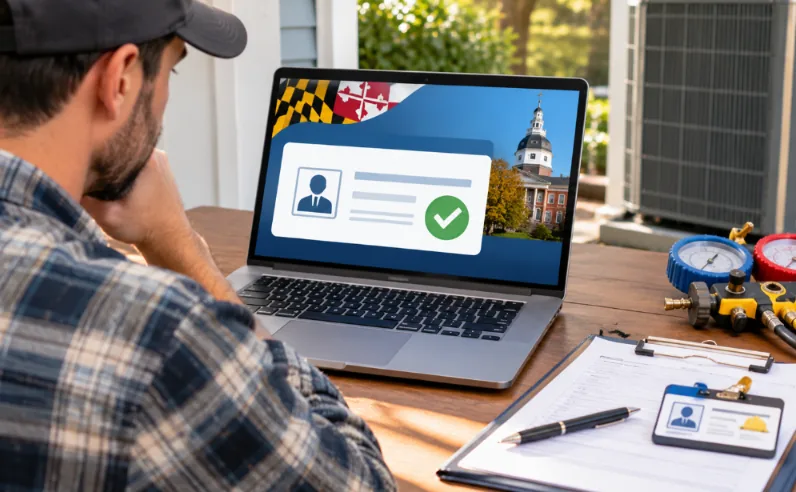
You check a Maryland HVAC contractor's license through the Maryland Department of Labor's free online license search for the State Board of HVACR Contractors, by entering the licensed person's name, the business name, or the license number. The record shows whether the credential is active, what tier it is, and when it expires. The lookup takes a couple of minutes. The single most useful move is to get the master license number written on your estimate, so you can confirm it yourself before you ever sign.
Where Do You Look Up a Maryland HVAC License?
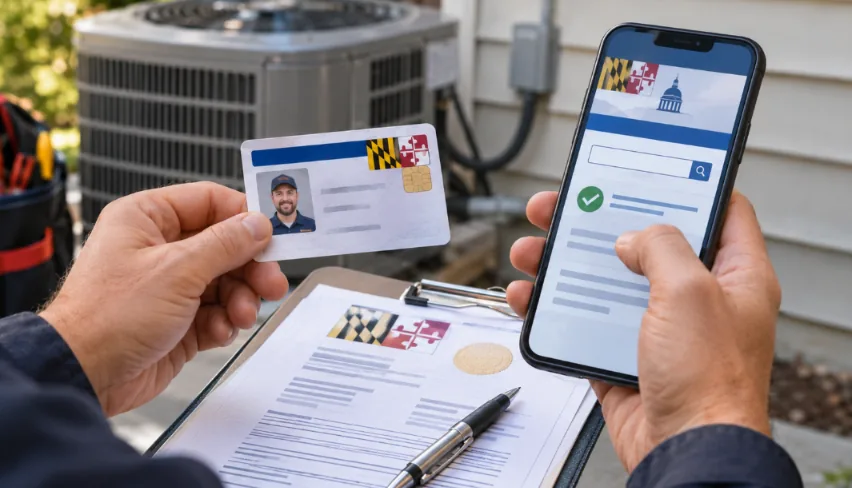
To check an HVAC contractor license in Maryland, go to the Maryland Board of HVACR Contractors website, open its online license search, and enter the licensed individual's name, the company name, or the license number. The result confirms whether the person is actively licensed and what level they hold. This is the one verification step no reviews page or truck wrap can replace.
A legitimate Maryland company works under a verifiable master credential, and that number is a real thing you can look up, not a slogan. It should appear on your written estimate. You type it into the search, and either a matching active record comes back or it does not.
Ask any contractor for the master license number on their written estimate, then confirm it on the state search before signing. Treat a company that offers only a business trade name with no license number behind it as a reason to pause. That one request filters out a surprising number of problems.
The Step-by-Step Maryland HVAC License Lookup
Checking an HVAC contractor's license in Maryland is straightforward once you know where to look. The state's official licensing database lets you verify a contractor's credentials and review their current license status. Follow these steps to find the correct record, confirm the details, and check that the contractor is properly licensed for the work.
Find the Official State License Search
Go to the Maryland Department of Labor's HVACR board website, not a third-party directory that charges a fee or shows stale data. The official search is free and pulls from the board's own records. If a site asks for payment to show you license status, you are on the wrong page and should back out.
Search by Name, Business, or License Number
The number is the cleanest search because it returns one record with no guessing. If you only have a company name, use that, but be ready for it to miss, since the license is held by a person, and the trade name on the truck may differ from the name on the credential.
Read the Record That Comes Back
Look at three fields first: the license tier, the status, and the expiration date. An active master credential with a future expiration is what you want. If the status reads expired or inactive, note it. One ambiguous field is worth a phone call before it is worth a conclusion.
Cross-Check the Name Against the Business
The licensed individual is often not the same name as the company. Confirm the master on the record is genuinely tied to the business quoting you, not a name borrowed to look legitimate. Ask the contractor directly whose license the work runs under, and match that answer to the record.
Save or Screenshot the Result
Keep a copy of what the search showed on the day you checked. If a dispute ever comes up, the dated screenshot shows the credential was active when you hired.
Run through those five and you have done more vetting than most homeowners ever do.
What Is the Difference Between a Master and Journeyman HVAC License?

The difference is authority and independence. A master can pull permits, run a company, and supervise others. A journeyman can perform skilled work but generally does so under a master's oversight. An apprentice is learning the trade and works under direct supervision. The tier on the record tells you who is legally standing behind the job.
Getting to journeyman generally takes several years of documented apprentice training before a person can test, and a master license typically requires about three more years as a licensed journeyman plus another exam. The master level sits above that and carries the responsibility for permits and code compliance. That progression is why the tier matters more than it looks on paper.
| License tier | What it is authorized to do | Why it matters to you |
|---|---|---|
| Apprentice | Hands-on work under direct supervision | Cannot stand alone as the responsible party |
| Journeyman | Skilled work, generally under a master's oversight | Competent, but the master carries the permit authority |
| Master | Pulls permits, runs the company, supervises others | This is the credential your job should run under |
Maryland also issues restricted master licenses for specific specialties, such as forced-air heating or refrigeration, and limited contractor licenses that cover maintenance and repair but not new installations. If your job is a system replacement, make sure the license on the record covers installation work.
For your purposes, the name you want verified on the estimate is a master, because that is who can legally pull the permit your installation needs. A journeyman on the crew is fine and normal. A job with no master attached anywhere is the gap to watch for.
What Does the License Status Actually Tell You?
A name appearing in the search is not the same as a green light. The status field is what tells you whether that credential is currently valid, lapsed, or carrying a problem. Maryland HVACR licenses run on a renewal cycle, typically a 2-year cycle, so an active record carries a current expiration date you can check against today.
Here is what the common status readings mean when you see them:
- Active: The credential is current and valid, with an expiration date still in the future.
- Expired: The license lapsed and was not renewed, so the authority to work may not be current.
- Inactive: The holder is not practicing under the credential, which is not the same as never having held it.
- Disciplinary history: A record of board action, which deserves a direct question before you proceed.
- No record found: The name or number returned nothing, which is its own answer.
Do not read a single field in isolation. An expired status near a renewal date may just mean the paperwork is in progress, while the same reading months past expiration is a different matter. When a field is ambiguous, the honest move is to ask the contractor to explain it, then decide.
Does a DC or Virginia License Cover Work in Maryland?
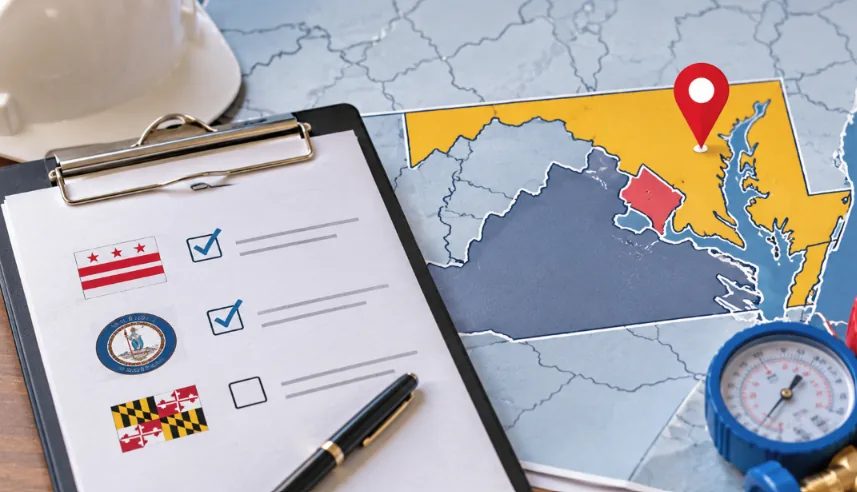
Generally, no. A Washington DC or Virginia credential does not authorize HVAC work in Maryland. Each jurisdiction licenses its own tradespeople, and the credential that counts is the one for the state your house physically sits in. For a Maryland home, that means a Maryland HVACR license, full stop.
This is exactly where border-area homeowners get tripped up. Cheverly sits minutes from the DC and Virginia lines, so quotes routinely arrive from companies licensed next door. A contractor can be entirely legitimate in DC and still have no standing to pull a permit on a Maryland job. The polish on the estimate tells you nothing about which state issued the credential.
The practical consequence is simple: search the Maryland record specifically, not just whatever license a company waves at you. A credential from across the line may be real and may be irrelevant to your address at the same time.
Confirming the Maryland side is the step most likely to get skipped here, and it is the one that protects the permit.
What to Ask Before You Sign, and the Red Flags
The license search confirms a credential exists. A short set of direct questions confirms the rest of the picture holds together. These are fair to ask of any contractor, and a straightforward company answers them without friction.
Before you sign, work through these:
- Ask for the master license number in writing: It should sit on the estimate, not be promised later over the phone.
- Ask who on the crew is licensed: Confirm a master or journeyman supervises the actual install, since the person responsible for the install should be able to pull the permit.
- Ask whether they will pull the permit: An unlicensed installer cannot pull one properly, and most equipment replacements require one. In most of Prince George's County, permits run through the Department of Permitting, Inspections and Enforcement (DPIE).
- Ask for proof of insurance: Maryland requires licensed HVACR contractors to carry liability insurance, so declining to show a certificate is a signal.
The red flags are the mirror image. A refusal to put a license number on paper, a business name with no verifiable master behind it, a price that only holds if you sign today, and an eagerness to skip the permit are all reasons to slow down.
None of these alone proves bad faith, but two or three together usually mean the next estimate is worth getting. For the rest of the comparison, from estimates to references, see our guide on how to pick the best HVAC contractor.
Why Choose Nero's Heating & Air in Cheverly, MD?
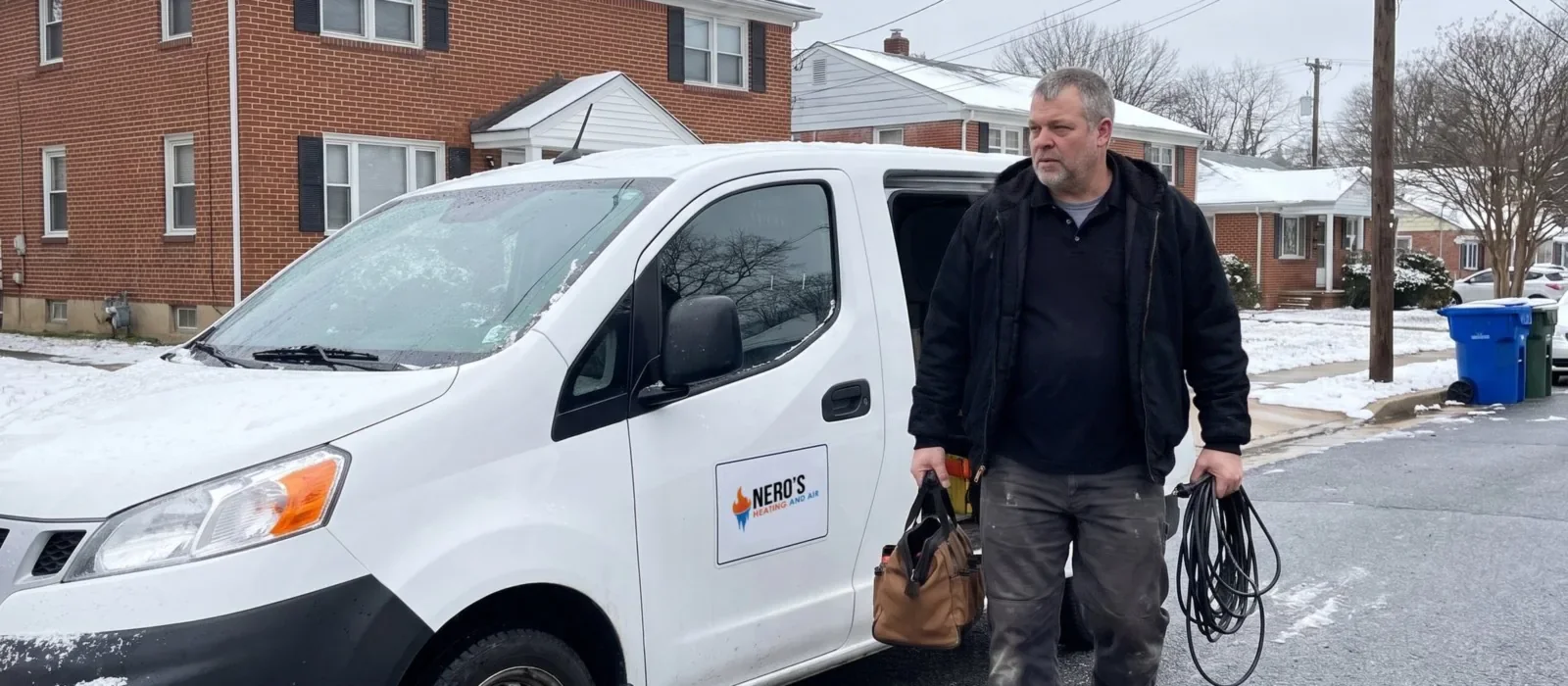
When comparing HVAC contractors in Maryland, verifying the company's licensing credentials is an important step before approving installation or repair work. Nero's Heating & Air holds a Maryland Master HVAC/R license, #47671, along with EPA certification, giving homeowners a specific credential they can look up through the state's licensing database.
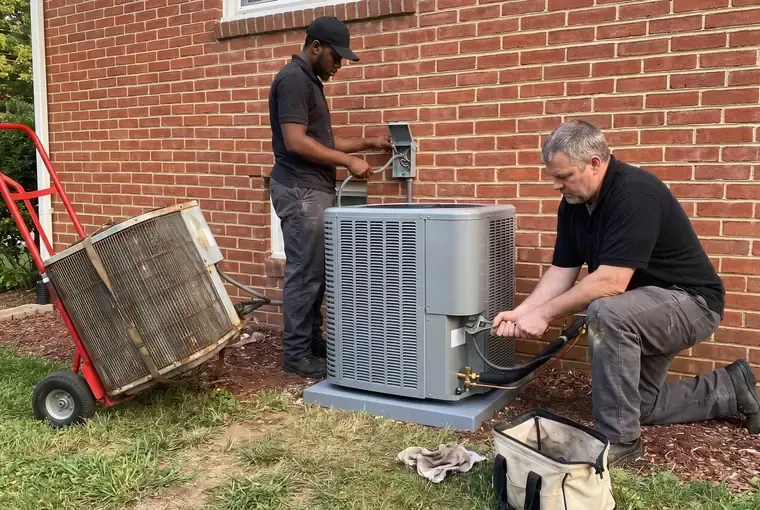
Working with a properly licensed contractor also matters when a project involves equipment installation, permits, and system controls. Whether you need heating services in Cheverly, MD or a new HVAC installation, having qualified professionals handle the work helps keep the project organized and the required documentation in order.
Before signing an estimate, you can ask for the contractor's license number and verify it independently. You can also meet the Nero's team before you book. To discuss your HVAC project or schedule service, call Nero's Heating & Air at (202) 750-9543.
Frequently Asked Questions
No. A business license or trade name registers the company. The HVAC credential licenses the individual to perform the work. A company can be registered and still have no qualified master attached to it, so it is worth checking both the business and the person behind it.
The work must be performed or supervised by a licensed individual. Apprentices can do hands-on work under a master or journeyman, which is normal and allowed. It is fair to ask who on the crew holds the credential and whether a master is standing behind the install.
Ask for the exact licensed name and number, since searching the business name alone can miss the record. The license is held by a person, not always the trade name on the truck. If they still cannot produce a matching active record, treat that as a reason not to sign.
Yes. Maryland requires licensed HVACR contractors to carry liability insurance, and a company with employees also needs workers' compensation coverage. Ask for a current certificate of insurance before work begins. A contractor who hesitates to provide one is taking a risk with your property, not just their own.
These credentials run on a renewal cycle, commonly two years, so an active record carries a current expiration date. A status reading expired means the credential lapsed and was not renewed, and it should be questioned before any work begins rather than taken on faith.
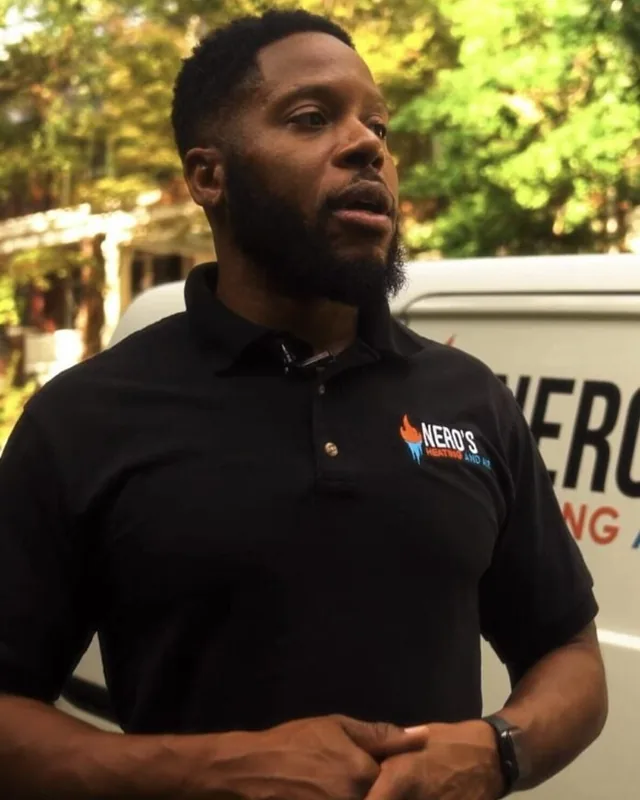
Julian Jones
- Founder
- Master HVAC, EPA 608
Julian started his own HVAC company after several years in the field with a large home services company. He had already learned the technical side of HVAC. What he wanted to change was how the work was explained.
The part of the job he cares about most is still the explanation. His view is simple: if a technician cannot clearly tell you what failed and why, the diagnosis is not finished yet.
About Us