


Your carbon monoxide alarm is sounding and you cannot tell whether it is a real emergency or a dead battery, with the clock running on a gas you can neither see nor smell. Guessing wrong in either direction is dangerous. Ignoring a true alarm can be fatal, and a gas furnace is one of the most common household sources of the stuff.
If your carbon monoxide alarm is going off with a steady, repeating pattern, get everyone outside to fresh air first, then call 911 or the fire department from outside and stay out until responders say it is safe. A single intermittent chirp usually means a low battery or an alarm at the end of its life, not CO. Once the emergency is handled, the furnace is a leading suspect, and it should be inspected before anyone runs it again.
What Should You Do in the First Five Minutes?
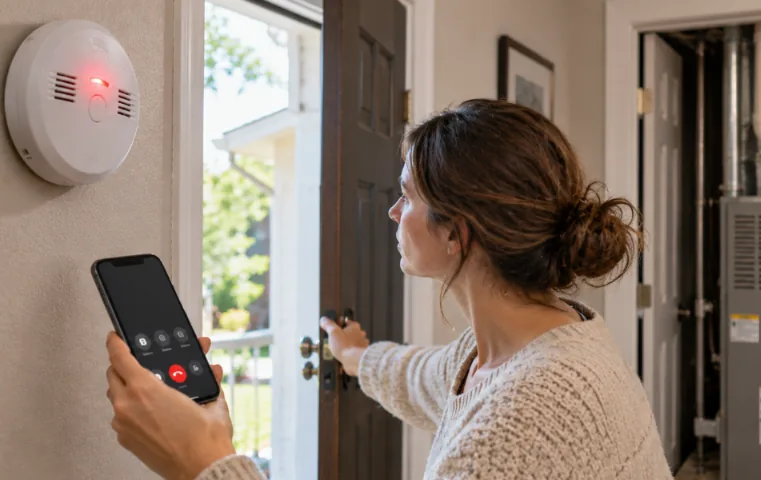
On a steady, repeating alarm, treat it as real and move. Get every person and pet out to fresh air before you try to diagnose anything. Carbon monoxide can cause confusion and loss of consciousness quickly, so the first job is distance from the source, not investigation.
Take these steps in order, from outside the house:
- Get everyone out: Move people and pets into open air, away from the attached garage.
- Call for help from outside: Dial 911 or the fire department once you are clear of the house.
- Do not go back in: The CPSC advises against reentering until responders give permission.
- Never run a generator indoors: Keep generators and unvented heaters out of the house, garage, and basement entirely.
That last point matters here. When winter storms knock out power across the DC region, people reach for portable generators and unvented kerosene or propane heaters, and CO poisoning climbs every time that happens. Keep those outside and well away from windows. Once you are safe, the next question is whether the sound was a genuine alarm at all.
Is It a Chirp or a Real Alarm?
A single chirp and a full alarm mean very different things, and mistaking one for the other either sends you outside over a dead battery or leaves you sitting in a hazard. The two sounds are designed to be distinguishable, so learning the pattern is worth a moment now.
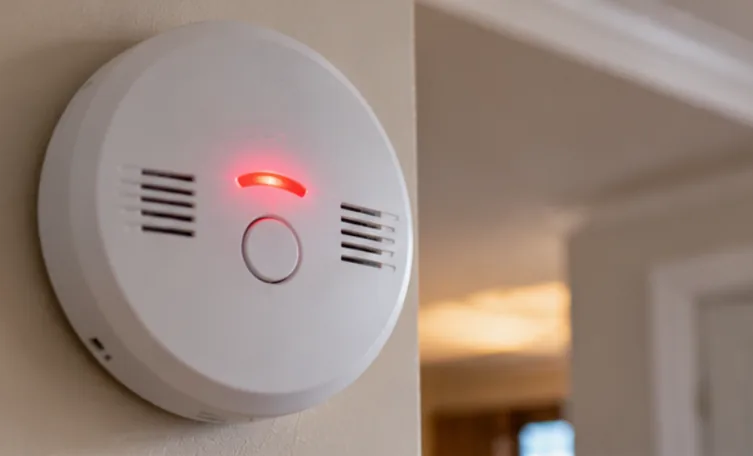
A low-battery chirp is a short, isolated beep that repeats about once a minute. Most CO alarms signal detected carbon monoxide with four quick, loud beeps, a short pause, then four more, repeating until the air clears. Smoke alarms use a three-beep pattern, and some combination units also announce "carbon monoxide" by voice. Patterns can vary by brand, so check the label on the back of your alarm. The table below lays out which is which and why it reads the way it does.
| What you hear | What it means | Why it sounds that way |
|---|---|---|
| A single short beep, repeating slowly | Low battery or end-of-life unit | Designed to nag without panic so you service it |
| Four loud beeps, a pause, then repeating | CO detected at a dangerous level | Must wake a sleeping household and prompt evacuation |
| Chirp with a different end-of-life tone | Alarm past its service date | A sensor that no longer reads CO reliably |
If it is a chirp, replace the battery or the whole unit and you are done. If it is the loud repeating pattern, you are back to the five-minute steps above. Either way, a confirmed alarm points you toward the most likely indoor source, which is a combustion appliance like the furnace.
How Could Your Furnace Be Leaking Carbon Monoxide?
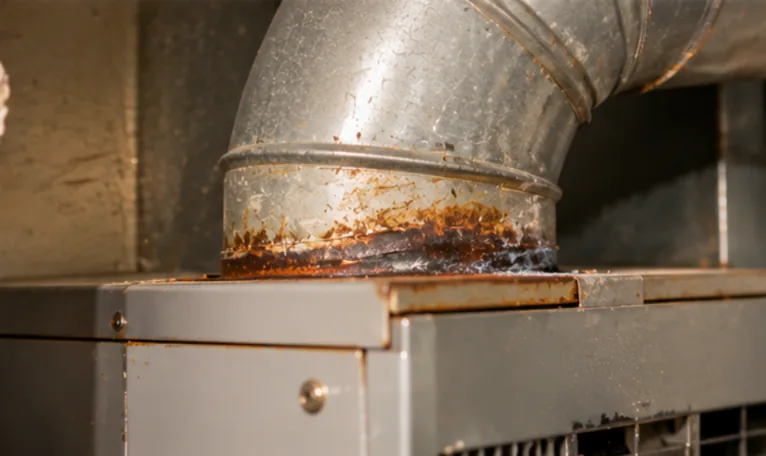
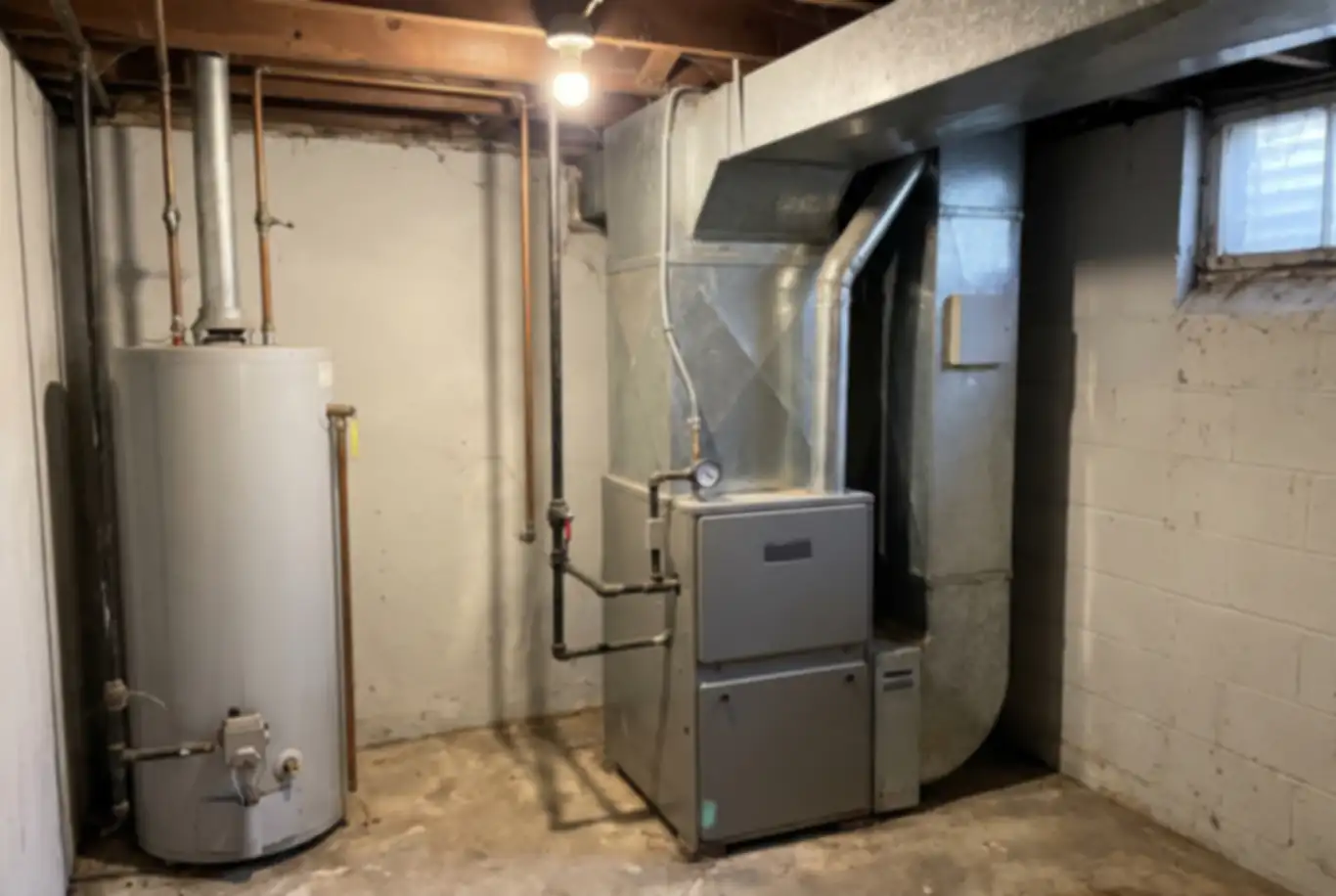
A gas furnace makes heat by burning natural gas in a set of sealed metal chambers called the heat exchanger. The flame heats the metal, the combustion gases produced by that flame stay inside those chambers, and they are supposed to leave the house entirely through the flue. Your breathing air passes over the outside of the hot metal and never touches the exhaust.
Carbon monoxide shows up when that separation fails. A cracked or corroded heat exchanger lets exhaust escape into the airstream. Incomplete combustion from a dirty or misadjusted burner produces more CO than normal. A blocked or disconnected flue sends exhaust back into the house. In each case the furnace blower, which pushes warm air through your ducts, can distribute those gases to every room.
This is why a furnace cannot be cleared by eye. A unit that looks fine and sounds fine can still vent carbon monoxide, and a cracked heat exchanger is one of the most serious faults behind it.
What Are the Signs of a Cracked Heat Exchanger?
A cracked heat exchanger can create a serious furnace safety concern because it may allow combustion gases to enter areas they should not. The warning signs are not always obvious, and several can point to other furnace problems. Here is what homeowners should watch for and how technicians investigate them.
Why Heat Exchangers Develop Cracks
A heat exchanger repeatedly expands as it heats up and contracts as it cools down. Over years of operation, this repeated stress can contribute to metal fatigue and cracks. Many gas furnaces have an expected lifespan of around 15 to 20 years, although actual service life depends on maintenance, installation, and operating conditions. If yours is in that range and showing the signs below, it may be time to weigh furnace replacement.
Soot or a Yellow Burner Flame
A properly operating gas burner generally produces a steady blue flame. A persistent yellow or orange flame, lazy combustion, or soot around the burner area can indicate incomplete combustion or an airflow problem. These signs do not confirm a cracked heat exchanger, but they warrant a professional inspection. A brief yellow flicker during ignition can be normal.
Headaches That Improve Outside the Home
Carbon monoxide exposure can cause headaches, dizziness, nausea, weakness, and fatigue. If symptoms improve after leaving the house and return after coming back, take the pattern seriously. However, these symptoms can have other causes, so do not try to diagnose CO exposure based on how someone feels. If a CO alarm sounds or exposure is suspected, leave immediately and contact emergency services from outside.
Repeated Short-Cycling or Rough Operation
A furnace that repeatedly starts and shuts down may have a combustion, airflow, or safety-control problem. A damaged heat exchanger can sometimes affect burner operation, but short-cycling also occurs with clogged filters, dirty flame sensors, and other faults. This symptom alone cannot establish that the heat exchanger is cracked.
How Technicians Confirm Heat Exchanger Damage
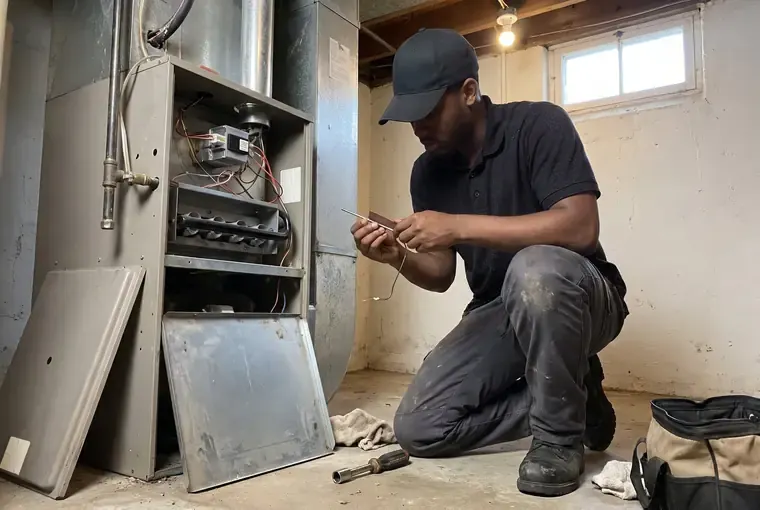
A visual inspection alone may not reveal every crack, particularly in areas that are difficult to access. A technician may use inspection cameras, examine the heat exchanger and burner operation, and perform appropriate combustion and carbon monoxide testing. Routine heating maintenance can help identify developing furnace problems, although no maintenance visit can guarantee that every hidden defect will be detected.
If you notice several warning signs, especially alongside a carbon monoxide alarm, stop using the furnace and arrange a professional safety inspection. Do not restart it until it has been evaluated. The age and maintenance history of the furnace can also help explain when heat exchanger problems become more likely.
Why Does Heating Season Raise the Risk?
The first hard runs of fall are when a worn furnace is most likely to show a combustion problem. The equipment has sat idle for months, and the first sustained call for heat puts the heat exchanger through full expansion for the first time since spring, which can make a small crack more likely to show up.
The idle summer months also let debris, rust, or even a bird's nest settle in a flue. That makes the start of winter the peak risk window, and the reason a pre-season furnace inspection earns its place. Catching a combustion or venting fault in October beats discovering it when the alarm sounds at 2 a.m. in January.
Can You Run the Furnace Again After the Alarm Stops?
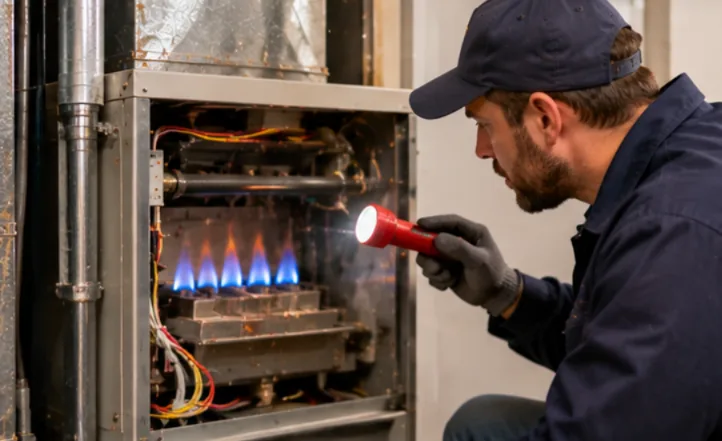
No. Keep the furnace off until a combustion and heat-exchanger inspection clears it, even if the alarm went quiet and the house feels normal. A silenced alarm means the CO level dropped, not that the source is gone, and the moment the furnace fires again it can refill the house.
You cannot clear it yourself. The fault lives inside sealed chambers and in the combustion process, neither of which you can see. A technician needs to test the combustion and venting and inspect the heat exchanger to confirm the furnace is safe to run.
So have the furnace and its venting inspected before resuming heat. If the house is cold and you need the system back quickly, emergency heating repair can get a technician to check the combustion, venting, and heat exchanger so you are not left guessing. Until that inspection happens, leave it off.
Where Should Carbon Monoxide Alarms Go?
The CPSC recommends a CO alarm on each level of the home and outside each separate sleeping area. Many sensors last about 5 to 10 years, depending on the model, and the replace-by date is printed on the unit. An alarm past that date may fail to sense CO, so test each one monthly and replace it when it expires.
Why Choose Nero's Heating & Air for Furnace Inspection in Cheverly?
If your carbon monoxide alarm has sounded and you suspect the furnace, a qualified technician can perform combustion testing and examine the heat exchanger and venting system to help determine whether the furnace is safe to operate. Based in Cheverly and holding Maryland HVAC/R license #47671, Nero's Heating & Air can inspect your heating system and identify potential combustion or ventilation problems.
Regular furnace maintenance can help identify developing issues with burners, heat exchangers, and venting before they lead to unexpected heating problems. If the inspection finds a problem, our team can handle the furnace repair or walk you through replacement options.
Do not wait until the next cold night to address a possible furnace safety issue. Contact Nero's Heating & Air to schedule an inspection or call (202) 750-9543 to discuss your heating concerns.
Frequently Asked Questions
A single chirp that repeats at a slow interval is almost always a low battery or an alarm that has reached the end of its life, not detected CO. A true CO alarm is a loud pattern, usually four quick beeps and a pause, that repeats and does not quit on its own. Replace the battery or, if the unit is past its date, the whole alarm.
Yes. Carbon monoxide is odorless and colorless, so a furnace leaking it gives off no smell at all. You cannot judge safety by scent, and the absence of an odor proves nothing. Only a combustion test and a heat-exchanger inspection can confirm the furnace is not venting CO.
Most CO alarms last about 5 to 10 years, depending on the model, with the replace-by date printed on the unit itself. Test each one monthly with the button, and when it passes that printed date, replace the entire alarm rather than just swapping the battery. An expired sensor can stop detecting CO reliably.
For a sounding CO alarm, call 911 or the fire department from outside every time, whether or not anyone feels sick. Firefighters carry meters to find the source. If you smell gas, a rotten-egg odor, leave and call Washington Gas or 911 from outside. CO itself has no smell, so the two calls cover different problems.
No. Do not stay or go back to sleep until emergency responders or a qualified technician have confirmed CO levels are safe and found the source. An alarm that silenced only tells you the gas dropped below its trigger, not that the hazard is gone or the furnace is safe.
Julian Jones
- Founder
- Master HVAC, EPA 608
Julian started his own HVAC company after several years in the field with a large home services company. He had already learned the technical side of HVAC. What he wanted to change was how the work was explained.
The part of the job he cares about most is still the explanation. His view is simple: if a technician cannot clearly tell you what failed and why, the diagnosis is not finished yet.
About Us