

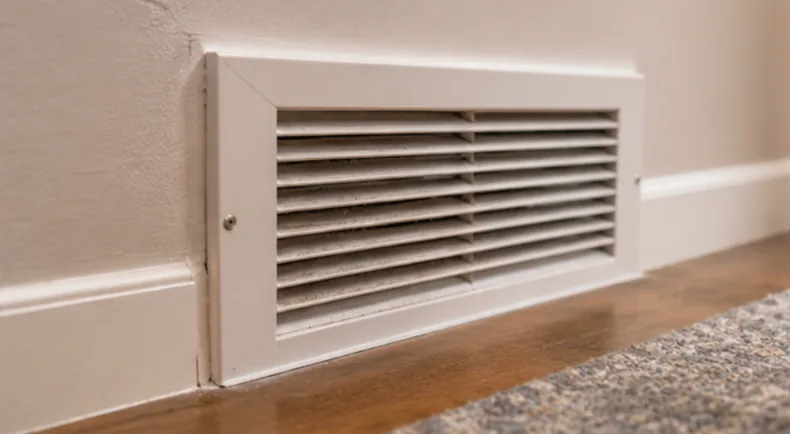
You turn up the thermostat, hear the furnace start, and expect warm air to reach your rooms. Instead, the vents blow cold or barely warm air. When temperatures drop in Cheverly, MD, this can quickly make your home uncomfortable. The cause could be a simple thermostat setting or a furnace problem that needs professional attention.
If your furnace is blowing cold air while the heat is on, start by checking six common causes: the thermostat fan set to ON instead of AUTO, a clogged air filter, a dirty flame sensor, a failed ignitor or extinguished pilot light, a clogged condensate line, or leaking ductwork in an attic or crawlspace. Understanding the symptoms can help you narrow down the problem before scheduling a repair.
How Does a Furnace Produce Warm Air?
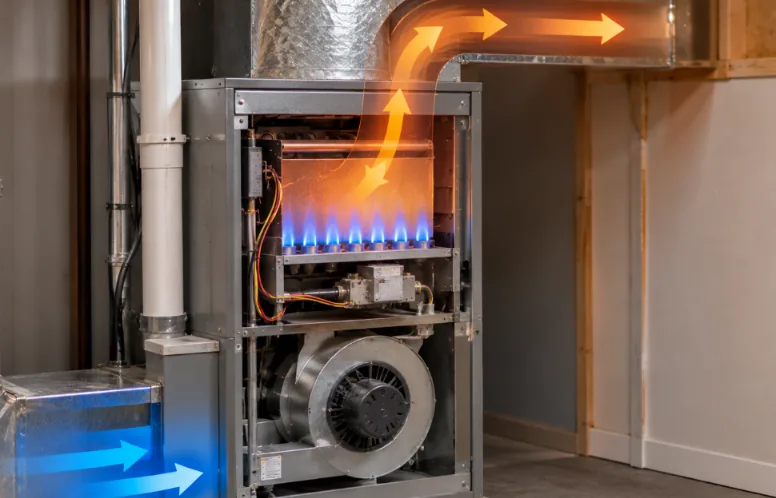
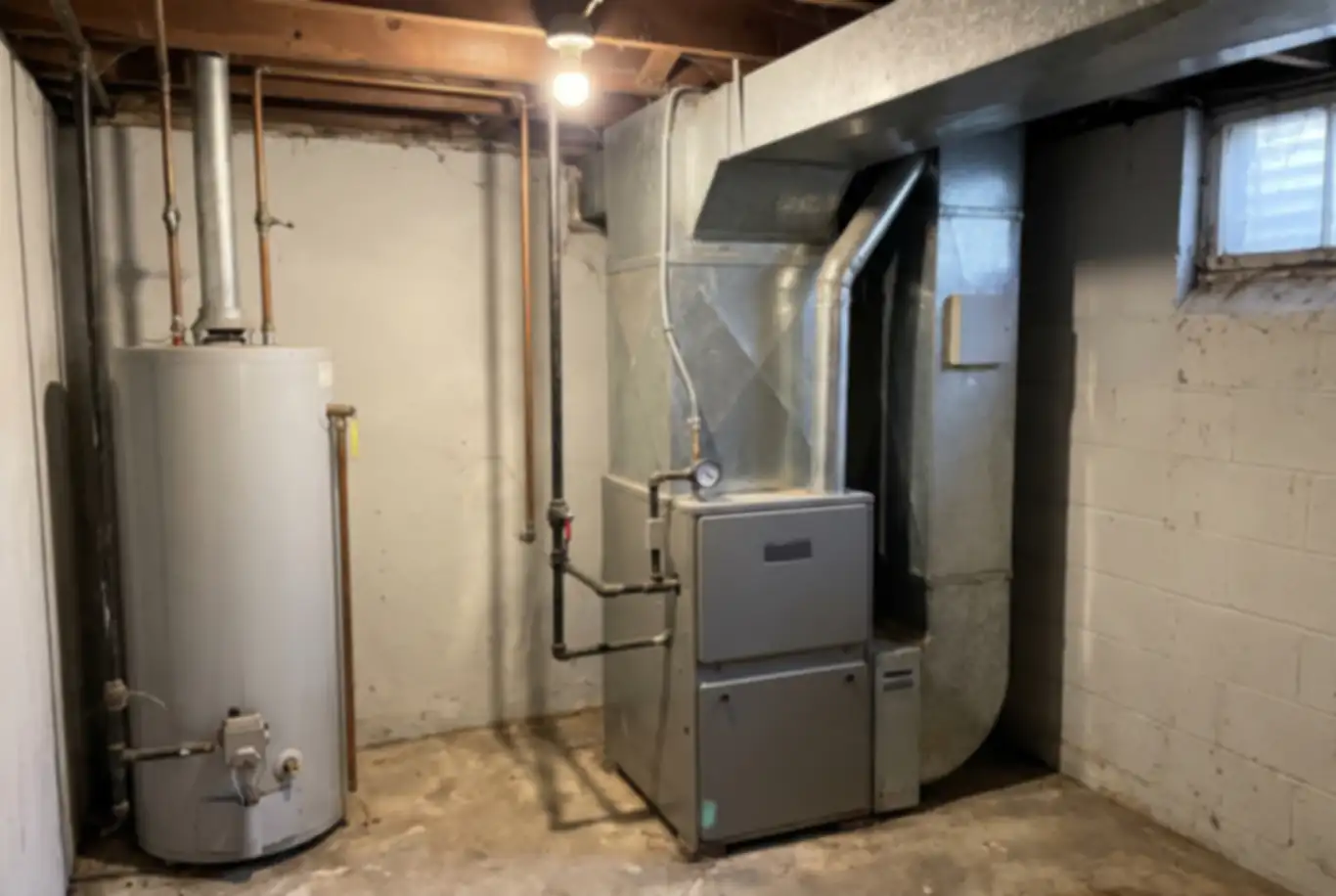
A gas furnace follows a specific sequence when your thermostat calls for heat. First, the ignition system lights the burners. The burners heat the heat exchanger, and once it reaches the required temperature, the blower motor starts moving household air across it. The warmed air then travels through the ductwork and enters your rooms through the supply vents.
This sequence explains why a furnace can keep running while blowing cold air. If the burners fail to ignite or shut down during a heating cycle, the blower may continue moving air without a heat source. A thermostat fan setting can also keep the blower running between heating cycles, making normal indoor air feel cool.
If your home uses a heat pump instead of a furnace, a few minutes of cool air can be normal while the outdoor unit runs a defrost cycle. Air that stays cold for long stretches points to a problem that needs heat pump repair.
Cause 1: Thermostat Fan Set to ON Instead of AUTO
The thermostat fan setting is one of the easiest things to check when your furnace blows cold air. Most thermostats have two fan options: ON and AUTO. Although both circulate air through your home, they control when the blower operates.
- AUTO: The blower operates as part of the furnace's heating cycle.
- ON: The blower runs continuously, including when the burners are not producing heat.
When the fan is set to ON, the blower continues circulating indoor air between heating cycles. Since that air is not passing over a heated heat exchanger, it may feel cool at the vents. This does not necessarily mean the furnace has stopped producing heat.
Switch the fan setting to AUTO and allow the furnace to complete a full heating cycle. If the vents deliver warm air when the burners operate, the fan setting may have been the issue. If the air remains cold while the thermostat calls for heat, move on to the air filter.
Cause 2: Clogged Air Filter Triggering the High-Limit Switch
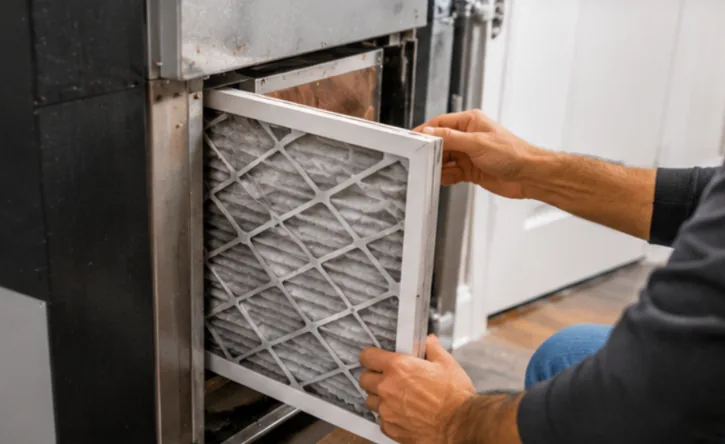
A clogged air filter restricts the airflow moving through your furnace. When too little air passes across the heat exchanger, it can become hotter than the system's safe operating limit. The high-limit switch responds by shutting down the burners to protect the equipment from overheating.
The blower may continue running to cool the heat exchanger, even though the burners are no longer producing heat. This can leave you feeling cold air from the vents. The furnace may attempt to restart the heating cycle, but the problem can repeat if the airflow restriction remains.
Warning Signs of a Dirty Filter
Look for these common symptoms:
- The air filter appears gray, dusty, or heavily coated with debris.
- Airflow from multiple supply vents feels weaker than usual.
- The furnace starts heating but shuts the burners off before completing the cycle.
- The system repeatedly starts and stops without maintaining the thermostat setting.
Check the filter and replace it if it is dirty. Use the correct size and filter type recommended by the furnace manufacturer. How often it needs replacement depends on the filter, pets, household conditions, and system usage.
If a clean filter does not resolve the problem, another airflow restriction or a high-limit switch issue may be involved. Regular furnace maintenance in Cheverly, MD can help identify restricted airflow and other developing heating problems.
Cause 3: Dirty Flame Sensor Shutting Down the Burners
A dirty flame sensor can make a furnace start producing heat and then suddenly blow cold air. The sensor is a small metal component near the burners that confirms a flame has been established. If it becomes coated with residue or oxidation, it may fail to detect the flame correctly.
When the control board does not receive the expected flame signal, it shuts off the gas supply as a safety measure. The blower may continue running, but the burners stop producing heat. In some cases, the furnace repeats the ignition sequence before entering a safety lockout.
Common Symptoms of a Flame Sensor Problem
Pay attention to what happens during startup:
- The furnace begins its ignition sequence.
- The burners light successfully.
- The flame shuts off after a few seconds.
- The furnace attempts to ignite again or eventually stops heating.
This pattern can point to a flame-sensing problem, but it does not confirm that the sensor is dirty. Other ignition or control issues can produce similar symptoms.
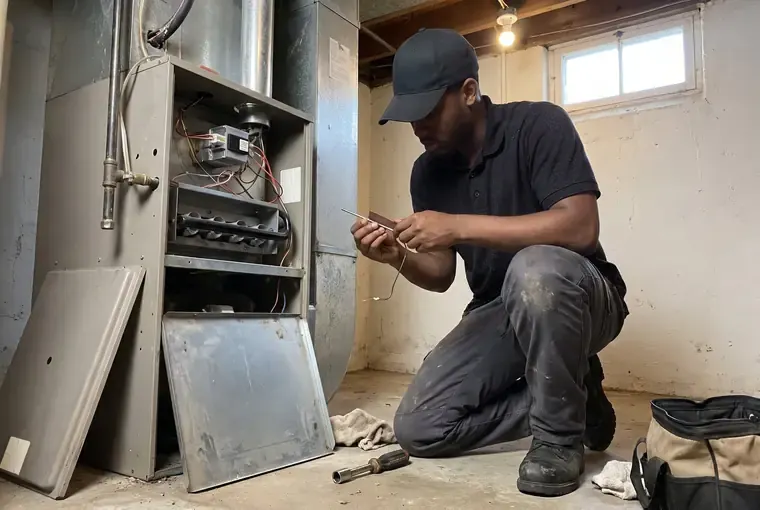
Cleaning or replacing the flame sensor requires access to the burner compartment. Because this involves furnace components and safety controls, have a qualified technician inspect it rather than attempting an uncertain repair.
Cause 4: Failed Ignitor or Extinguished Pilot Light
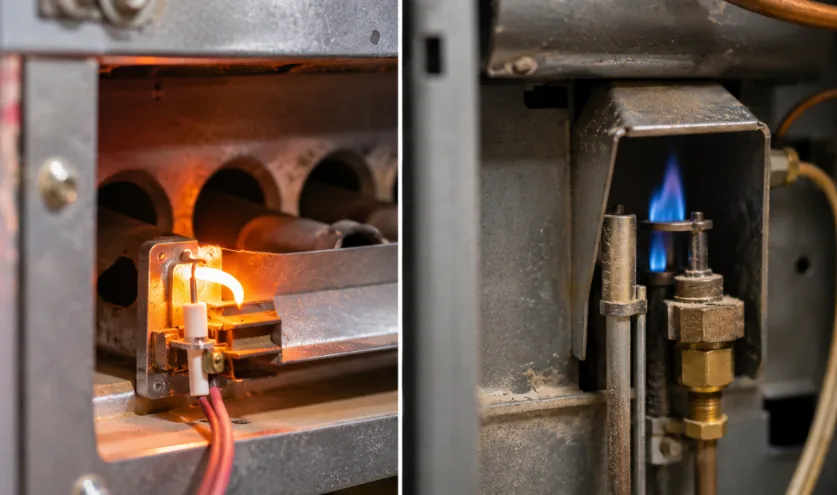
A furnace needs a working ignition system to light its gas burners. If the ignitor fails or an older furnace loses its standing pilot light, the burners may never start. The blower may still operate during parts of the startup sequence, leaving you with little or no warm air.
The exact symptoms depend on the type of ignition system installed in your furnace.
Failed Hot-Surface Ignitor
Many modern gas furnaces use a hot-surface ignitor. This small component heats up when the thermostat calls for heat and reaches the temperature needed to ignite the gas.
Over time, the ignitor can crack or stop functioning. You may hear the furnace begin its startup sequence, but the burners never establish a flame. Without successful ignition, the furnace cannot produce warm air.
Extinguished Pilot Light on Older Furnaces
Some older gas furnaces use a standing pilot light that stays lit between heating cycles. When the thermostat calls for heat, this small flame ignites the main burners.
If the pilot goes out, the main burners may not start. A draft, a problem with the pilot assembly, or a failing thermocouple may be responsible. If you smell gas, do not try to relight it. Leave the house and call Washington Gas or 911 from outside. Otherwise, only follow the manufacturer's relighting instructions if your furnace is designed for homeowner relighting. If the pilot will not stay lit, arrange a professional inspection.
Both problems involve gas and combustion components. Avoid opening the burner compartment or attempting repairs unless you are qualified to work on the equipment. A technician can inspect the ignitor, pilot assembly, and related safety controls to identify the cause.
Cause 5: Clogged Condensate Line on a High-Efficiency Furnace
A clogged condensate line is another possible reason a high-efficiency furnace stops producing warm air. These furnaces extract additional heat from combustion gases, causing water vapor to condense into liquid. The resulting water must drain through a condensate trap and drain line.
Over time, the drain can become restricted by sludge, debris, or buildup. When water cannot drain properly, it may collect in the condensate system. Depending on the furnace design, a safety switch may shut down the burners to prevent an overflow or water damage.
Signs of a Condensate Drain Problem
Look for visible warning signs around the furnace:
- Water collecting in or around the condensate pan.
- A backed-up or overflowing drain line.
- A condensate pump that is not removing water.
- A furnace that stops heating and displays a fault or status code.
The blower may continue operating even when the burners are locked out. This can make a condensate drainage problem look like an ignition failure.
You can look for visible water around the drain components without opening the furnace or disconnecting any lines. If the drain is difficult to access, water is overflowing, or you cannot identify the blockage, leave the repair to a technician. The drain, trap, pump, and safety controls may all need inspection.
Cause 6: Leaking or Poorly Insulated Ducts in Unheated Spaces
Sometimes the furnace is producing warm air, but that heat is not reaching your rooms properly. Leaking or poorly insulated ductwork can allow heated air to escape before it reaches the supply vents. This is particularly important when ducts pass through an unheated attic, crawlspace, or another unconditioned space.
The location of the cold air can help narrow down the problem. If the air near the furnace feels warm but a distant bedroom vent delivers noticeably cooler air, the ductwork may be losing heat along the way. Gaps, disconnected joints, damaged duct sections, and missing insulation can all contribute.
Comparing Airflow at Different Vents
Pay attention to how the problem affects different areas of your home:
| What You Notice | Possible Cause |
|---|---|
| Warm air near the furnace but cool air at distant vents | Leaking or poorly insulated ductwork |
| Cold air from nearly every supply vent | Furnace burners may not be operating |
| Some rooms receive warm air while others remain cold | Duct leakage, damage, or airflow imbalance |
A professional duct inspection can determine whether heated air is escaping through gaps or whether insulation is inadequate. Sealing and repairing affected sections can improve heat delivery and reduce wasted energy. If one floor stays colder than the rest, read why upstairs rooms stay cold when the heat is on.
Safe Checks Before Calling for Furnace Repair
You do not need to take apart your furnace to narrow down the cause of cold air. A few basic observations can help you identify a thermostat or filter issue and provide useful information to a technician if the problem continues.
Before scheduling service, check the following:
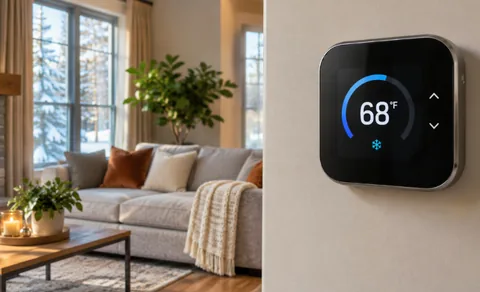
- Thermostat setting: Make sure the system is set to HEAT, the temperature is above the current room temperature, and the fan is set to AUTO.
- Air filter: Inspect the filter and replace it if it is visibly dirty or clogged.
- Heating cycle: Notice whether the burners start and then shut off, or whether they never ignite.
- Gas supply: Make sure the gas valve to the furnace is open and other gas appliances, like the stove, are working. If gas service is interrupted, the burners cannot light.
- Condensate area: On a high-efficiency furnace, look for visible water around the condensate pan or drain components.
- Supply vents: Compare the air coming from vents near the furnace with the air reaching distant rooms.
- Furnace status light: If your furnace has a diagnostic light, note its flashing pattern or displayed error code. Check the manufacturer's instructions rather than guessing what it means.
You can reset a furnace once if the manufacturer's instructions allow it. If it shuts down again, avoid repeated resets. The system may be responding to a safety condition that needs professional diagnosis.
Do not open the burner compartment, bypass safety switches, adjust gas components, or attempt to repair electrical ignition parts. If you smell gas, leave the home and contact the gas utility or emergency services from a safe location. If a carbon monoxide alarm sounds, get everyone outside and call emergency services.
Why Choose Nero's Heating & Air for Furnace Repair in Cheverly, MD?
If the thermostat is set correctly and the filter is clean but your furnace continues blowing cold air, it is time to have the system inspected. Ignition failures, flame-sensor problems, high-limit shutdowns, condensate backups, and duct leaks require different repairs. Replacing parts without identifying the cause can waste money and leave the original problem unresolved.
Nero's Heating & Air provides furnace repair in Cheverly, MD. A technician can inspect the ignition sequence, burner operation, airflow, safety controls, condensate drainage, and ductwork to determine why your furnace is not delivering warm air.
Our team is based in Cheverly, holds Maryland HVAC/R license #47671 and EPA certification, and serves homeowners throughout the surrounding DMV area. If your furnace is not heating properly, book your furnace repair online or call (202) 750-9543 to discuss the symptoms and arrange the next step.
Frequently Asked Questions
Yes. Most furnaces run the blower on a short delay after ignition so they do not push cold air, but briefly cool or lukewarm air at the very start of a cycle is normal. Persistent cold air through the whole cycle is not, and points to one of the causes above.
It is best left to a technician. Cleaning it means shutting off gas and power and opening the burner compartment, and a sensor that gets scratched, bent, or reinstalled wrong can keep the burners cycling off just as before. A technician can also confirm the sensor was the real cause, since ignition and control faults look the same.
A clogged condensate drain is a common cause. Condensing furnaces produce water as they run, and a safety switch locks the burners out if the drain backs up, leaving the blower pushing unheated air until the line is cleared. Check the pan and line for a visible backup.
Compare the air at the furnace to the air at a distant vent. If it feels warm at the furnace but cool by the time it reaches a far room, suspect duct loss, especially with runs through an unheated attic or crawlspace. Cold air at every vent points back at the furnace.
Reset it once. If it locks out again, stop. Repeated resets on a flame-sensor or safety-switch lockout do not fix the cause, and they can mask a problem a technician needs to see happen live. Leave it off and note what it did before each lockout.
Julian Jones
- Founder
- Master HVAC, EPA 608
Julian started his own HVAC company after several years in the field with a large home services company. He had already learned the technical side of HVAC. What he wanted to change was how the work was explained.
The part of the job he cares about most is still the explanation. His view is simple: if a technician cannot clearly tell you what failed and why, the diagnosis is not finished yet.
About Us