Skip to content


For most Cheverly homes with existing ducts, yes: a heat pump can replace an aging gas furnace and take over your air conditioning in the same install. If your furnace is past 15 years old and the next repair quote has put replacement on the table, the bigger question is what goes in its place, because one heat pump covers both the heating your furnace does and the cooling your air conditioner does.
Whether it saves you money depends on three things you can check this week: your own gas and electric rates, the condition of your ductwork and electrical panel, and how old your air conditioner already is. This guide works through each one with numbers you can test against your own bills.
Can a Heat Pump Replace Both Your Furnace and Your AC?
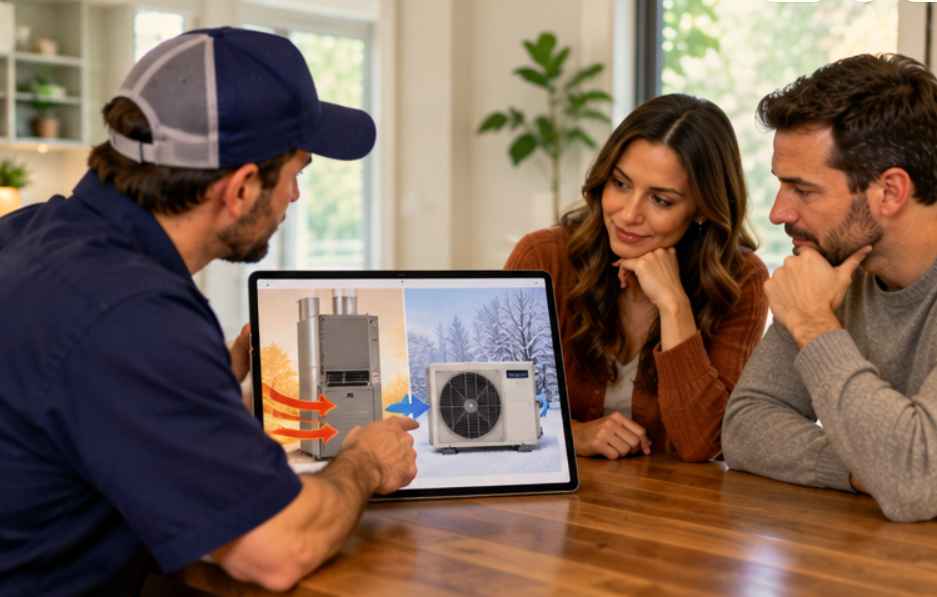
Yes, for most ducted homes. One outdoor unit handles both jobs, pulling heat out of the house in summer and reversing to pull heat from outdoor air in winter. If you want the mechanics of that reversal, we covered how a heat pump heats and cools a home in a separate post.
What matters for a replacement decision is the timing. A well-maintained gas furnace runs 15 to 20 years, and a central AC condenser runs 12 to 15, so the two often reach the end within a couple of seasons of each other. When that happens, one heat pump install replaces two separate projects.
Many homes in this part of Prince George’s County already have the ductwork a central system needs. Where they do, the new equipment connects to existing runs, which removes the largest cost barrier that stops heat pump retrofits elsewhere.
How Does a Heat Pump Perform on the Coldest DC-Area Nights?
This is the fear that stops most people, and it is worth answering with a number rather than reassurance. The heating design temperature HVAC engineers use for the Washington DC area sits in the mid-to-upper teens, and the hours colder than that add up to only a small fraction of a typical year.
Cold-climate heat pumps keep most of their rated heating output at 5°F, and some hold close to all of it. Against a design day in the teens, that is comfortable margin rather than a marginal call. A standard-efficiency heat pump has less headroom and will lean on backup heat sooner, which is the distinction that gets blurred in sales conversations.
Ask any contractor for the rated heating capacity at 5°F and at 17°F, not the HSPF2 number alone. HSPF2 is a seasonal average, and an average tells you nothing about the specific January night when the house has to stay warm.
Which Costs Less to Run Here, Gas or a Heat Pump?
Your rates decide this, not the efficiency label on the box. The honest way to compare is cost per million BTU of delivered heat, which puts gas and electricity on the same footing.
Here is the arithmetic worked through at example rates. These are not current Pepco or Washington Gas tariffs, so swap in the numbers from your own bills. A therm of gas contains 100,000 BTU, and a kilowatt-hour contains 3,412 BTU.
| Equipment | Efficiency | Delivered heat | Cost per million BTU at illustrative rates |
|---|---|---|---|
| Gas furnace | 95% AFUE | 95,000 BTU per therm | $13.68 at $1.30 per therm |
| Heat pump | COP 3.0 | 10,236 BTU per kWh | $15.63 at $0.16 per kWh |
| Heat pump | COP 3.5 | 11,942 BTU per kWh | $13.40 at $0.16 per kWh |
At those rates the two land within a couple of dollars of each other, which is why no blanket answer exists. Drop the electric rate to $0.14 and the more efficient heat pump pulls ahead at $11.72, while the COP 3.0 unit only ties the furnace at $13.68. Drop gas to $1.00 a therm and the furnace wins at $10.53. A heat pump’s efficiency also falls on the coldest days, so use a seasonal figure rather than its best-case rating.
Pull your last two bills, find your all-in rate per kWh and per therm, and run the same three lines. That takes ten minutes and tells you more than any brochure. A heat pump also delivers your summer cooling, so the comparison is not heating cost alone.
What Rebates Apply in Prince George’s County?
This changed for 2026, and working from last year’s numbers can throw your budget off by thousands.
The federal Energy Efficient Home Improvement Credit, known as 25C, was worth up to $2,000 on a qualifying heat pump. The One Big Beautiful Bill Act repealed it for property placed in service after December 31, 2025. A heat pump installed in 2026 does not qualify, and any quote still showing that credit is working from stale information.
What remains is utility-side. Cheverly sits in Pepco territory, and Pepco runs EmPOWER Maryland energy-efficiency programs that can include incentives for qualifying heat pumps. The amounts, eligibility rules and paperwork change from year to year, so check what currently applies on Pepco’s website before you budget around any number. Bring the question to your estimate visit as well, because some incentives depend on how the equipment is purchased and who installs it.
What Is a Dual-Fuel System, and Who Should Get One?
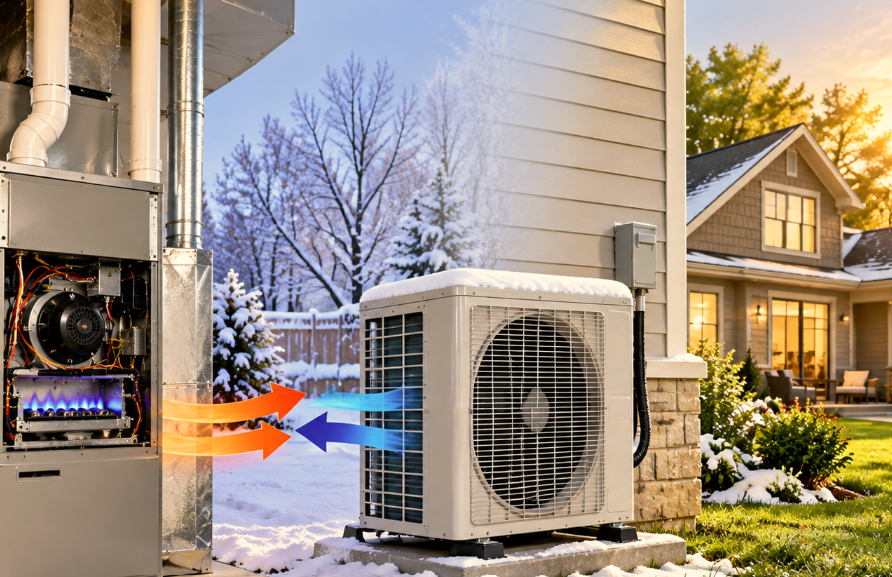
A dual-fuel setup pairs a heat pump with your gas furnace as backup and switches between them automatically, either on outdoor temperature or on which fuel costs less at the time. The heat pump handles the large majority of the season and the furnace covers the handful of nights below its economic balance point.
With a design temperature in the teens, that handover happens on relatively few nights here. Dual fuel suits a specific homeowner rather than everyone:
- You already have sound gas service: the furnace stays in place, so the added cost is the heat pump rather than both units
- You want guaranteed output on the coldest nights: gas backup removes any dependence on electric resistance heat
- Your electric rate is high: the control logic hands off to gas when gas costs less that day
- You plan to stay put: the efficiency gain repays the extra equipment cost over years, not months
- Your furnace is newer than your AC: replacing the condenser with a heat pump keeps a sound furnace working
If your furnace is the failing component and the AC is sound, the reverse applies. We compared those paths in our post on choosing a heat pump or a straight air conditioner.
What Has to Be Right in Your Home for a Heat Pump to Work?
Before accepting a heat pump quote, several parts of the home and existing HVAC system need to be evaluated. A unit that is poorly sized, restricted by inadequate ductwork, or mismatched with the home’s electrical capacity can underperform when heating demand is highest. A heat pump installation in Cheverly should begin with this assessment rather than jumping directly to a specific model.
Proper Ductwork and Airflow
A heat pump moves a larger volume of cooler air than a furnace, so ductwork designed decades ago for a different system may not provide the airflow the new equipment requires. Undersized or restrictive ducts can reduce comfort in distant rooms and increase system pressure, making a static pressure evaluation an important part of equipment planning.
Adequate Electrical Capacity
The outdoor heat pump and any electric backup heat can place significant demands on the home’s electrical system. An electrical assessment can determine whether the existing panel and wiring can support the equipment or whether a new circuit or panel upgrade may be necessary. Identifying this requirement early helps prevent unexpected installation costs and delays. Panel and wiring upgrades are handled by a licensed electrician before the heat pump goes in.
Manual J Load Calculation
A Manual J load calculation determines how much heating and cooling capacity the specific home requires based on factors such as square footage, insulation, windows, orientation, and other building characteristics. Oversized equipment can cycle unnecessarily, while undersized equipment may struggle during colder weather. Ask the contractor to explain how the calculated load led to the selected equipment capacity.
Required Permits and Inspections
Heat pump installation may require permits and inspections through the applicable local authority. These requirements help verify that the electrical work, equipment installation, and other aspects of the project meet applicable codes. Homeowners should confirm who is responsible for obtaining required permits and arranging inspections before installation begins.
How Does the Age of Your AC Change the Decision?
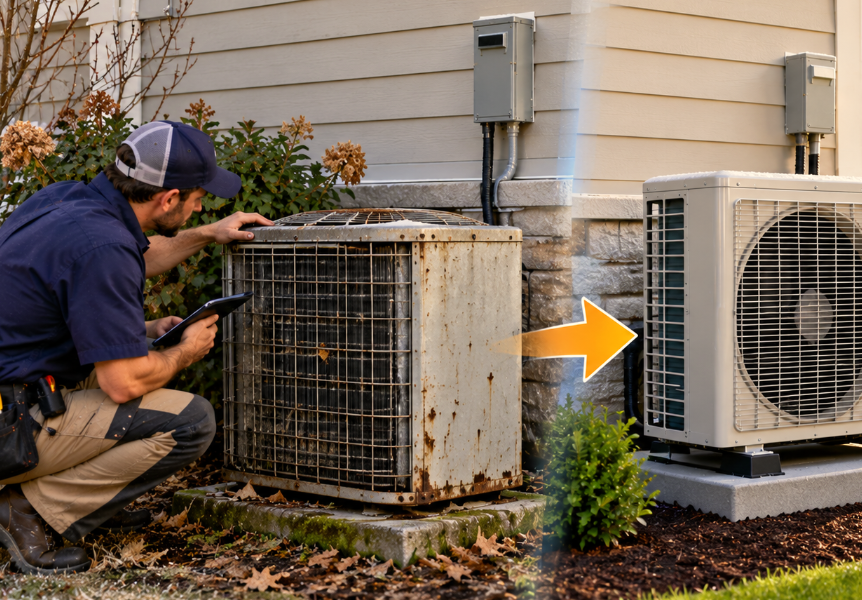
An aging air conditioner often settles this on its own. If both units are near the end, one heat pump replaces two separate installs and you avoid paying labor twice within a couple of years.
| Your situation | Likely best path | Why |
|---|---|---|
| Furnace and AC both old | Heat pump replacing both | One install covers heating and cooling, no duplicated labor |
| AC newer, furnace failing | Furnace swap or dual fuel | No reason to discard a sound condenser early |
| AC old, furnace sound | Heat pump for cooling, keep gas backup | Upgrades cooling now and hedges the coldest nights |
| Either unit still on R-22 | Replace rather than repair | R-22 is phased out, so recharging is costly and short-lived |
If you are replacing the condenser anyway, the incremental cost of making it a heat pump is smaller than most homeowners assume, because the indoor coil and the air conditioning replacement labor are already in the quote.
Why Choose Nero’s Heating & Air for a Heat Pump or Furnace Replacement in Cheverly, MD?
Nero’s Heating & Air has served Cheverly and Prince George’s County since 2019, and our team installs gas furnaces, heat pumps and dual-fuel systems. Because we install all three, the recommendation comes from your house and your bills rather than from one product we need to sell.
Every replacement starts with a load calculation and a duct check, so the equipment is sized to the home before a model is chosen. If the numbers point back to gas, our furnace replacement options are quoted the same way, and every installation carries a one-year labor warranty.
Replacement estimates are free, written and binding once you sign, and financing through GreenSky offers promotional rates for qualified customers, subject to approval. To find out which path fits your home, call (202) 750-9543 and we will walk you through the options.
Frequently Asked Questions
How much more does a heat pump cost than a straight furnace swap?
A heat pump install generally lands above a like-for-like furnace replacement, because you are buying the cooling side at the same time. Weigh it against the condenser replacement you would otherwise face in a few years, and against any utility incentive that applies, rather than comparing it to the furnace alone.
Will my gas bill disappear if I go all-electric?
Your heating gas use ends, but a gas water heater, range or dryer keeps the account and its monthly base charge alive. A dual-fuel system shrinks the bill rather than closing it. Compare the expected electric increase against the gas saving before assuming the switch nets out in your favor.
Is a heat pump louder than the AC it replaces?
Modern variable-speed units generally run quieter than a 12-year-old single-stage condenser, particularly at low speed. The difference that matters is hours: a heat pump runs in winter too, so it is active far more of the year. Placement away from bedroom windows matters more than it did with a summer-only condenser.
What happens if the power goes out?
A heat pump stops, and so does a gas furnace, because the furnace needs electricity for its blower, igniter and controls. Neither system gives you heat in an outage without a generator. This is not a reason to choose one over the other, though it is worth knowing before anyone tells you otherwise.
How long does the installation take?
A straightforward changeout using existing ducts is usually a one-day job. Panel work, duct modifications or a new line set extend that. Ask for the expected timeline in writing alongside the quote, and confirm whether the permit inspection happens on the same visit or afterward.